

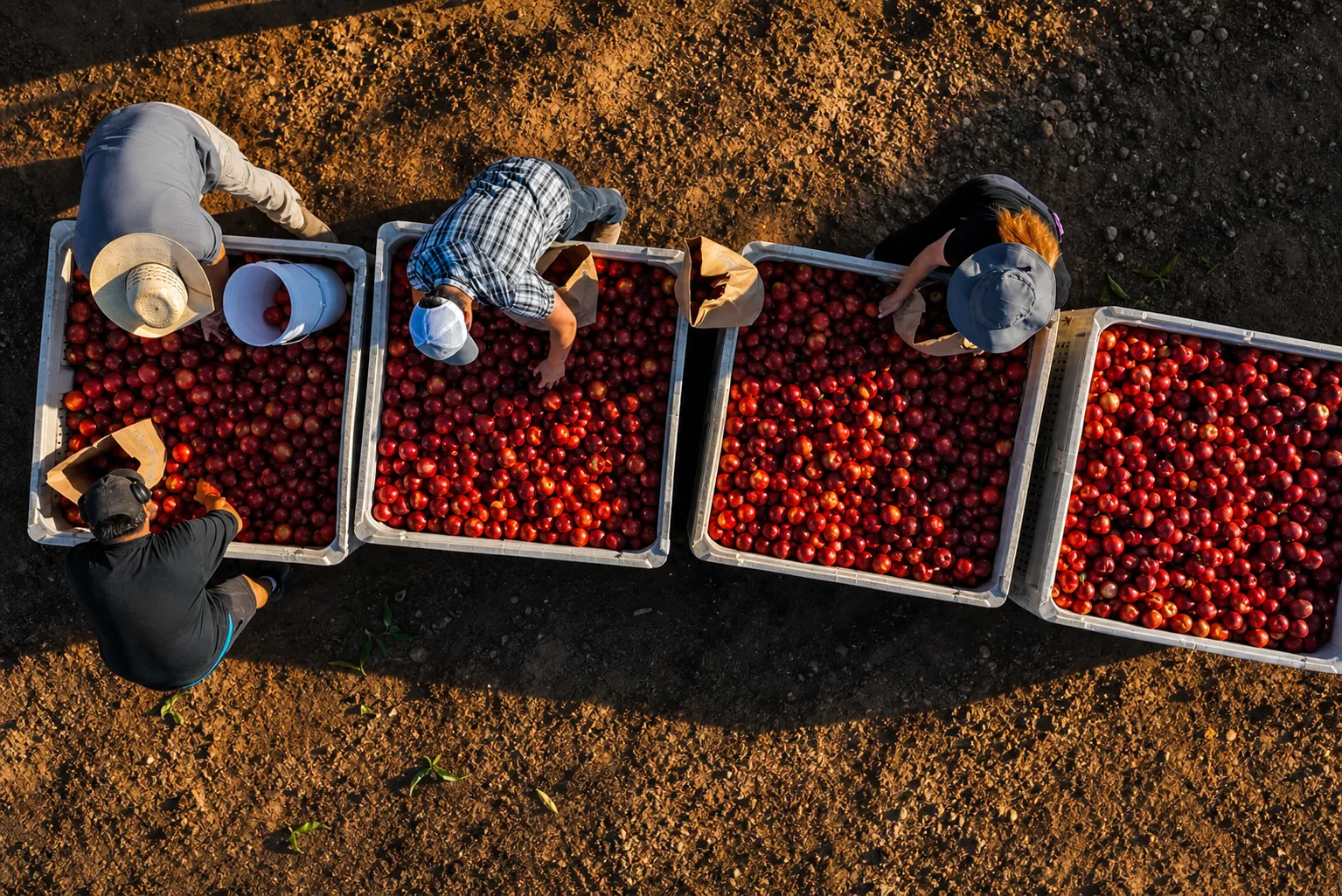
Thousands of visitors descended on a small orchard in California’s Central Valley this week to pick free nectarines from the trees, part of an unusual giveaway driven by a bitter legal dispute between a third-generation farmer and a major agricultural marketing company.
Cesar Mora, who farms in Reedley, has been unable to sell nearly 125,000 pounds of white nectarines for a second consecutive year because of a lawsuit filed against him by Giumarra Brothers Fruit Company. Rather than watch the fruit rot on the trees again, Mora decided to give away the entire harvest to the public, launching the effort through social media with his Instagram account ‘@NoNectarinesWasted,’ which garnered over 866,000 views within days.
The response was immediate and overwhelming. Between 2,000 and 3,000 people showed up to Mora’s orchard starting Monday, arriving with buckets, grocery bags, coolers, and truck beds to collect the fruit. By Wednesday, local volunteers wearing “No Nectarines Wasted” T-shirts helped bag the nectarines, and the California Highway Patrol temporarily shut down the giveaway due to the massive crowds and safety concerns. Mora distributed more than 100,000 pounds of fruit within the first few days and pledged to continue the giveaway.
The legal battle centers on a proprietary white nectarine variety called Monalise, known for its sweeter, less tart taste. Mora signed a sublicensing agreement with Giumarra in 2017 that allowed him to grow and sell the variety. He later entered a marketing agreement in 2019 requiring the fruit to be packed and sold exclusively through Giumarra. Giumarra recruited Mora to grow the nectarines, according to court documents, and under the agreements, Mora was obligated to pay Giumarra a royalty of $2.50 per tree, a 4% production royalty based on gross sales, and a sales commission.
From the start, Mora says the arrangement was problematic. He alleges that up to half of the nectarines he provided to Giumarra in 2020 were thrown away, cutting deeply into his profits. In 2022, Mora claims Giumarra sold his nectarines to Taiwan in violation of the contract, which specifies the fruit should be marketed in the U.S. And Canada. Giumarra disputes both allegations.
After years of financial losses, Mora sought to end his relationship with Giumarra and in 2023 began selling his nectarines to another fruit packer. That decision triggered the lawsuit. Giumarra sued for breach of contract, and the company then began sending cease-and-desist letters. When Mora tried to return to Giumarra, the company rejected him, leaving him with no legal path to sell the fruit. The dispute has kept the fruit from market for two consecutive years, costing him roughly a quarter of his annual income.
Mora has accused Giumarra of unfair and fraudulent business practices, claiming the company misled him about holding exclusive patents and legal rights to the variety. His attorneys point out that Giumarra has not provided documentation proving its license to the nectarine variety. In court filings, Giumarra says all rights to the Monalise variety are owned by Star Fruits Diffusion, a French plant breeding company, while Giumarra holds the marketing rights. The company noted in legal documents that the Monalise is not covered by a U.S. Plant patent. In May, a Fresno County Superior Court judge ruled that Giumarra’s breach of contract claim could proceed, deciding that the agreement between the two parties is valid regardless of whether a patent exists.
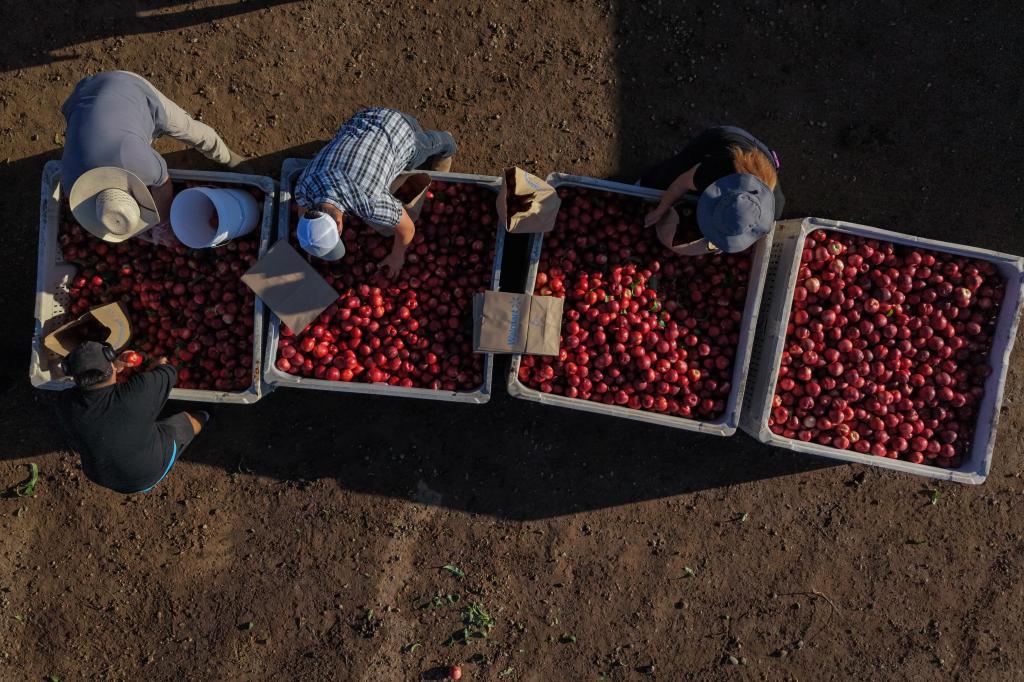
For Mora, the giveaway has become both a practical solution and a statement. He posted a video saying the agricultural corporation has been preventing him from doing anything with his crop. Visitors to his orchard expressed sympathy for the farmer’s plight. One woman who drove two hours from Bakersfield to collect nectarines said it was sad to see a small farmer targeted by a large company. Mora raised more than $17,000 through a GoFundMe campaign to help cover his legal costs.
The Central Valley is an agricultural powerhouse, producing an estimated 40% of the nation’s fruits, nuts, and table foods, including most of its nectarines. The dispute highlights broader tensions in agriculture between individual farmers and large industrial food marketers that control plant breeding rights and distribution channels.
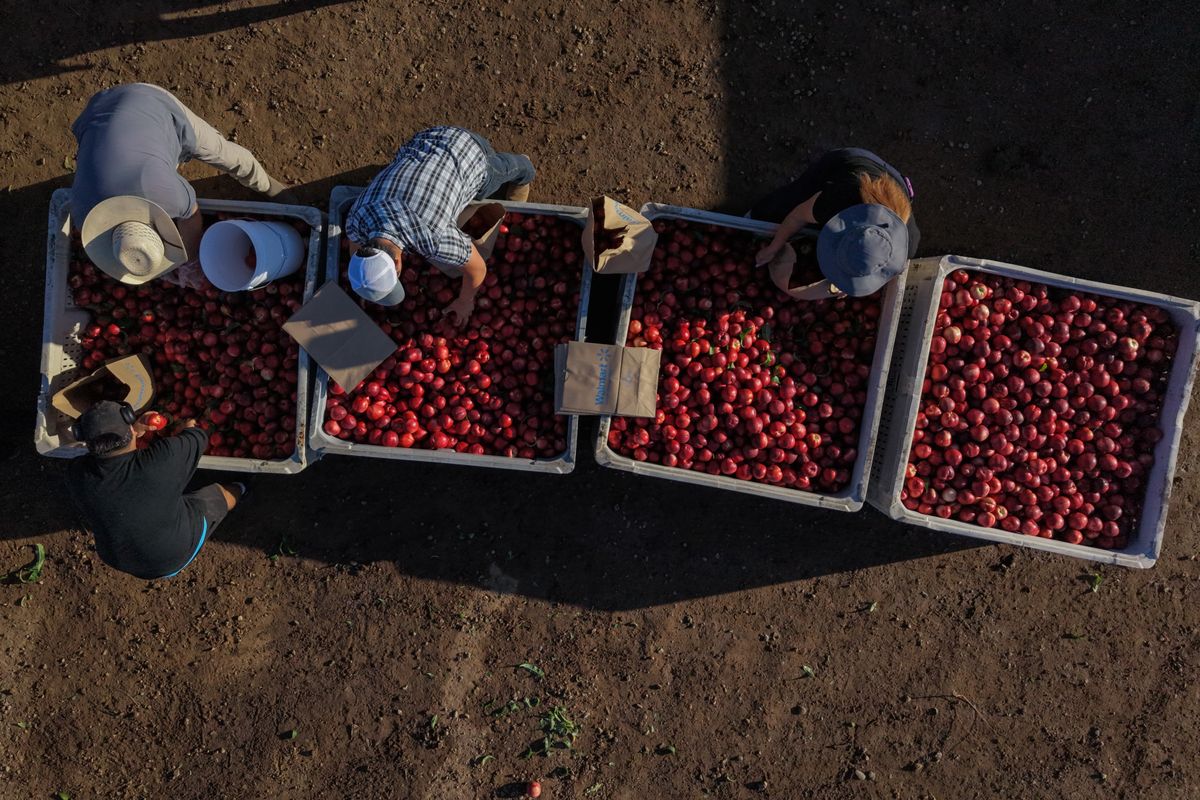
Mora says the years of litigation have left him frustrated and defensive about continuing to farm. “It’s been discouraging to even want to go out and farm,” he said. Still, he has expressed hope that his case will result in stronger legal protections for growers dealing with similar licensing agreements.
Giumarra issued a brief statement saying the dispute is simply a disagreement over two written agreements and should be resolved in court based on the facts. The company said it remains committed to serving its growers with integrity and honoring contractual obligations.
A trial is scheduled for July 20, with the case expected to determine not only who controls the rights to sell this particular nectarine variety, but potentially set precedent for how farmers and agricultural marketers negotiate disputes over proprietary fruit varieties in the future.