

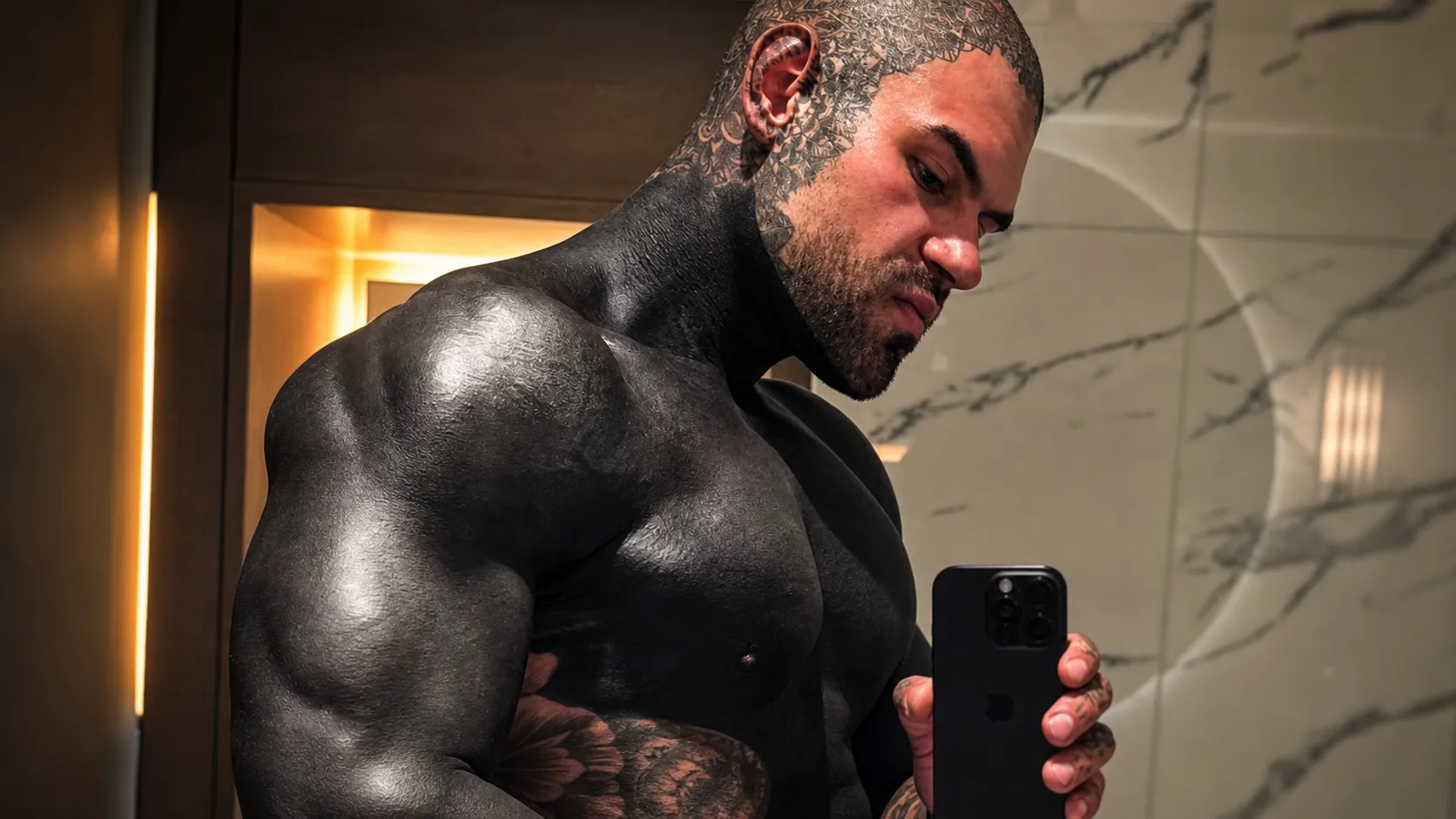
A tattoo enthusiast heavily covered in blackout ink has shared a serious warning about aftercare, saying one small mistake during healing can leave lasting damage that may not be fixable.
Dave Chudley began his blackout tattoo journey in 2020 and has steadily added more coverage ever since. His goal is ambitious too, with hopes of eventually reaching around 80 percent of his body.
Blackout tattooing has become increasingly visible in recent years, helped in part by celebrities and social media videos showing the scale and shock value of the style. The look involves saturating large sections of skin with solid black ink, sometimes to mask older tattoos and sometimes as a dramatic design choice on its own.
Because blackout pieces are often built up over multiple sessions, the healing can be more demanding than people expect. The skin is dealing with a larger amount of trauma, more swelling and more fluid than a typical small tattoo, so aftercare matters just as much as the work done in the studio.
In some cases, artists later add designs over the blacked-out area to create contrast and a more layered effect.
But Dave says the real challenge is not limited to sitting through the appointment. In his view, the final result often depends just as much on what happens during the healing stage as it does on the artist’s work in the studio.
He says there is one golden rule people should never ignore while the skin is recovering.
“You do not want to pick it, you do not want to touch it,” he explained.
Dave said he once ended up with a scabby area on his neck after it caught on something, but even then he left it alone rather than interfere with the healing.
“Don’t touch it. Otherwise you can scar, you can get infected, and it won’t heal as well.”
According to him, even a perfectly applied blackout tattoo can heal poorly if the aftercare is neglected.
“You can have a great saturation, your skin can be very well saturated, it could be done exactly how it should be, and if you don’t look after it properly, you don’t take care of it, it will still heal badly and it will still end up not looking good.”
He also says people can go wrong by using too much product, arguing that the tattooed skin still needs room to recover naturally.
“You don’t want to over apply healing products as well, you just want to kind of let it do it itself naturally.”
Dave explained that standard aftercare methods used for many fresh tattoos are not always suitable for blackout work. In particular, he says second skin coverings are ineffective because of how much fluid and excess ink the area produces.
“You can’t heal it like a regular tattoo. A second skin, for example, doesn’t work, because there’s just way too much fluid, plasma, excess ink that’s seeping through. So it’s just not going to work.”
Instead, he relies on an unusual item to manage the healing process.
“That’s why I use puppy training pads, because they just absorb everything in. They’re large, so you can wrap them around quite well, and you just keep replacing those. That seems to be what I found the best way for healing.”
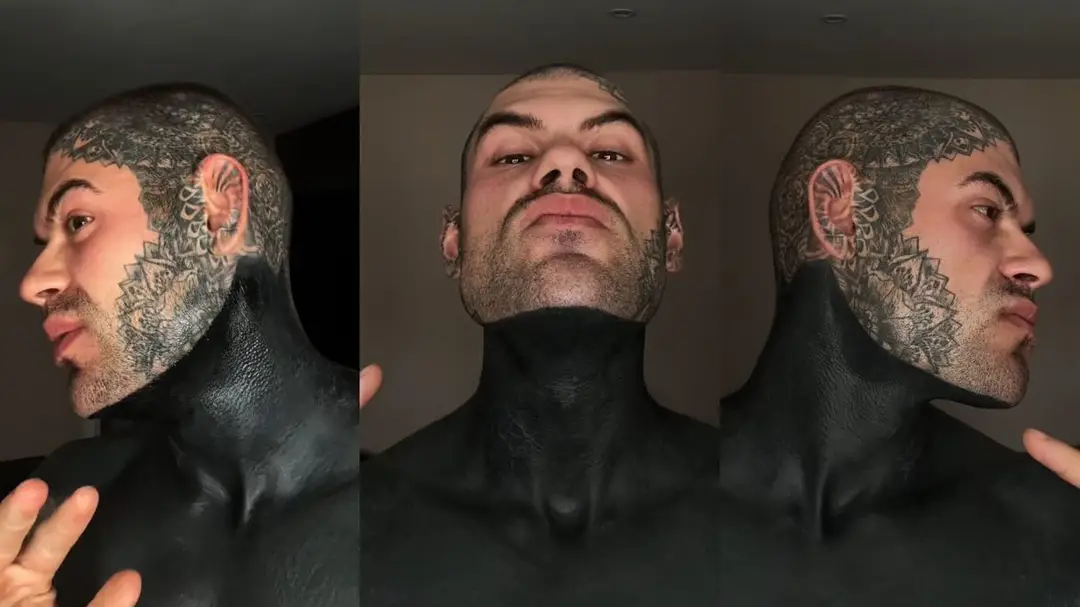
He also pushed back on the idea that blackout tattooing is somehow simpler than detailed work just because it uses large blocks of one colour. Dave says the difficulty lies in achieving full, even saturation without overworking the skin.
“It’s just colouring it in. No, it’s not just colouring it in. There’s so much to it, because it’s not just about colouring the skin in, it’s about not damaging the skin in the process, achieving that smooth finish, complete saturation.”
His own experience backed that up. When he first started, he only had his forearm done, but after it healed he felt it did not sit right with the rest of his tattoos. He eventually had that section removed and began again.
Rather than enduring one huge session, Dave prefers to build the work gradually through shorter and more regular appointments. He says that approach makes both recovery and the pain easier to deal with.
“My process with black work is little and often. I actually sit weekly. I find that healing is better, I find that you tolerate it better, and you can actually kind of still live your life normally while having that work done.”
He added that blackout tattoo pain can intensify differently from a more conventional tattoo. While it may begin at a manageable level, swelling can make it increasingly uncomfortable as the session continues, especially in highly sensitive areas such as the throat and jaw.
For anyone considering blackout work, artists and skin experts generally recommend the same basic rules: keep the area clean, don’t pick at scabs, avoid over-moisturising and watch closely for warning signs such as worsening redness, heat, swelling, pus, fever or increasing pain. If those appear, medical advice should be sought quickly.
That is why Dave says patience is the real secret to making blackout ink look its best long term.
“The biggest thing is just leave it alone,” he said. “If you let it heal properly, that’s when it looks right.”