


Although serial killings account for less than 1% of homicides in any given year, they continue to capture public attention in a way few other crimes ever do.
Dr Kanika Bell, a psychologist and Associate Professor at Clark Atlanta University, says there is a clear reason for that fascination.
In an interview with Oxygen.com, Bell said most people are not particularly drawn to the more common circumstances behind many killings, such as arguments or spontaneous violence that escalates in the moment.
“We are fascinated by the one person who is committing ritualistic acts, who is planning, who is returning to daily life as a husband, as a parent, going to work in between kills,” she said.
Bell has also examined the fear that this kind of darkness could exist within an ordinary family, especially through her involvement with Oxygen’s series ‘Killer Siblings,’ which focuses on cases involving relatives who became involved in horrific crimes.

One explanation that often comes up, in both fictional storylines and real-life legal cases, involves a variant in the MAOA gene, sometimes referred to as the ‘warrior gene.’
That label can be misleading. MAOA is not a single “serial killer gene,” and having a variant in this gene does not mean a person will become violent. In fact, most people with MAOA variants are not violent, and violence is shaped by many factors, including childhood experiences, mental health, substance use, trauma, and social environment.
Because some MAOA variants are more common in males, the gene has been cited in courtrooms and popular culture alike, including the show Riverdale, as a possible explanation for violent or antisocial actions.
Bell argues, however, that the attention given to MAOA may reflect a human need for answers more than any definitive scientific conclusion.
“We don’t understand why someone would ritualistically choose innocent persons and butcher them, sexually assault them, and maim them in the ways that serial killers do,” she said.
“I think we are thirsty and looking for something to explain that phenomenon.”

She said she doubts that one gene alone can explain the complex and extreme violence seen in serial offenders. Instead, she believes upbringing, family dynamics, and early life experiences are much more influential.
“We are normally looking at psycho-social, familial dynamics that contribute to, you know, someone developing the capacity to commit acts like those,” she explained.
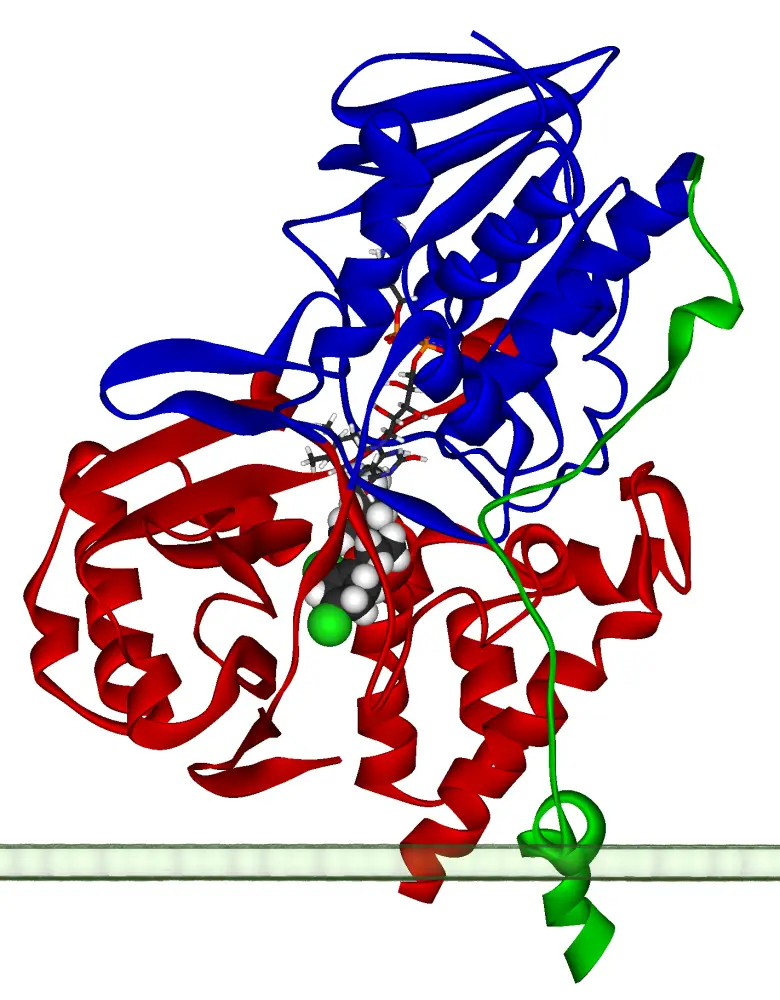
So, what does the MAOA gene actually do? Put simply, it helps the body make an enzyme called monoamine oxidase A, which breaks down certain brain chemicals after they have carried out their function.
Those chemicals, known as neurotransmitters, include serotonin, dopamine, norepinephrine, and related compounds. They are important for mood, sleep, appetite, stress responses, and emotions. The enzyme helps clear them away once signals have been passed between nerve cells.
If that process is disrupted by a harmful mutation, it can result in a rare disorder called monoamine oxidase A deficiency, also known as Brunner syndrome. This condition affects males almost exclusively and is associated with mild intellectual disability, impulse-control problems, and aggressive or violent outbursts.
Some people with this disorder also have autism spectrum disorder, attention-deficit/hyperactivity disorder, sleep problems, or repetitive behaviors. In some cases, foods high in tyramine, such as cheese, may worsen symptoms.
The exact reason the condition can affect behavior is still not fully understood, but researchers believe that an inability to break down monoamines properly may interfere with brain development and impulse control.
There is also some speculation that tyramine, a substance found in foods such as cheese, may contribute as well, which could explain why symptoms sometimes intensify after eating certain items.
Still, carrying a MAOA variant is far from proof that someone will become violent, and Bell stressed that the presence of the gene does not determine a person’s future.
That distinction matters, because the most commonly discussed MAOA finding in behavioral research is not a rare disease-causing mutation at all, but a common variant that may slightly lower enzyme activity. Studies have suggested that this kind of low-activity version may be linked to aggression mainly when combined with severe childhood maltreatment or other adverse environments. In other words, the effect appears to depend heavily on environment rather than genes alone.
That said, the anxiety around inherited violence can be deeply personal for some families.
Bell said some of her clients who come from violent family backgrounds, including those with a violent parent or sibling, have decided against having children because they fear passing on whatever may be responsible.
“It’s difficult to try to reassure someone, when someone has a violent parent and a violent sibling that, you know, hey, there’s a possibility you’ll have really great kids, that this won’t come down as a genetic pathway,” she said.
Even with those concerns, Bell noted that there is no strong evidence showing violent tendencies are inherited with anything close to the consistency of physical features such as eye colour.
“I do think that sometimes people believe that it has that level of genetic power and I just don’t think we’ve had studies that show that kind of genetic marker at this time,” she said.
Experts generally agree that serial offending cannot be reduced to a single gene, and that labeling MAOA as a “serial killer gene” overstates what science can support. The more accurate takeaway is that genetics may influence aspects of temperament or impulse control in some people, but those effects are usually small, context-dependent, and shaped by a person’s life history.