


Most people want simple ways to protect their health and hold onto a more youthful feeling for longer. According to one specialist, a few everyday choices may even help ‘add years’ to your life.
Recently, health trends have seen more people trading their nightly glass of wine for matcha and aiming to complete 10,000 steps a day in a bid to feel better overall.
At the same time, appearance-focused treatments continue to grow in popularity. In its 2023 statistics, The Aesthetic Society reported that U.S. Cosmetic surgery procedures were up 10.2% from 2019, with liposuction, breast augmentation, tummy tucks, breast lifts and eyelid surgery among the most common operations.
But staying well and supporting a more youthful body does not always require expensive treatments, according to Dr Nichola Conlon, a molecular biologist whose work focuses on cellular ageing.
She recently appeared on ITV’s This Morning, where she discussed practical ways people can support their long-term health.
During the interview with Ben Shephard and Cat Deeley, Dr Conlon explained that there is a difference between chronological age and biological age. In other words, the number of years you’ve lived may not reflect how quickly your cells are ageing internally.
So what can people do to reduce biological age and improve their health span?
For anyone unfamiliar with the term, Dr Conlon says a health span is ‘the proportion of our life spans that we live in good health,’ and she stressed that diet plays a major role in that.
She said people should focus on eating in a way that ‘improves gut health,’ because gut health can affect inflammation throughout our ‘entire bodies’.
“Having low inflammation is one of the most important things for aging well, and for our health span” she told the hosts.
One way to support gut health is by eating more ‘plants’ – meaning foods such as fruit, vegetables, nuts, seeds, herbs, spices, as well as tea and coffee.
Dr Conlon also highlighted the value of ‘plant based proteins’ like beans and lentils.
Health experts generally agree that a diet rich in minimally processed plant foods, along with regular movement and adequate sleep, supports healthy ageing. The World Health Organization defines healthy ageing as maintaining the functional ability that enables well-being in older age.
Dr Conlon’s advice also fits with broader public health guidance encouraging adults to be physically active, because regular movement helps lower the risk of chronic disease and supports mental well-being.
While some people once believed wine ‘was good for longevity,’ that view has shifted. The better-supported takeaway is that if people do drink alcohol, less is better; and for those who do not drink, there is no health reason to start.
She also pointed to research from Harvard University known as the ’85 Plus study.’
According to Dr Conlon, the study found that the factor which ‘influenced health span’ the most was the strength and quality of a person’s connections with others.
That idea aligns with long-running Harvard research showing that relationships and social connection are strongly linked with happiness and health in later life.
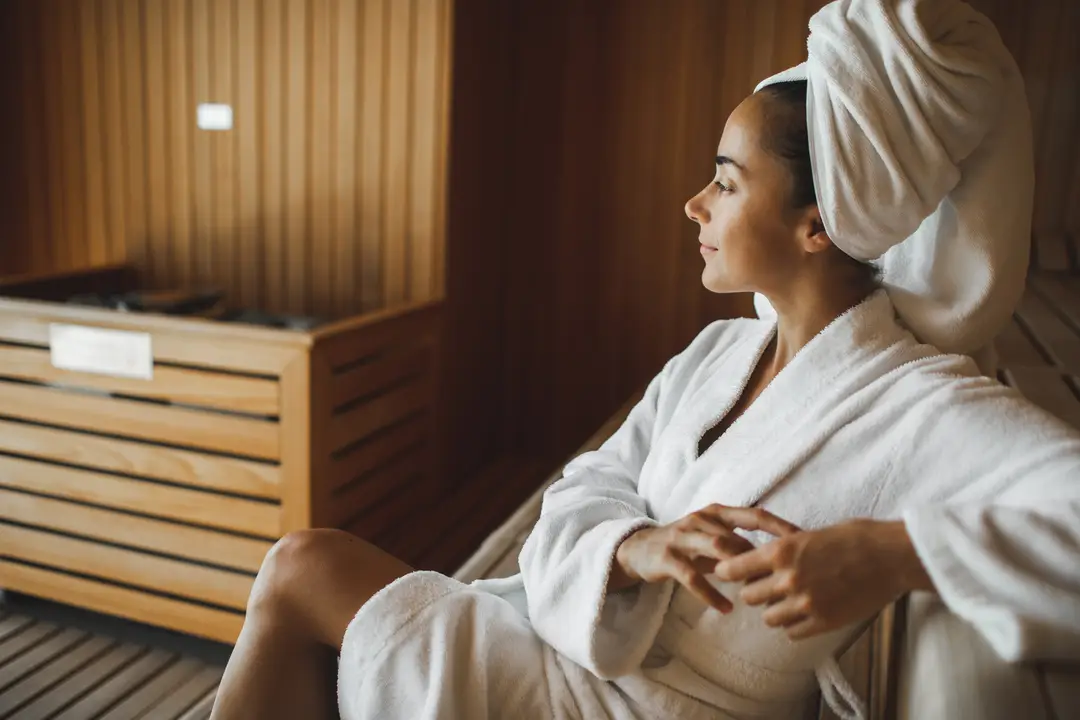
A gym membership that includes sauna access may cost money, but it is still likely to be far less than cosmetic work.
Research has suggested that temperature exposure can benefit the body. Explaining how heat may help, Dr Conlon said on This Morning: “The way this works is we have heat shock proteins in our cells. If we go into a high temperature, these get activated.”
She explained that this response can help by ‘kickstarting repair, and lowering inflammation’.
Cold exposure may offer benefits too. For people tempted by ice baths, Dr Conlon said they trigger different shock proteins. While the evidence is not yet as strong, the early signs for inflammation appear encouraging.
Still, many people will probably prefer relaxing in a sauna. And if improving health span is the goal, Dr Conlon also advised trying to keep stress levels down.
Experts say that stress management, good sleep, regular exercise and strong social ties all play a role in healthy ageing. In practice, that means the simplest longevity habits may also be the most sustainable: move more, eat more plants, stay connected, drink less alcohol and find ways to keep stress under control.