

Hundreds of schools across the United Kingdom were forced to shut their doors in late June as Europe experienced record-breaking temperatures, exposing how unprepared Britain is for the extreme heat that climate experts say will become increasingly common. The closures disrupted learning for thousands of children and created serious challenges for working parents scrambling to find childcare during a critical moment in the school calendar.
The Welsh school where teacher Mark Morris works was among more than 1,000 UK schools forced to close or send children home early during the heat wave. With no air conditioning or fans and windows that don’t open properly, Morris said it would have been impossible to conduct his design and technology classes when temperatures in Wales reached a record 35.9 degrees Celsius, equivalent to 96.6 degrees Fahrenheit.
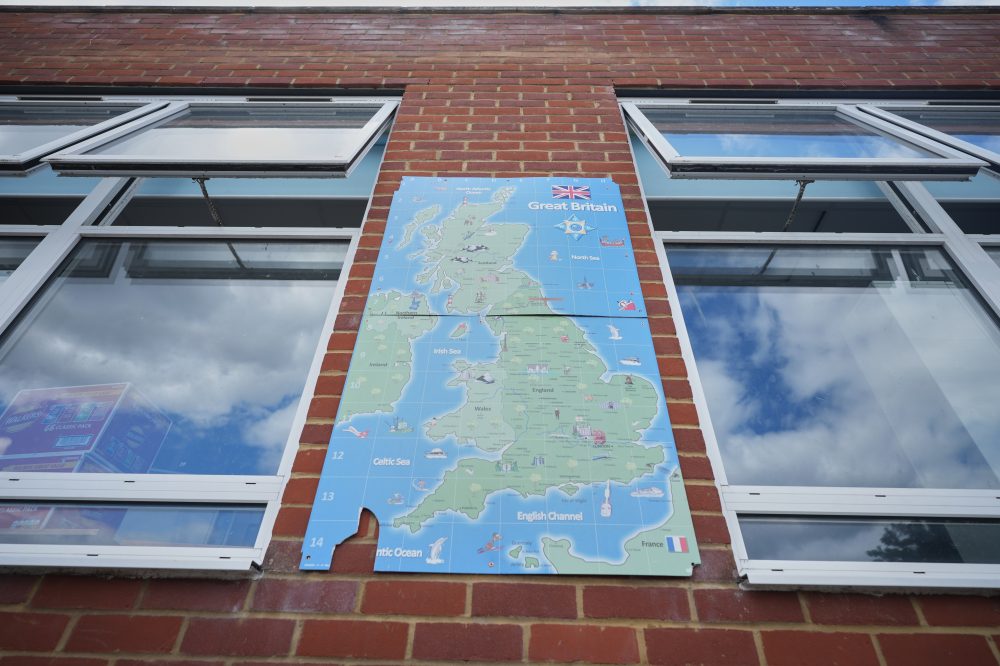
“Even in a normal summer, the heat on those south-facing windows becomes unbearable,” Morris said. “If there’s anything that you need to turn the oven on, you can forget about it. There’s no way anybody could carry on.”
Schools that managed to remain open resorted to emergency measures just to keep students and staff safe. Children and teachers made do with mini handheld fans and water sprayer bottles. Salads and popsicles replaced hot meals at lunch. Blinds were drawn and some students sought refuge by lying on the floor in semi-darkness, the coolest part of the room. Some even sat with their bare feet in buckets of water. Yet with typically 30 bodies crammed inside each classroom, lessons could become a health hazard.
The strain on staff has been severe. A health and safety spokesperson for the teachers’ union NASUWT reported that members have been teaching in extremely hot conditions, with accounts of teachers passing out in classrooms while trying to instruct their classes. Teachers’ unions have long called for Britain’s government to introduce a maximum workplace temperature, but no such standard currently exists.
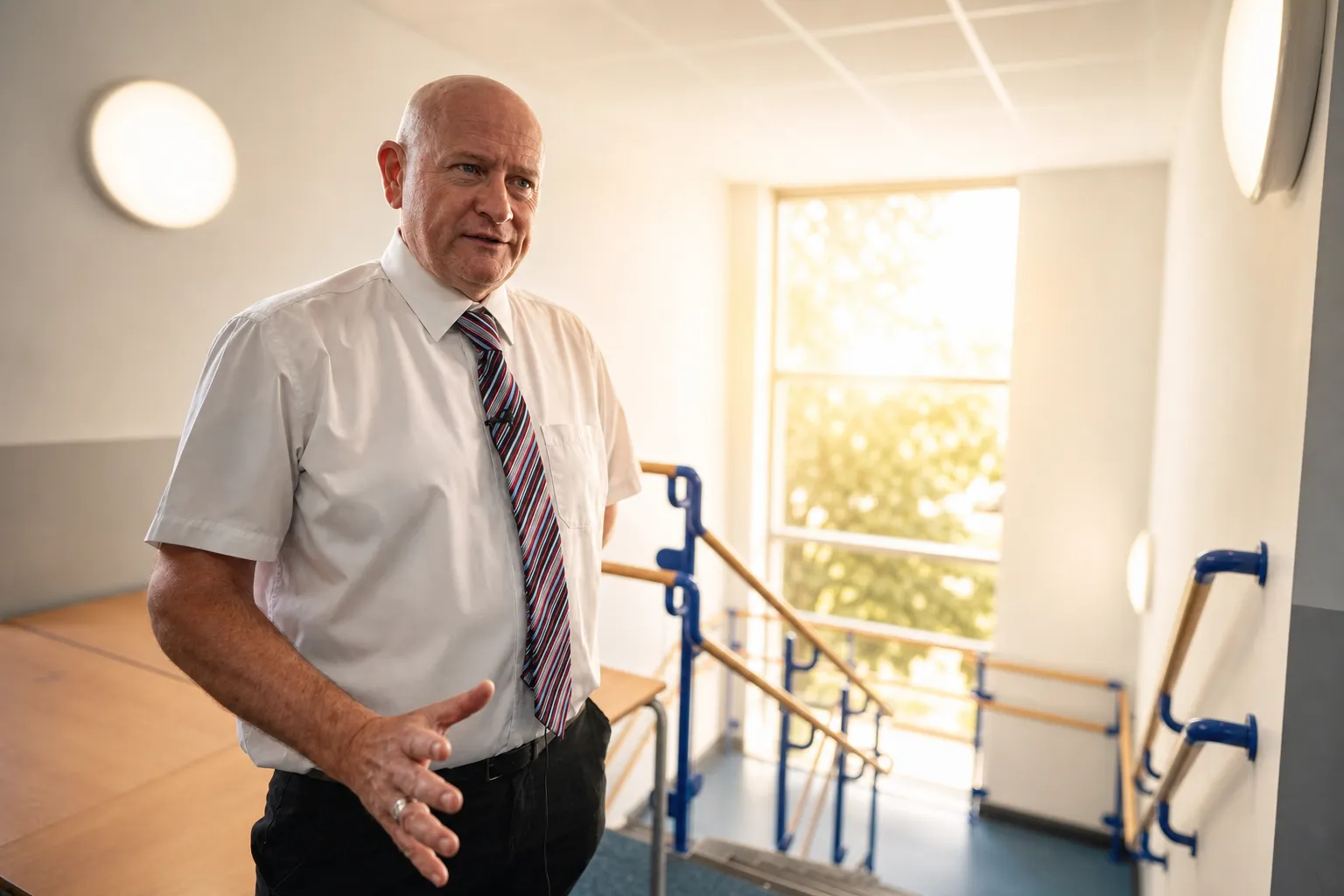
The problem extends beyond old buildings. At Beaconsfield Primary School in west London, head teacher Dave Woods noted that the newer part of his campus, built barely a decade ago, performs much worse in extreme heat than the school’s historic building from 1908. The older structure stays cooler thanks to its high ceilings and thick exterior brick walls, while the modern section, built in 2017, was not designed with climate change in mind despite scientists already warning about changing global temperatures at that time.
“You would have thought in 2017, there would have been more thinking ahead because we already knew about changes to climate, changes to global temperatures,” Woods said, who is also vice president of the National Union of Headteachers. Woods is considering installing air-conditioning in at least part of the campus, but the cost is prohibitive. His school now receives just 7,000 pounds, about $9,348, per year for all repairs. Installing air conditioning throughout would cost close to 20,000 pounds, or roughly $26,700, and other critical issues like leaking roofs urgently need fixing.
The funding crisis stems from government austerity measures in the 2010s that drastically cut school budgets and never recovered. This chronic underfunding has left schools unable to adapt to modern climate realities. Additionally, four out of five UK schools still contain asbestos in their buildings, making retrofitting air-conditioning systems difficult and costly.
The structural problems schools face are part of a broader infrastructure issue. Britain’s public buildings—schools, hospitals, and care homes—were constructed decades ago with little consideration for the prolonged heat that is now becoming commonplace. Government climate advisers acknowledged in a recent report that these buildings were “built for a climate that no longer exists today,” designed to retain warmth during cold winters rather than stay cool during extended periods of high temperatures.
The June heat wave was part of a wider crisis across Europe. Temperature records fell across multiple countries as a massive heat dome settled over the continent. In the UK, a provisional temperature of 37.7 degrees Celsius, or 99.9 degrees Fahrenheit, was recorded in Norfolk on 26 June, breaking the previous June record that had stood since 1957. Nights were equally concerning, with “tropical nights” where temperatures never dropped below 20 degrees Celsius, denying people’s bodies the opportunity to cool overnight.
Looking ahead, climate experts warn that Britain faces an increasingly difficult future without major adaptation. The Climate Change Committee, an independent official group advising the government, warned in a recent report that by 2050, heat waves could regularly exceed 40 degrees Celsius in southern England. Without adaptation, the average number of days per year that indoor temperatures could hit 35 degrees Celsius in thousands of English schools will increase by 70 percent compared to current levels, leading to more days of lost learning and lower educational outcomes.
The committee recommended that schools, care homes, and hospitals most at risk should install air conditioning within the next 25 years, ideally using low-carbon systems such as heat pumps. As a first approach, the committee suggested low-cost, “passive cooling” measures like blinds and external shading. Woods is already considering such options, mentioning plans for tree planting to provide shade, external screening on windows, and solar film to reflect glare. “But nothing’s going to happen extremely quickly,” he acknowledged.
The recent school closures have starkly exposed how unprepared Britain remains for what climate scientists call the “new normal”—more intense and regular heat waves that will test the nation’s aging infrastructure. Without significant government investment and swift action, schools and other critical public institutions will continue to struggle through each summer heat wave, unable to provide safe learning environments for the children who depend on them.