

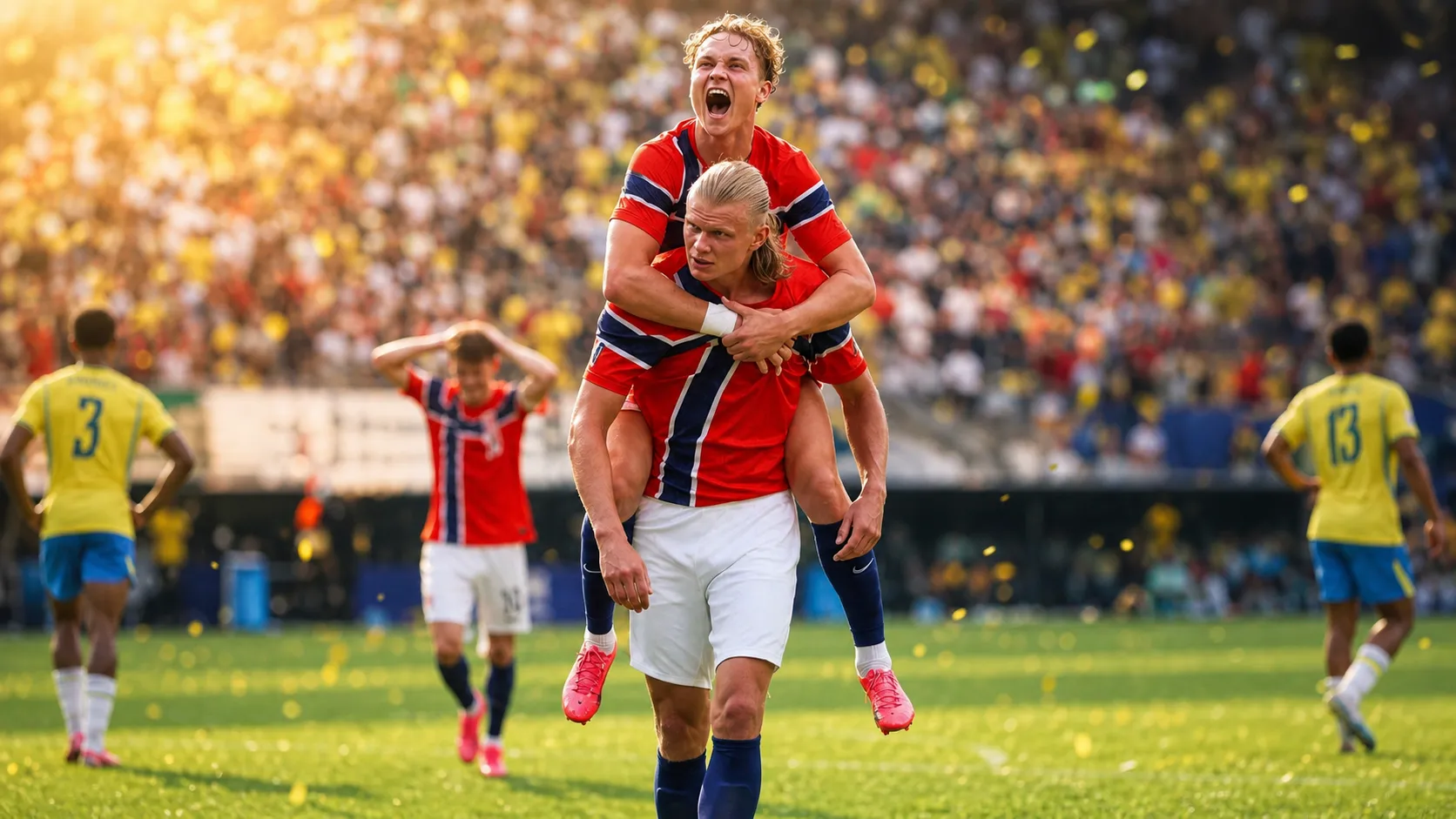
Anyone who has spotted a flood of pink boots at the World Cup is seeing things correctly. The eye-catching color choice has become one of the tournament’s more unexpected talking points, though some experts believe it may backfire badly for the brands behind it.
The 2026 World Cup has already delivered plenty to talk about, including shock results, dramatic late goals, contentious VAR moments and tense extra-time finishes.
Beyond the action itself, one of the most noticeable details on the pitch has been the sheer number of players wearing vivid pink soccer boots, a trend that has quickly become impossible to ignore.
That visual wave is no accident. It is largely the result of the biggest boot makers in the game — Nike, Adidas and Puma — all supplying footwear to a huge share of the players involved, with several other brands also leaning into similar bright colorways.
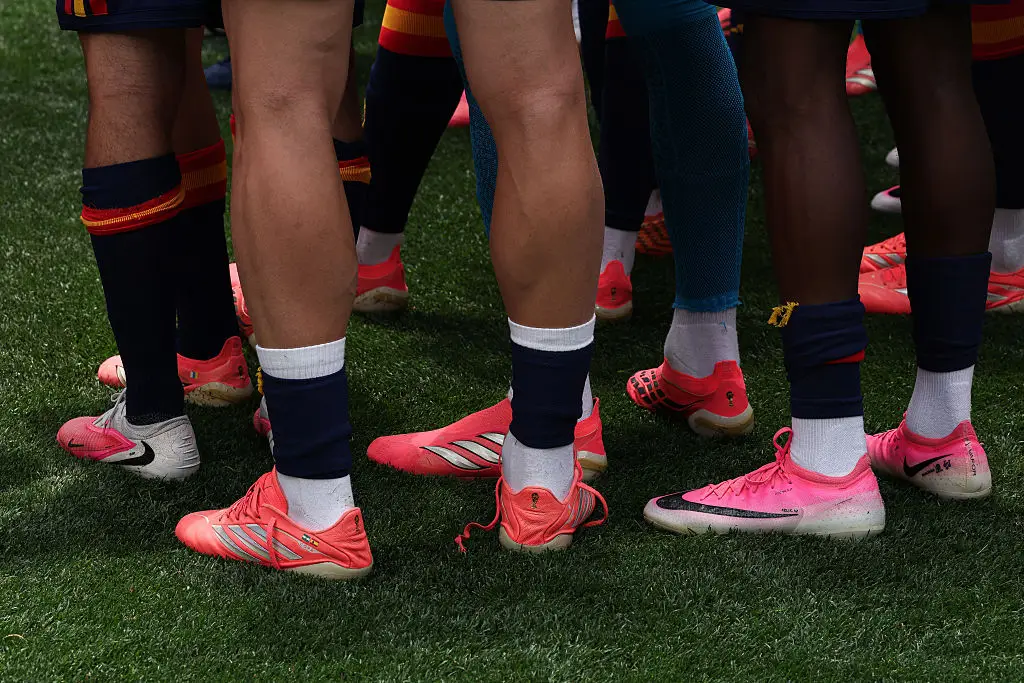
Before the tournament began, all three companies rolled out new collections for the occasion. Remarkably, each one arrived with a very similar design direction, with pink taking center stage across multiple silo models.
Nike brought out its ‘Breakout Pack’, Adidas launched the ‘Road to Glory Pack’ in the bold ‘Solar Turbo’ colorway, and Puma introduced its ‘Showtime Pack’ with a bright ‘Poison Pink’ gradient.
The result has been a rare case of rival brands making almost the same aesthetic call at the same time, leaving fans with the feeling that everyone is wearing some version of the same boot.
Sneaker enthusiast Solesavvy noted that ‘no one is standing out this year’.
Posting to Instagram, they wrote:
“Historically World Cup collections were themed around just cities and counties, using patterns and colors connected to local culture.
“This year every brand seems to have read the same 2025 trend report about pink being the ‘it’ color for spring/summer ‘26.”
The Business Standard reported that the color choice is not purely about style either, and that there is a scientific reason behind it.

Because pink sits opposite green on the color wheel, it stands out sharply against the pitch, making the boots far easier to notice during games.
It is also a long-term strategy rather than a rushed idea, with manufacturers often starting work on World Cup boot releases up to two years in advance.
There is also a commercial logic to the color choice. Bright, high-contrast designs tend to photograph well, cut through television broadcasts and social-media clips, and give brands a clear visual signature at a tournament where a large share of elite players are already tied to the same few manufacturers.
That said, the pink takeover has not been universally loved. Some critics say the effect makes the tournament look less distinctive, because the main boot brands have all converged on a nearly identical palette instead of competing with different creative directions.
Alongside the boot discussion, this year’s tournament has also introduced several rule changes intended to keep matches moving and punish time-wasting. Some of those updates are already dividing opinion.
Substituted players now have 10 seconds to leave the field, and they must exit at the nearest point on the boundary line. If they do not, the replacement cannot enter until the next stoppage after one minute has passed.
When referees believe a player is wasting time over a throw-in or goal kick, they can begin a five-second visual countdown. If the ball is still not back in play when time runs out, the restart is awarded to the opposition.
Any outfield player who receives treatment from medical staff on the pitch must now remain off the field for one minute after play restarts, unless they are exempt under the competition’s medical provisions.
VAR has also been expanded. Officials can now review wrongly awarded corners, second yellow cards that lead to a red, cases where one player is punished for another’s actions, and attacking fouls that happen before the ball is in play.
Players who cover their mouths during confrontations may be shown a red card under the competition’s latest disciplinary guidance, which is intended to make it harder to hide abusive language.
Any player who walks off the pitch in protest at a referee’s call may also be shown a red card, while any team that abandons a match by walking off will forfeit the result.
So the pink boot boom is partly about fashion, partly about branding and partly about visibility. But if every major manufacturer keeps arriving at the same answer, what was meant to help individual stars stand out could end up making them all blend together instead.