

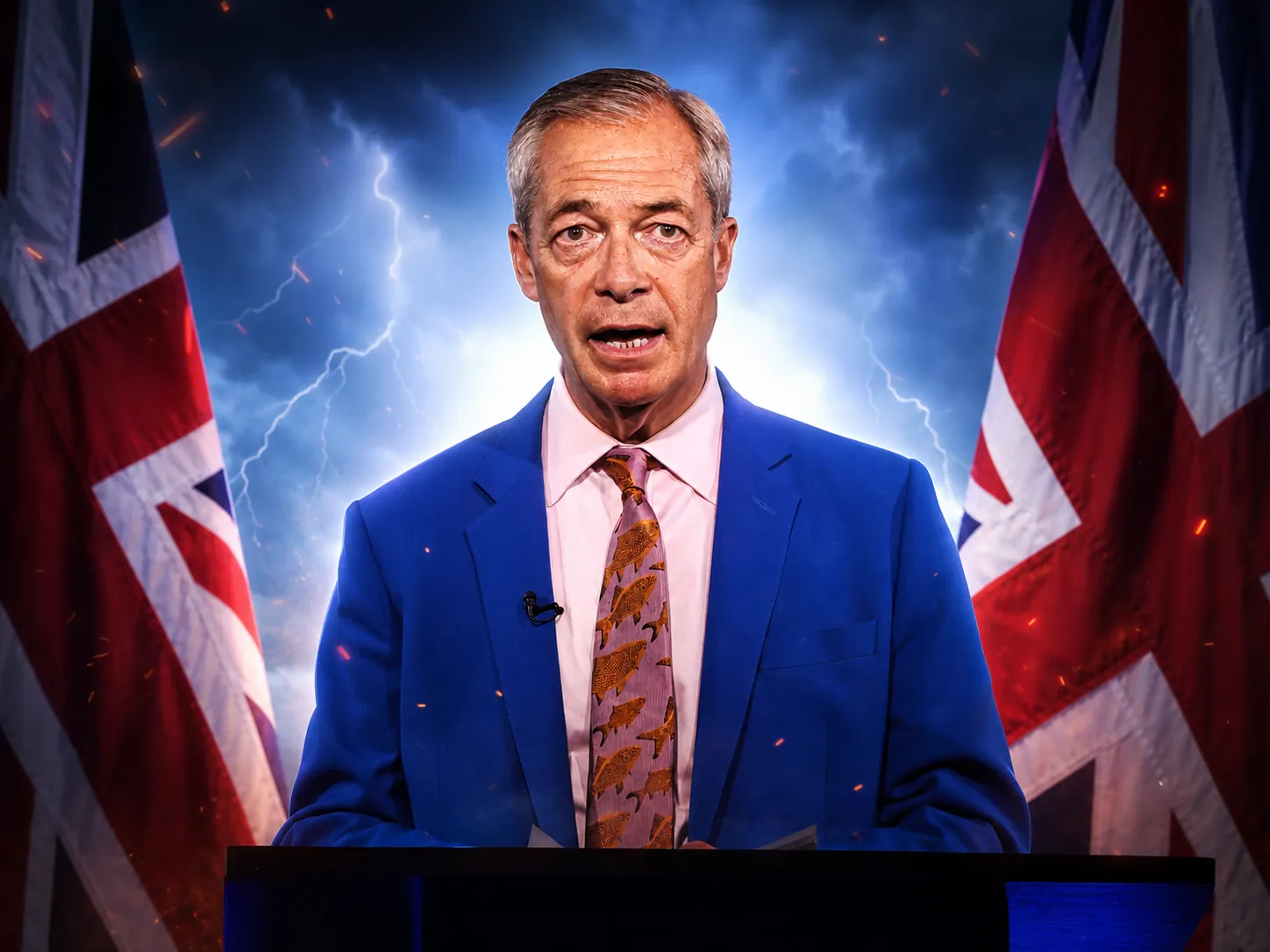
Nigel Farage, the leader of Britain’s populist right-wing Reform UK party, has announced he will resign from parliament and immediately recontest his seat in a special election, a dramatic gambit to combat mounting scrutiny over his personal finances and relationships with wealthy donors.
Farage announced the decision on his YouTube channel Tuesday to resign as the member of parliament for Clacton-on-Sea, his constituency in Essex. In a fiery 20-minute address, he framed the move as an opportunity for voters to judge him directly, calling it a “people versus the establishment” election and describing it as a chance to “stick two fingers up to the entire establishment.”
The resignation comes amid growing controversy over undeclared gifts and financial support Farage received before his election to parliament. The parliamentary standards commissioner has been investigating whether Farage properly declared a £5 million gift from cryptocurrency billionaire Christopher Harborne, whom Farage said provided the money as private funding for personal security. Farage initially described it as “the equivalent of a lottery win.”
The situation intensified over the weekend when the Sunday Times reported additional undeclared support. The newspaper revealed that George Cottrell, a political ally convicted of wire fraud in the United States in 2017, had paid for staff to work on Farage’s social media and allowed him to use a five-story Georgian townhouse near Buckingham Palace before his election in 2024. Under parliamentary rules, Farage should have declared these benefits.
In his Tuesday announcement, Farage denied any wrongdoing, stating that parliament’s ethics code applied only to lawmakers’ public lives, not their personal affairs. “Making money is not a crime,” he said, arguing that he had complied with parliamentary regulations based on “good legal advice.” He suggested the scrutiny represented political persecution and claimed that “the establishment have now decided that they can’t beat us fairly, so they’ve chosen to use foul means.”
The resignation triggers a procedural advantage under British parliamentary rules. Once Farage wins the by-election, the parliamentary investigation will be suspended. If he loses, the standards commissioner will decide whether to resume the inquiry. This means Farage’s victory would effectively interrupt the investigation process, resetting the window for declarations required by House authorities.
Farage’s strategy has encountered immediate obstacles. The three largest political parties—Labour, the Conservatives, and the Liberal Democrats—announced they will not contest this by-election. Instead, they indicated they would wait for a potentially second by-election that could be forced if the parliamentary investigation finds against Farage and suspends him for more than 10 days. This collective boycott removes some of the political competition and spotlight from what Farage intended as a vindication.
Conservative leader Kemi Badenoch accused Farage of having a “hissy fit” and calling an “ego by-election.” She argued he should face the outcome of the investigation rather than trigger a vote to distract from it. The Liberal Democrats urged the government to block his resignation until the standards commissioner finished investigating. Labour dismissed the move as pathetic and said the party would not “indulge” the special election.
Criticism extended beyond the mainstream parties. Rupert Lowe, a former Reform MP who founded the hard-right Restore Britain party after breaking with Farage, said the by-election would “cost the taxpayer a fortune” and demanded that Farage pay for it himself. Green Party leader Zack Polanski called Farage a “grifter” who “pulled the trigger early” on the election.
The move represents a risky calculation for Farage, who has transformed Reform UK from a fringe movement into a major force in British politics. Reform has led opinion polls since April 2025 and is positioned to potentially form the next government after the next general election, scheduled for no later than August 2029, with Farage as a possible prime minister candidate.
Farage was first elected as Clacton’s MP in 2024, winning nearly half the vote and significantly outperforming Reform’s national vote share. He is personally popular in the seaside constituency, suggesting he would likely win a by-election. However, critics note he has been a relatively absent member of parliament, making only 69 spoken contributions in the Commons over two years compared to hundreds from his Reform colleagues. Parliamentary records show he mentioned his constituency only six times since becoming an MP, once every four months.
The by-election is expected to take place in August or September. Under parliamentary procedures, Reform UK, having won the seat, controls the timing unless other parties attempt to amend the writ in the House of Commons. Farage has offered to cover the cost of the election, potentially up to a quarter million pounds, in an attempt to counter criticism about public expenditure.
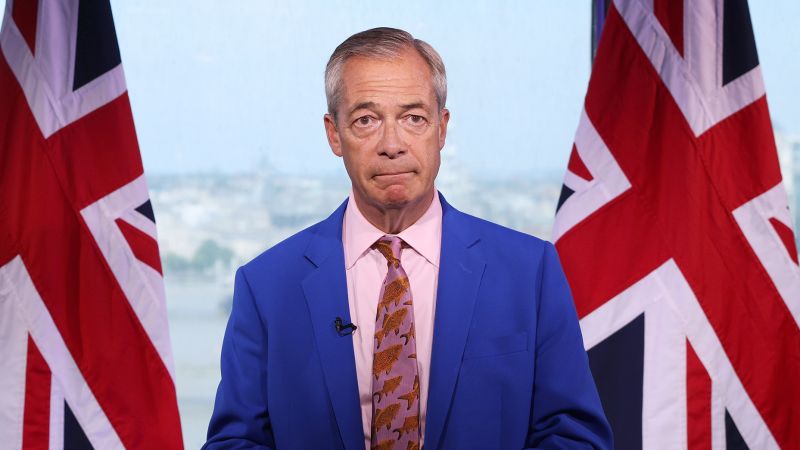
The resignation also comes amid broader questions about Farage’s international profile. Earlier this year, he visited President Donald Trump’s Mar-a-Lago resort but failed to secure a meeting, and sources suggested the relationship between the two men had cooled. However, Trump posted on Truth Social this week in apparent support of Farage, sharing an article comparing scrutiny of the British politician to the “2024 anti-Trump playbook.”
The timing of Farage’s announcement creates an unusual political moment. Former Labour leader Andy Burnham, who defeated Reform’s candidate in a recent special election in Makerfield, is expected to become prime minister within two weeks as Labour appoints a new leader following Prime Minister Keir Starmer’s recent resignation. This national political transition compounds the uncertainty surrounding the Clacton by-election.
Farage’s gambit reflects the high stakes of his current position. Once an outsider figure who campaigned for Brexit before entering parliament, he now leads a party with genuine prospects of national power. The financial scrutiny threatens to undermine his anti-establishment appeal and populist credentials. Whether forcing voters to choose again in a by-election will reset the narrative or backfire remains uncertain, particularly if opposition parties eventually contest a second election after the investigation concludes.