


An outbreak of cyclosporiasis, a diarrheal illness caused by a microscopic parasite, has surged to more than 1,000 cases across the United States as of July 8, 2026, with health officials scrambling to identify the source of the infection. Nearly a thousand of these cases are concentrated in Michigan, where the outbreak has grown at an alarming pace since late June.
Michigan’s cyclosporiasis outbreak has grown to nearly 1,000 cases since June 22, marking an unprecedented spike for a state that typically records around 50 cases annually. As of July 8, the Michigan Department of Health and Human Services reported 992 cases. Earlier reports from July 6 documented more than 700 cases with 36 to 38 reported hospitalizations in the state. The vast majority of cases remain concentrated in southeast Michigan, particularly in Monroe, Lenawee, Washtenaw, Wayne, Shiawassee, Jackson, Oakland and Livingston counties, with Wayne County—home to Detroit—being among the hardest-hit areas.
Beyond Michigan, cyclosporiasis cases continue rising across 18 states nationwide. Ohio has reported at least 177 cases, with the majority occurring since late June. Illinois has recorded 141 cases this year—described as higher than average. New York has confirmed 120 cases since May 1, though this falls within the state’s typical range of 500 to 700 cases annually. North Carolina has reported at least 110 cases since May, while Indiana has seen 72 cases. Texas has documented 48 cases. Additional cases have been reported in Massachusetts, Florida, Wisconsin, Pennsylvania, Virginia, Tennessee, Georgia, Colorado, New Jersey, Connecticut, and Alaska. Before the Michigan surge, the Centers for Disease Control and Prevention had reported 145 cases across 17 states between May 1 and June 16, none involving recent international travel.
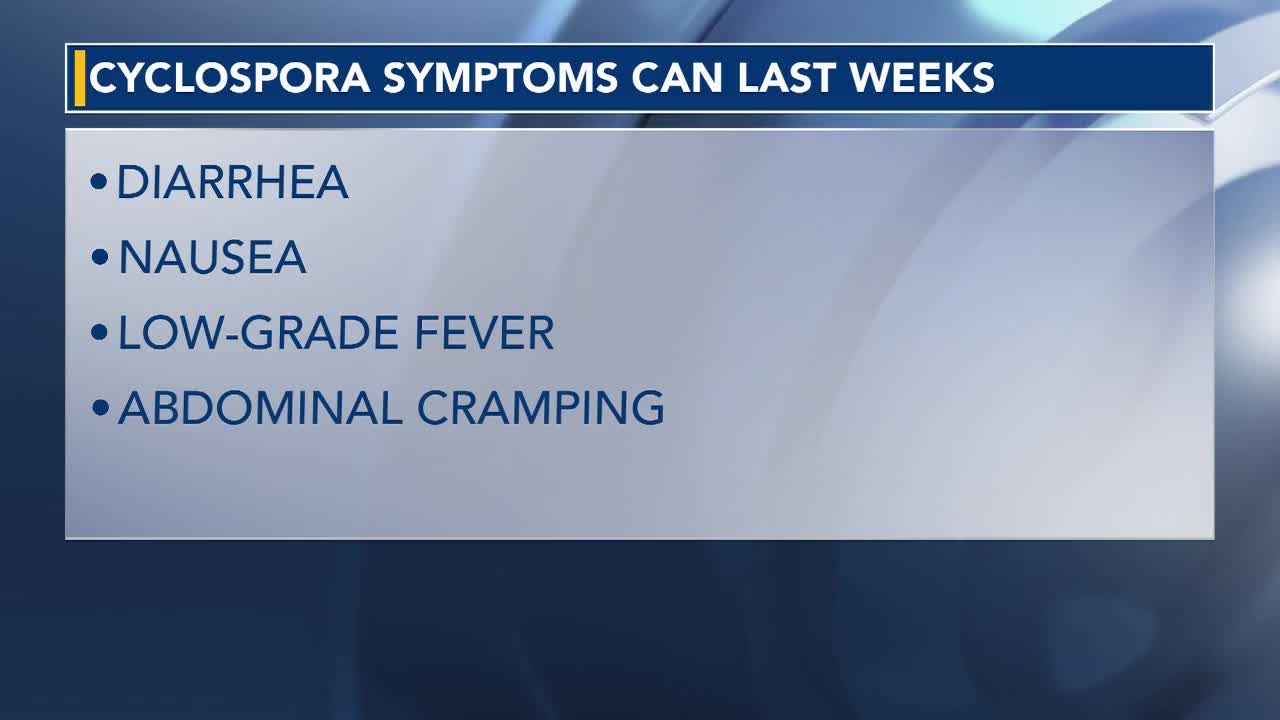
Cyclosporiasis is an intestinal illness caused by the parasite Cyclospora cayetanensis. The infection spreads through food or water contaminated with feces. The parasite typically infects the small intestine and causes watery diarrhea with frequent and sometimes explosive bowel movements. Other common symptoms include loss of appetite, weight loss, abdominal cramps, bloating, nausea, fatigue, low-grade fever, and sometimes vomiting. Symptoms typically appear one to two weeks after exposure but can range from two days to two weeks or longer. Without treatment, the illness can last from a few days to over a month, with symptoms sometimes appearing to improve before relapsing.
The parasite does not spread directly from person to person. It requires one to two weeks outside the body in the environment to become infectious after being shed in feces, making direct transmission highly unlikely.
Health officials emphasize that cyclosporiasis is not usually life-threatening. Among those infected, cases have ranged in age from 5 to 86 years, with a median age of 42, and 61 percent are female. At least 20 people were hospitalized nationally as of mid-June, and several dozen more have required hospitalization in Michigan alone. No deaths have been reported.
A significant challenge facing health officials is the difficulty in identifying the contamination source. As of early July, no specific food supplier, grower, or produce type had been conclusively linked to the outbreak. The true number of infections is likely substantially higher than reported counts, as cyclosporiasis requires specific stool testing that is not included in routine diagnostic panels and is frequently missed without targeted medical orders.
Previous cyclosporiasis outbreaks in the United States and Canada have been linked to various fresh produce items, including bagged salad mixes, fresh cilantro, fresh basil, raspberries, snow peas, and scallions. Health officials believe contaminated produce is the likely source of the current outbreak, though the specific item remains unknown. State and local officials are interviewing affected patients to identify common exposures and prevent additional illness.
The CDC, working alongside the Food and Drug Administration and state and local health departments, is investigating multiple clusters of cases across states. However, officials have noted there is currently no evidence of a single multistate outbreak linking all cases. Rather, different clusters may reflect separate contamination events or multiple sources of exposure.

Health authorities are recommending immediate precautions for consuming fresh produce. Consumers should wash all fruits and vegetables thoroughly under running water before cutting, cooking, or eating. For leafy greens, health officials recommend buying whole heads of lettuce rather than prewashed, bagged varieties and discarding the outer two to three layers of leaves before washing. Restaurants and commercial kitchens in affected areas are urged to implement additional precautions with fresh produce, including cooking when possible, as heating food to 150 degrees kills the parasite.
Cyclosporiasis is treated with the oral antibiotic trimethoprim-sulfamethoxazole, typically taken for 10 days. People experiencing persistent or relapsing diarrhea lasting longer than a few days, particularly those in affected states since late May, should contact their healthcare provider and specifically request testing for Cyclospora using stool samples, as it does not appear on standard diagnostic panels.
The outbreak coincides with cyclosporiasis season in the United States, which officially runs from May 1 through August 31, when case counts naturally rise with increased consumption of fresh produce during warmer months. The 2026 season began on May 1. Michigan health officials described the current outbreak as “large and growing” and urged residents experiencing sudden, ongoing diarrhea to contact their healthcare provider and inform their local health department if family members experience similar symptoms.