

Russian athletes may have a path back to the 2028 Olympic Games in Los Angeles after the International Olympic Committee provisionally lifted its suspension of the Russian Olympic Committee, but any return is still expected to come with strict conditions.
The IOC had suspended the Russian Olympic Committee in October 2023 after Russia created sports bodies in occupied regions of Ukraine, which the IOC said violated the Olympic Charter and the territorial integrity of the Ukrainian Olympic Committee.
At the time, the committee said the Russian Olympic Committee ‘is no longer entitled to operate as a National Olympic Committee’ and ‘cannot receive any funding from the Olympic movement’.
The IOC’s latest position opens the door to a possible return, but it does not amount to a blanket green light. The organization has continued to stress that Russian athletes must meet eligibility standards and that the Olympic movement must remain politically neutral.
One major requirement is that ‘all Russian athletes returning to international competition must meet relevant anti-doping requirements’.
That condition is especially significant given Russia’s long-running doping issues, which led to dozens of Olympic medals being stripped from Russian athletes over the years and triggered years of sanctions from international sport bodies.
Russia’s previous anti-doping ban expired in 2023, but the country remained restricted from Olympic participation because of the war in Ukraine and the IOC’s earlier suspension of its national committee.
Under the latest update, Russian athletes could again be eligible for Olympic pathways if they satisfy the IOC’s rules and the requirements of the relevant international federations.
According to an IOC statement, the ‘ROC no longer includes as members any regional sports organisations in territories falling under the jurisdiction of the NOC of Ukraine’.
Other details remain unclear. There has still been no final decision on whether Russian competitors would be allowed to use the country’s flag, colors, or anthem at the 2028 Games.
The IOC has also maintained its earlier position that it would ‘not organise IOC events in Russia or invite Russian government or state officials to its events’.
Russian officials have responded positively to the development, arguing that Olympic competition should remain separate from politics.
Russian sports minister Mikhail Degtyarev wrote on Telegram: “The IOC is sending a clear signal: the Olympic movement must remain free from politics.”
He also said Russia intends to take part in qualification events for the 2028 Games in Los Angeles.
The Olympic Games have previously seen officials act against athletes over political messages displayed during competition.
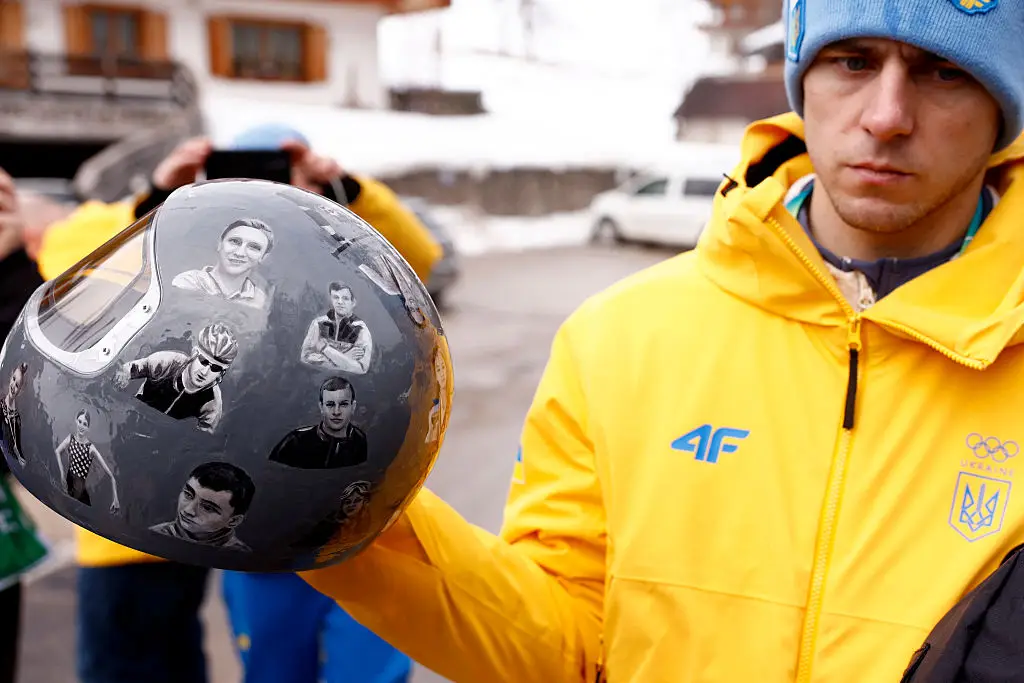
One recent example came in February involving skeleton racer Vladyslav Heraskevych, who wore a helmet during training runs that referenced athletes killed during the conflict involving Russia.
The IOC reportedly told him the helmet was not allowed, and a statement said it ‘does not comply’ with the Olympic Charter.
Heraskevych continued to wear it and was subsequently banned, according to reports.