


Retatrutide is still undergoing clinical testing, but specialists have already highlighted the major feature that distinguishes it from Ozempic.
Also referred to as ‘Reta’, Retatrutide is an experimental weekly injection created by Eli Lilly, the pharmaceutical company behind Mounjaro and Zepbound.
The new treatment works by targeting GLP-1, GIP, and glucagon receptors. That combination is designed to curb appetite, improve insulin sensitivity, and increase energy use, making it similar in some ways to the weight-loss injections that have become increasingly popular in recent years, especially in the US.
According to a recent study, 11 percent of people in the US now say they are taking this kind of medication for weight loss.
Although Retatrutide and Ozempic are both administered once a week, they are not the same drug and differ in several important ways.

Ozempic was originally developed to help control blood sugar in people with type 2 diabetes, whereas Reta was designed with weight loss as its primary goal.
Both medications can produce similar effects because they act on areas of the brain involved in appetite control. However, Reta also slows stomach emptying, meaning food remains in the stomach longer and can help people stay full for more time.
The biggest distinction is in how the drugs work. Ozempic and Wegovy contain semaglutide as their active ingredient, while Reta contains retatrutide, a synthetic peptide that acts on three hormones – GLP-1, GIP, and glucagon – rather than only targeting GLP-1 like Ozempic.
That triple-action approach has made retatrutide one of the most closely watched obesity drugs in development. In a late-stage Phase 3 trial reported by Lilly in May 2026, people taking the highest dose lost an average of 28.3 percent of their body weight over 80 weeks, with some participants continuing to lose weight beyond that in an extension study. Lilly said the results were enough to place retatrutide among the strongest weight-loss medicines ever studied.
Earlier trial data had already suggested the drug could outperform semaglutide-based treatments on weight loss. In a Phase 2 study, the highest dose produced an average reduction of 24.2 percent of body weight at 48 weeks, while Wegovy reached 20.7 percent at 72 weeks in the comparison cited by the article.
Despite those promising results, side effects remain an important consideration.
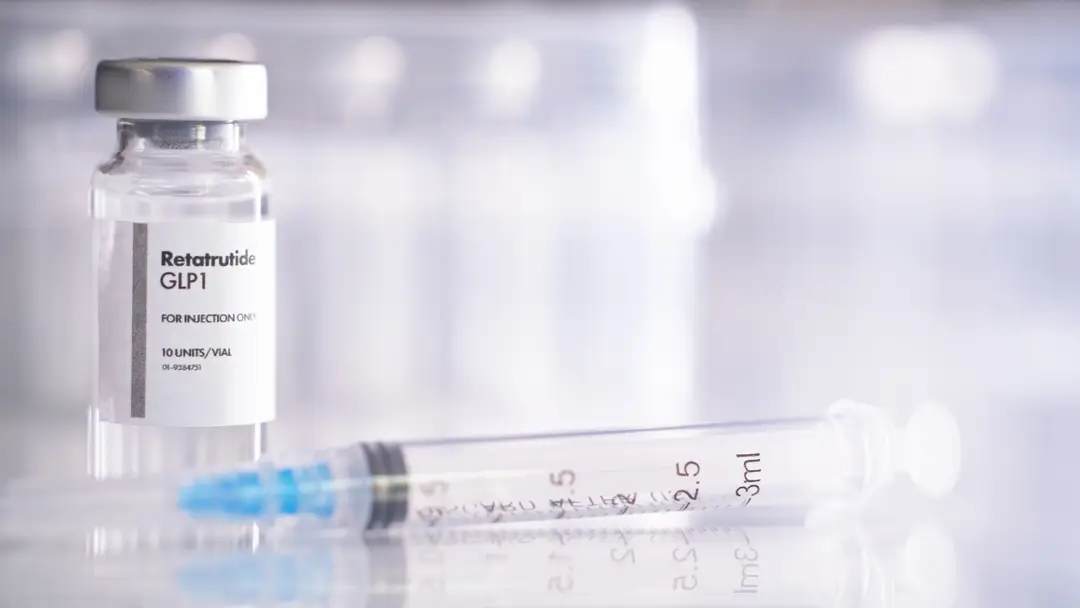
Because it affects three separate pathways involved in blood sugar regulation, appetite reduction, digestion, and fat burning, gastrointestinal issues are among the most likely side effects.
As with similar medications, people may feel nauseous, vomit, or experience constipation and diarrhoea. In Lilly’s Phase 3 obesity study, nausea, diarrhoea, constipation and vomiting were the most common adverse effects, and higher doses were linked to more treatment discontinuation.
More recent safety concerns have also focused on products being sold outside regulated clinical trials. Health authorities in Victoria, Australia, said in 2026 that several cases of acute liver injury were linked to unapproved peptide products labelled as retatrutide, and warned that contaminants may have contributed to the harm. The key issue is that these are not the same as Lilly’s investigational drug used in clinical trials.
The manufacturer’s website says Reta is only available to people taking part in clinical trials and should not be used outside those studies unless it receives approval. The FDA has also warned that retatrutide is not an approved drug and cannot be used in compounding under federal law.
Researchers still do not know the full range of possible side effects. However, a study looking at self-reported experiences from Reddit users found that 57.6 per cent of 13,589 respondents said they had experienced at least one side effect.
Among the issues most commonly mentioned were increased appetite, fatigue, nausea, cravings, higher energy levels, insomnia, and an elevated heart rate.