


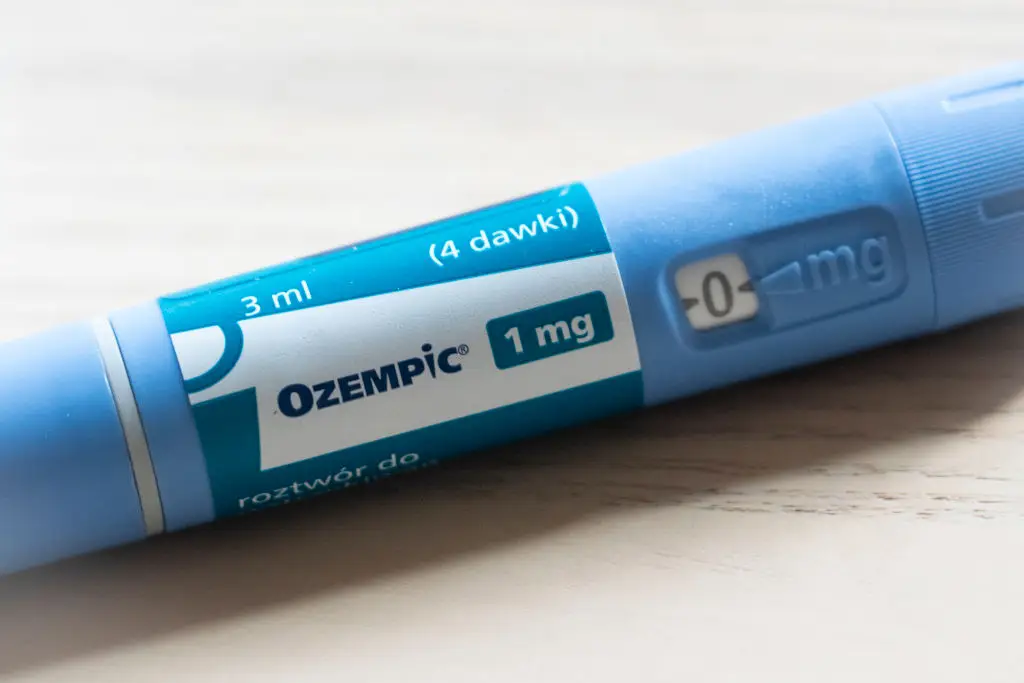
Names like Ozempic, Wegovy and Mounjaro have become almost impossible to avoid online in recent years, largely because weight loss medications are now being used by millions of Americans.
These treatments work by mimicking natural hormones that help people feel fuller for longer while also reducing appetite.
Now, researchers say they may have found a more familiar way to produce a similar effect, using an ingredient that could be added to foods many people already buy regularly.
Scientists from Imperial College London and the University of Glasgow developed a modified dietary fiber known as inulin-propionate ester, or IPE. The ingredient has now been authorised for use in the European Union as a novel food, opening the door for it to be incorporated into products such as bread, smoothies and breakfast cereals.
IPE works by carrying propionate, a short-chain fatty acid, directly into the large intestine. Once there, it stimulates the release of hormones that reduce hunger, including GLP-1, which is the same hormone targeted by popular weight loss injections.
“We showed in a randomized-controlled trial in middle-aged people that when it’s consumed daily, it prevents weight gain,” said Gary Frost, one of the scientists behind the breakthrough at Imperial College London.
Under normal circumstances, a person would need to consume about 80 grams of fiber per day to generate enough of these fatty acids to prompt that hormonal response. That is far above typical intake, with most people falling short of the recommended daily amount of fiber.
According to the researchers, IPE can achieve that effect with only 10 grams.
One study tracked 60 overweight adults between the ages of 40 and 65. Over a six-month period, none of the people taking IPE gained a meaningful amount of weight, while 17 percent of those not taking it did.
In another, larger trial involving 270 participants aged 20 to 40, researchers did not find a significant change in overall body weight. However, people who took IPE experienced an average increase in fat-free mass of just over two pounds, though experts have said it is not yet clear whether that represented muscle or another form of tissue.
Douglas Morrison, from the University of Glasgow, explained that scientists had to get creative to make the fatty acid palatable in the first place. “Your only option is to stick a tube in from the top, or to stick a tube up from the bottom, and neither of these is particularly pleasant,” he said.
That issue was solved by bonding propionate to inulin, a carbohydrate that already occurs naturally in a range of everyday foods.
Researchers say most consumers are unlikely to detect it in food. Frost said the overwhelming majority of people cannot taste IPE when it is added, although a small number notice a slight bitter flavor.
After a regulatory process that lasted more than a decade, the ingredient has now cleared its main EU authorisation step. Food industry use would still depend on manufacturers, product formulation and any national rollout decisions, while a UK launch would require separate approval.
Still, some experts believe more evidence is needed before firm conclusions can be drawn. Brendan Gabriel, from the University of Aberdeen, has noted that several of the studies were based on relatively small groups, and questions remain over whether the extra lean mass seen in younger participants was actually muscle or some other form of tissue.