

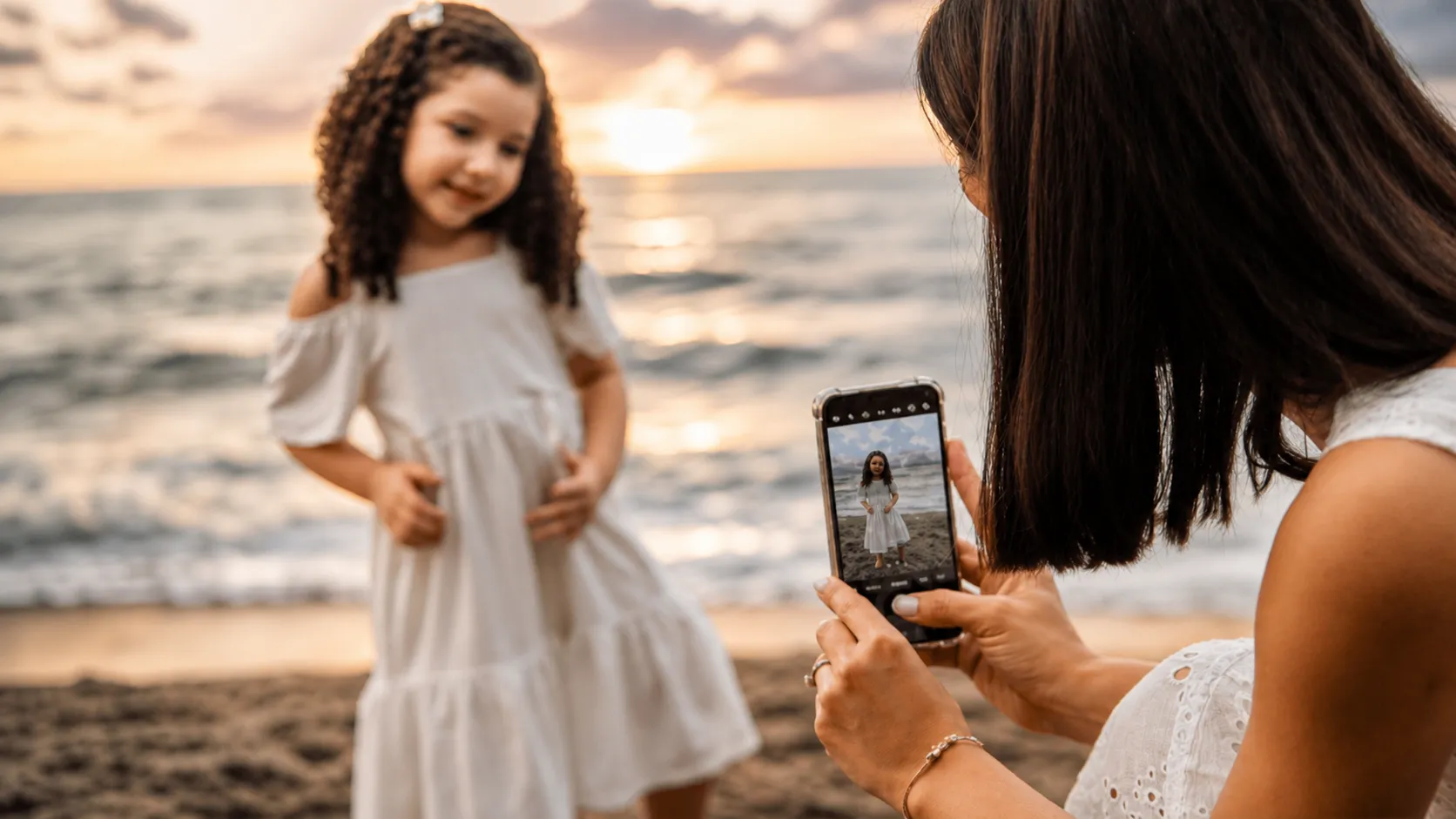
Parents are being urged to think carefully before sharing family photos of their children online, with a cyber security specialist warning that even harmless-looking posts can expose youngsters to serious risks.
Families are regularly reminded about the challenges of raising children in a digital world that keeps changing at speed.
With advice ranging from limiting device use to restricting social media access for teenagers, many parents can feel overwhelmed by the pace of new online threats.
Now, experts in online safety are highlighting another concern: posting pictures of children on social media, even in spaces that may appear private.
The warning comes amid growing concern over AI-generated abuse content. In July 2026, the Internet Watch Foundation and the National Crime Agency said offenders were increasingly exploiting openly available images of children to create realistic sexualised material, and the IWF said it had identified thousands of AI-generated child sexual abuse images and videos in 2025. Schools and parents have also been told that routine family photos can be copied, altered and reused in ways that are difficult to control once they are shared online.
During a discussion on Good Morning Britain, Hannah Swirsky, head of policy at the Internet Watch Foundation, said:
“We have seen a real increase in AI generated material.
“So this can be photographs which have been manipulated or sexualized, it could be a child that doesn’t exist, but imagery has been used to create this material.”
She also said:
“We’ve seen certain cases where schools have been targeted, particularly for extortion.”
Swirsky warned that “offenders will scrape the imagery” before attempting to blackmail schools for large sums of money.
Even so, there are still practical steps parents can take if they want to share milestones or photos while reducing the risk to their children. Online safety groups say the most important thing is to think about what information is visible in a picture, how widely it can be shared, and whether a child would be happy for that image to remain online in the future.
Experts also say parents should avoid posting anything that could identify a child’s school, routine or location, such as uniforms, name badges, house numbers, car registrations or geotags. Some guidance now also recommends checking whether a platform’s privacy tools are still set the way you expect, because features and defaults can change over time.
Jake Moore, a cyber security expert, said:
“AI has advanced so much, we’ve seen some crazy cases. I think it’s about reducing the risk of those images getting out into the public domain.”
He explained:
“So firstly try and keep them to closed groups, like Whatsapp family groups, they’re probably the only people who want to see those images.
“But Instagram and Facebook now offer a feature called Close Friends, where you can pick the people you want to see those images. And that can really help reduce the chances of them getting out into the public.”
For parents who have already spent years uploading family pictures, Moore said there are still ways to tighten privacy settings after the fact.
“If you have been posting them for many years as some of us have been, you can review all those,” he added.
“You can change albums so that only your friends can see them, or even just only you can see them.
“It’s also good to talk about this with friends and family, it’s about bringing up the conversations with the people who maybe don’t realise that AI is so powerful, or scary.”
Online safety charities also advise parents to talk to children about consent before sharing photos of them, since children may not want an image to be posted at all, or may feel embarrassed by pictures that seem harmless to adults. In some cases, even an ordinary holiday snap can become part of a child’s permanent digital footprint.
The broader message from experts is that everyday family content can be misused in ways many people would never expect, making privacy settings and limited sharing more important than ever. They say the safest approach is to pause before posting, share as little as possible publicly, and remember that once an image is online, it can be copied, screen-grabbed, altered or forwarded beyond the original audience.