


With temperatures climbing, plenty of motorists are stuck asking the same question: is it cheaper to use the air conditioning or just drive with the windows open?
The answer is not as straightforward as many people think, because the most efficient choice changes depending on your speed, your car and just how hard the A/C has to work on a given day.
Tom Preston, managing director of Hippo Leasing, has shared advice on the long-running argument, explaining that the best approach starts before you even pull away.
He said that although many people immediately throw open the windows when getting into an overheated car, that should only be a temporary fix.
“Instead, open the windows for a minute before setting off to let the trapped hot air escape,” he said, before pointing the air vents towards the footwells so the cooler air pushes the warm air up and out of the car.
That advice lines up with guidance from the US Department of Energy, which says a short burst of window-down driving can help vent hot air from the cabin before switching to air conditioning, rather than letting the system work harder from the start.
After the interior temperature starts to drop, Preston recommends changing tactics.
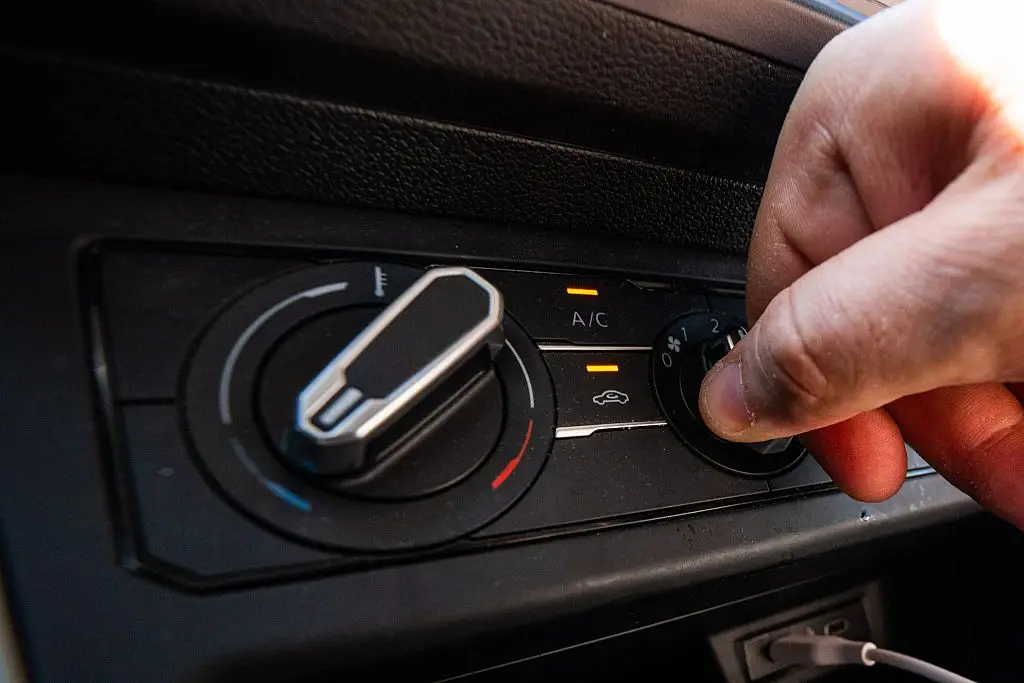
At that point, he says drivers should shut the windows and use recirculation mode, as it allows the system to cool air already inside the cabin rather than constantly trying to chill warmer air from outside.
While open windows might seem like the cheaper option, Preston says that changes once you get beyond 45mph.
That general rule is in line with long-running fuel-economy guidance that says windows can be the better choice at lower speeds, while air conditioning tends to make more sense on faster roads because open windows create more aerodynamic drag.
In other words, there is no single magic number that applies to every car in every condition, but once speeds rise, the extra drag from open windows usually starts to outweigh the fuel cost of running the AC.
So although driving with the windows down may feel like the no-cost way to stay cool, it can actually end up costing more on faster roads than keeping them shut and letting the AC handle it.
That is why the best option often depends less on personal preference and more on how quickly you are travelling, how hot it is outside and whether you are driving in stop-start traffic or on a motorway.

Preston also shared a few additional warm-weather tips for keeping your car comfortable and functioning properly during hotter months.
He warned that recirculation mode should not be used continuously for more than about 30 minutes, as carbon dioxide can build up in the cabin and may leave the driver feeling sleepy.
It is also best avoided in rainy conditions, since it can make windows steam up faster, though it can be useful in heavy traffic because it helps limit exhaust fumes entering the vehicle.
During very hot weather, he advises turning off Eco and stop-start modes, as both can reduce the effectiveness of the air conditioning.
For plug-in hybrids and electric vehicles, the same basic principle applies, but the A/C can have a bigger effect on range, so pre-cooling the cabin while the car is still plugged in can help conserve battery power once you set off.
He added that AC maintenance matters year-round too. Using the system occasionally in winter can help prevent mould and bacteria from building up, while re-gassing it every couple of years helps it keep working efficiently.