

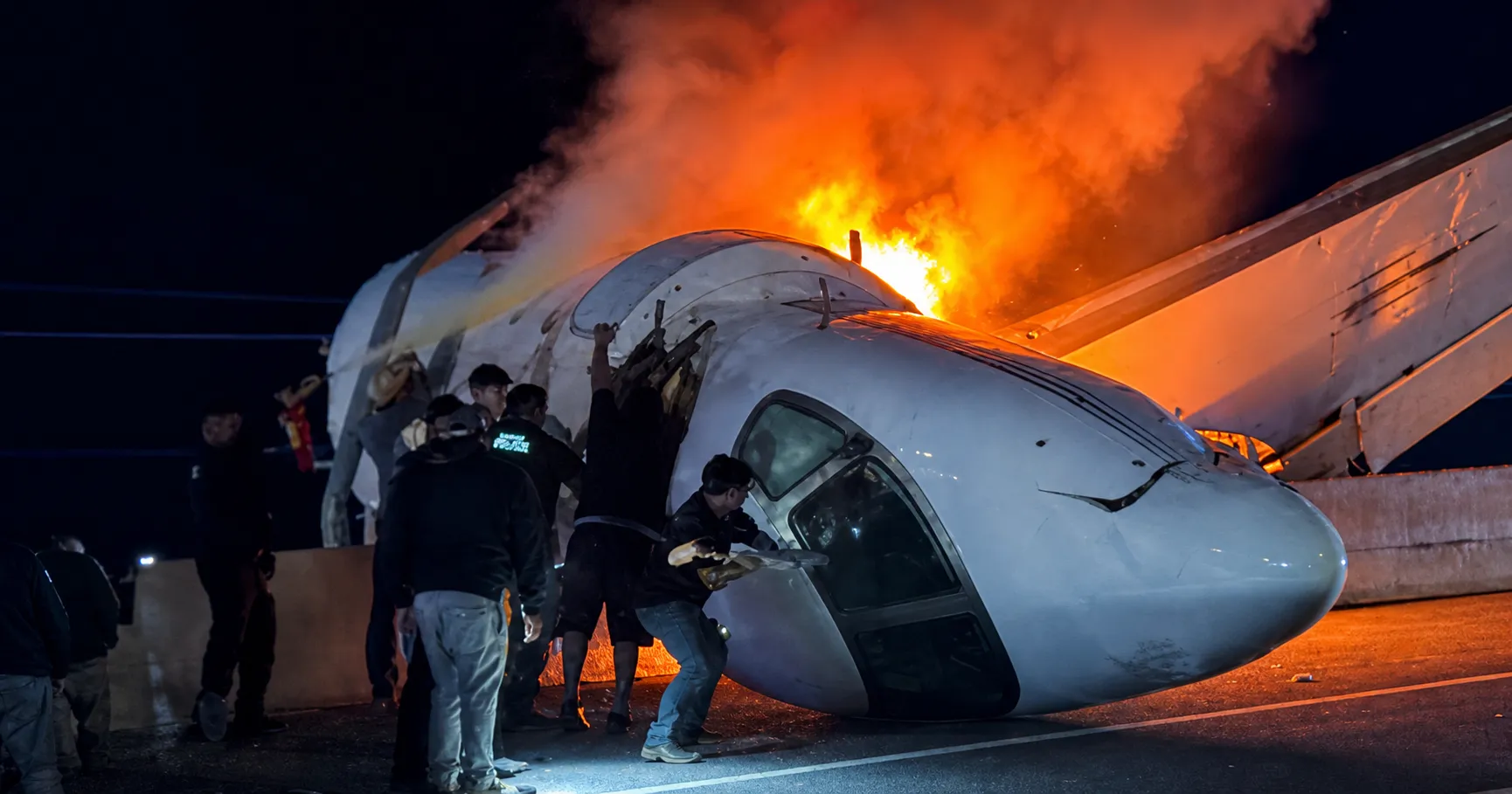
A NetJets-operated Cessna Citation Latitude business jet lost power in both engines while attempting an emergency approach to Laredo International Airport, forcing pilots to make a desperate glide toward the ground that ended in a crash on a Texas highway, according to a preliminary investigation report released by the National Transportation Safety Board.
The aircraft, carrying six people from San José del Cabo, Mexico, to Austin, Texas, came down on the northbound lanes of Bob Bullock Loop about one mile southeast of Laredo International Airport late on June 16, 2026, at approximately 10 p.m. CDT. The crash killed Joshua Baer, the 50-year-old founder and CEO of Capital Factory, an Austin-based venture capital firm that specializes in technology startups. Five others aboard survived—two pilots and three teenage passengers.
The sequence of events leading to the crash began early in the flight when the crew reported an unusual vibration they had not experienced before. The pilots described a low-frequency vibration with a humming sound resembling a fan running, felt through the instrument panel. After consulting with NetJets Flight Operations and Maintenance Control, they completed emergency checklists and were cleared to proceed to their destination, with instructions to document the vibration after landing.
As the aircraft neared the U.S.-Mexico border, however, a cascade of system failures developed rapidly. The crew first received an alert indicating low fuel pressure on the right side of the aircraft, followed seconds later by another low-fuel notification. About three minutes later, electrical system failures appeared, and roughly 11 minutes after that, a low-fuel warning triggered. These alerts indicated a progression from fuel system problems into electrical system failures affecting the aircraft’s right side.
The pilots declared an emergency with Mexican air traffic control and were transferred to Houston Air Route Traffic Control Center. They reported generator failure, multiple additional system failures, and low fuel indications, requesting an immediate diversion to Laredo International Airport. Controllers issued radar vectors, including a large 270-degree turn, to position the aircraft for a 14-mile final approach to Runway 36L.
While established on final approach, the right engine flamed out. Seconds later, the left engine also failed, leaving the aircraft with no power at a critical moment. The first officer asked Laredo Tower whether there was an open field suitable for an emergency landing. Controllers advised there were no fields available—only the nearby highway.
With no engines producing thrust, the aircraft descended toward the highway. The first officer aligned the jet with the northbound lanes of Bob Bullock Loop in an attempt to set down safely. During touchdown, the aircraft struck several light poles, collided with a moving vehicle, came to rest partially on an overpass, and rolled onto its right side. Video from security and residential cameras captured two separate bursts of fire while the aircraft was still airborne.
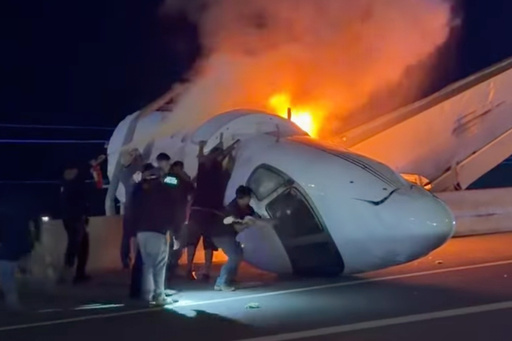
The position of the wreckage created a harrowing rescue situation. With the aircraft on its side, the main cabin door faced upward while the rear emergency exit was pinned against the ground, trapping occupants. Bystanders and first responders worked frantically to extract passengers, with some striking the cockpit glass with a sledgehammer while others used makeshift levers to pry open doors. Video from the scene showed passengers and crew members jumping and being pulled from the burning wreckage. A firefighter entered the smoke-filled cabin to extract the last person inside.
The investigation revealed significant damage to critical aircraft components. Examination of the wreckage found that the right engine fuel pressure switch had separated from its fuel tube assembly, with the fuel tube assembly fractured adjacent to the welded fitting where the pressure switch was attached. Multiple P-clamps that normally secure the fuel tube assembly against vibration were also fractured, suggesting that the vibration experienced early in the flight may have triggered a chain reaction of mechanical failures.
Investigators also discovered abnormalities in the right engine starter generator, manufactured by Safran. Multiple exterior housing screws were missing from the unit. While the generator had 57.2 operating hours remaining since its most recent overhaul—well below its 1,200-hour overhaul interval—the missing screws raised questions about how the component could have become damaged or loosened.
Flight control systems showed no evidence of pre-impact failure. The ailerons, elevator, and rudder maintained continuity, suggesting the pilots retained some ability to control the aircraft despite the loss of engine power. However, without thrust, there was insufficient altitude to recover once both engines flamed out.
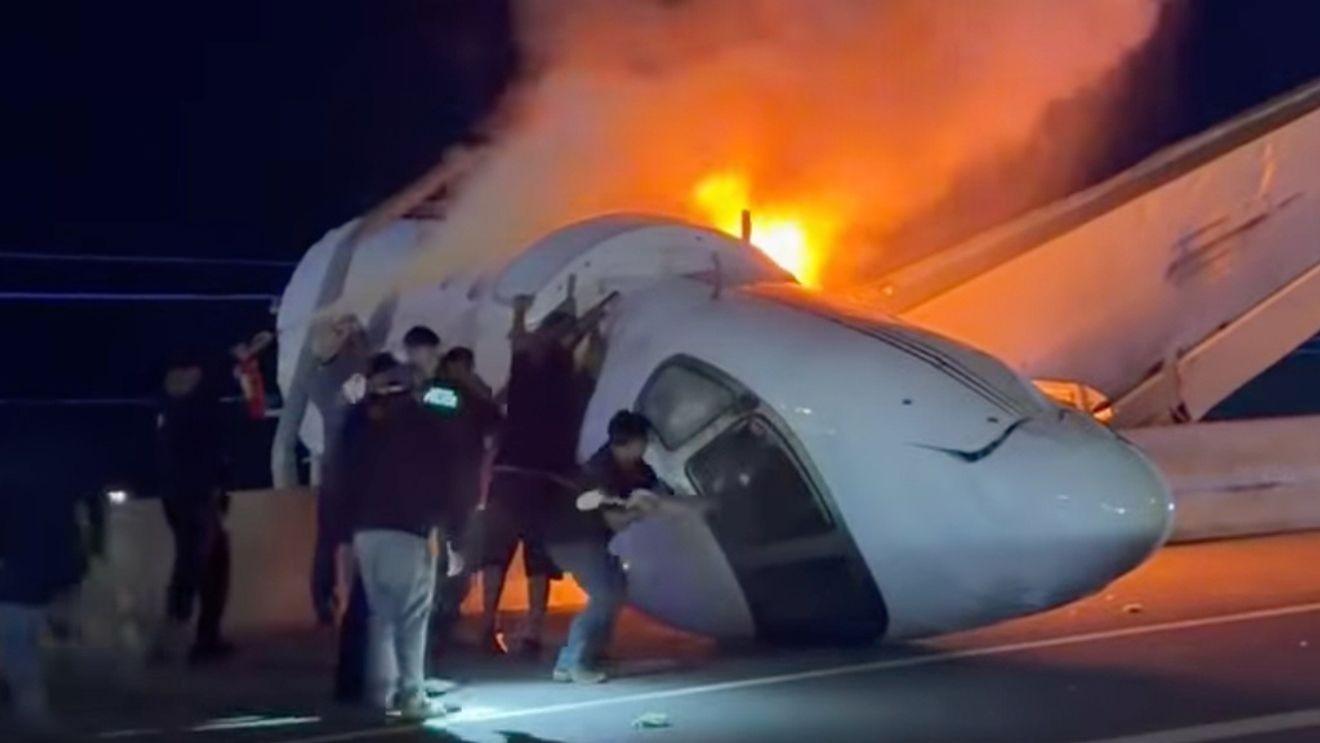
The aircraft involved was a Textron Aviation Citation Latitude, Model 680A, delivered in 2016. It was operating under Part 91 Subpart K fractional ownership rules. The captain was seriously injured in the crash, while the first officer and three teenage passengers suffered minor injuries. One person in the vehicle struck by the aircraft also sustained minor injuries. Five police officers who assisted in the rescue were treated for smoke inhalation but were later released from the hospital.
This was the first fatal crash in NetJets’ 62-year history as an aviation company. NetJets, which originated the fractional-ownership business model for private jets in 1986 before being acquired by Berkshire Hathaway in 1998, had maintained an exemplary safety record until this accident.
The crash marked a sobering loss for Austin’s technology community. Baer was widely recognized as a central figure in the city’s evolution as a major tech hub. He founded Capital Factory to help entrepreneurs connect with investors and launch their businesses, and his influence extended throughout Texas’s startup ecosystem.
Laredo Mayor Victor Treviño described the outcome as “nothing short of a miracle that this tragedy did not become a mass fatality event,” noting that a hotel stood just feet away from the crash site. He also praised the heroic actions of police officers and firefighters who risked their lives to rescue passengers from the burning aircraft.
The NTSB investigation is continuing, with laboratory analysis of the damaged components and review of cockpit voice and flight data recorder information expected to determine how the failures developed and whether they were connected. The agency’s investigation typically results in a preliminary report within 30 days and a final determination of probable cause within one to two years.