

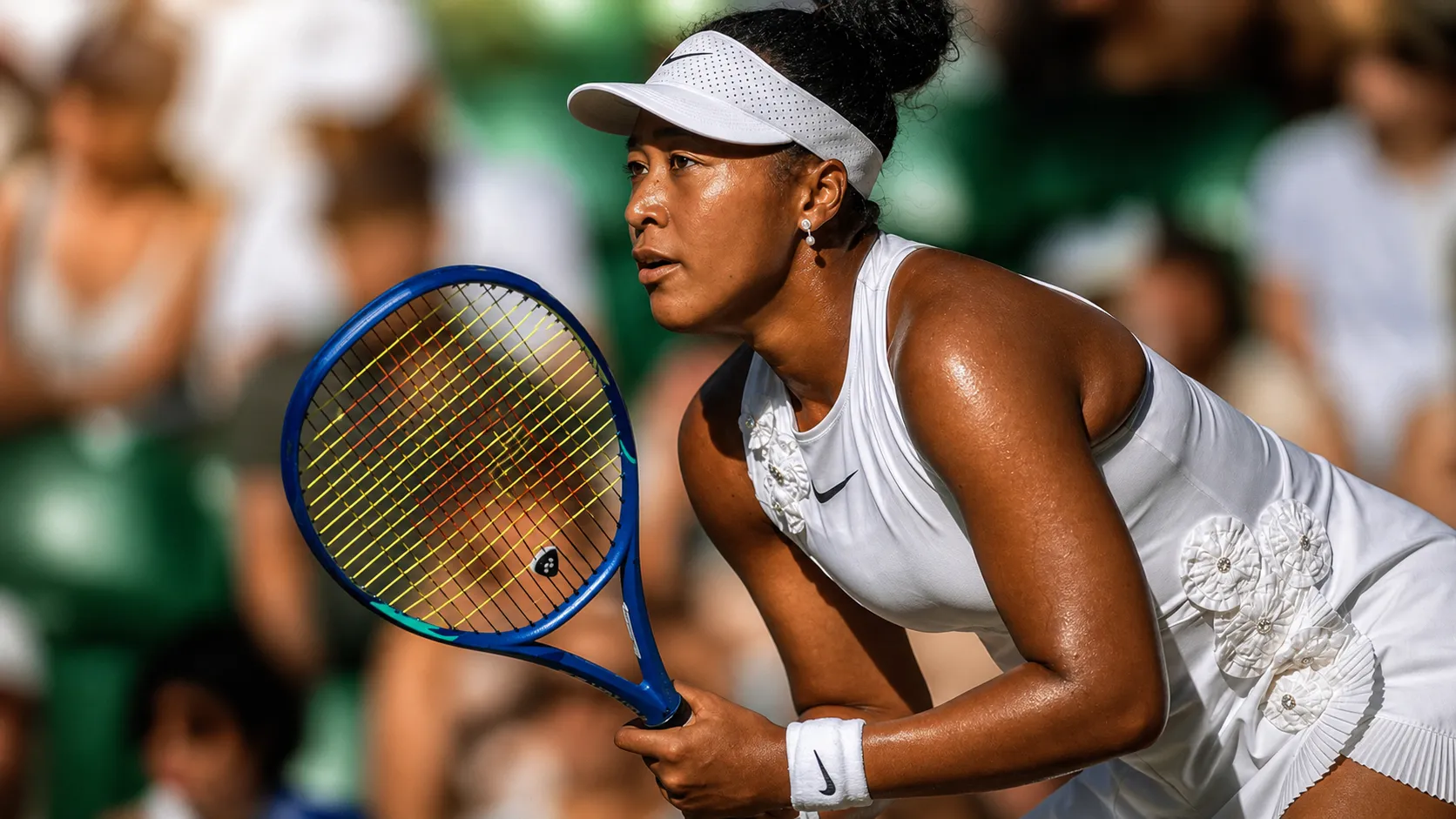
Wimbledon may be tennis’s most famous Grand Slam, and it’s also the one with the toughest approach to what players can wear.
As the 2026 tournament reaches its finale, Jannik Sinner and Alexander Zverev are preparing to battle for the title. The result may be impossible to predict, but one part is guaranteed: both men will step onto court in white.
Even though tennis is a non-contact sport, slips and tumbles still happen, especially when players stretch or dive across the grass. And at Wimbledon, where outfits are expected to be pristine, that creates an obvious problem when green marks get all over an “all white” kit.
The Championships have been around since 1877, and while much of the event has embraced modern changes, the clothing policy has remained remarkably consistent. Wimbledon may now use electronic line calling across all courts, but its fashion rules are still rooted in tradition.
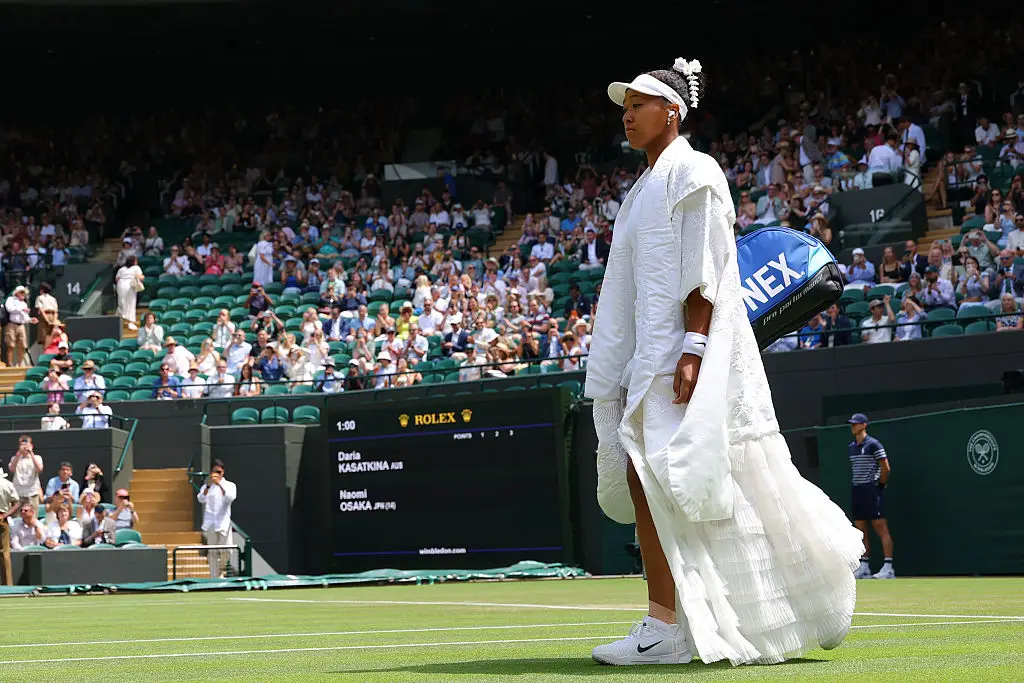
The reason for the white-only tradition goes back to concerns about sweat.
In Victorian times, visible perspiration was viewed as “improper,” so white clothing became the preferred choice because it hid sweat marks better than many other shades. Over time, that practical decision became inseparable from the tournament itself.
The rule still survives today as a defining characteristic of The All England Club tournament and remains one of the clearest symbols of Wimbledon’s long history.
That can be awkward in the modern era, especially when elite players are tied to major sponsorship deals. Roger Federer, for instance, had a huge contract with Uniqlo, whose logo is red, making Wimbledon’s demands harder to navigate.
As per the official Wimbledon site, “Competitors must be dressed in suitable tennis attire that is almost entirely white* and this applies from the point at which the player enters the court surround.”
The rules also make clear that white does not mean “cream or off white”.
Branding is permitted, but only in a very limited way, with manufactured logos expected to remain “small”.

Several players have “accidentally” fallen foul of the code over the years, including one competitor during this year’s tournament.
Jessica Bouzas, playing on Court 17, was delighted after winning her second-round match. But the moment was reportedly interrupted when the umpire “had words” with her because a black underlayer could be seen at the back of her outfit.
Venus Williams faced a similar moment in 2017 when her pink bra strap was visible during a match. After a break in the second set, it could no longer be seen, although she never confirmed whether she had been told to change it.
Wimbledon did make one notable update in 2022, allowing women to wear dark undershorts to feel more comfortable if they were on their periods.
Still, the dress code is only one part of a much wider rulebook.
Wimbledon is famously exacting about almost everything, from the height of the grass to how the balls are stored. Players can also be hit with huge financial penalties for certain behaviour on court.
Unlike some other Grand Slams, Wimbledon does not run deep into the night. Play is subject to an 11pm curfew, which has led to some major matches being paused at dramatic moments.
That has left fans waiting until the following day for a conclusion more than once.
Novak Djokovic and Rafael Nadal’s 2018 semi-final was halted after the third set. Andy Murray was also left frustrated in 2023 when he had been ahead against Stefanos Tsitsipas before their match was suspended overnight; when play resumed the next morning, Murray went on to lose.
Bathroom breaks are tightly controlled too. Players get one toilet break in matches of up to three sets, and two if the contest lasts longer.
Those breaks can only happen during a set change, and a player must return within three minutes or risk conceding a point to their opponent.
Given that the longest Wimbledon match lasted 11 hours across three days, timing those trips probably matters more than most people would think.
Equipment abuse can also prove costly. Players may be fined as much as $50,000 for smashing rackets, and Djokovic is believed to have broken more than 60 during his career.
Swearing can lead to the same maximum punishment.
There is even a time limit between points. Once the ball is out of play, the server has just 25 seconds to begin the next point, or the umpire can issue a violation that may ultimately hand a point to the other player.
Competitors are also expected to show genuine effort. Bernard Tomic, for example, was fined $60,000 after officials decided he had not tried hard enough in a defeat to Jo-Wilfried Tsonga that lasted only 58 minutes.
Age restrictions apply as well. Players must be at least 14 years old to take part, which meant rising stars such as Coco Gauff had to wait before appearing at the tournament.
There are rules for the crowd too. Spectators under 16 must be accompanied by a guardian, while children under five are not allowed on show courts.
That meant Serena Williams’ two-year-old daughter Adira River was unable to watch her mother’s return at this year’s Grand Slam, and it also meant not all four of Andy Murray’s children could attend his final doubles appearance in 2024.
Even the smallest details are carefully managed. The grass is cut to 8mm, a length considered ideal for the modern game while still allowing the surface to hold up.
The balls are also kept at a controlled temperature to help keep their bounce as consistent as possible.
The white-clothing rule was originally imposed only on women. According to Tennis Fashions: Over 125 Years of Costume Change, it was introduced because it was ‘quite unthinkable that a lady should be seen to perspire’.
Later, the same standard was extended to male players.
Wimbledon does allow a small amount of colour, but only in a very limited form: a single trim around the neckline or sleeve cuff, and even that cannot be thicker than 1cm.
So while the tournament has adapted in some areas, its best-known tradition remains firmly in place. At Wimbledon, white still rules.