

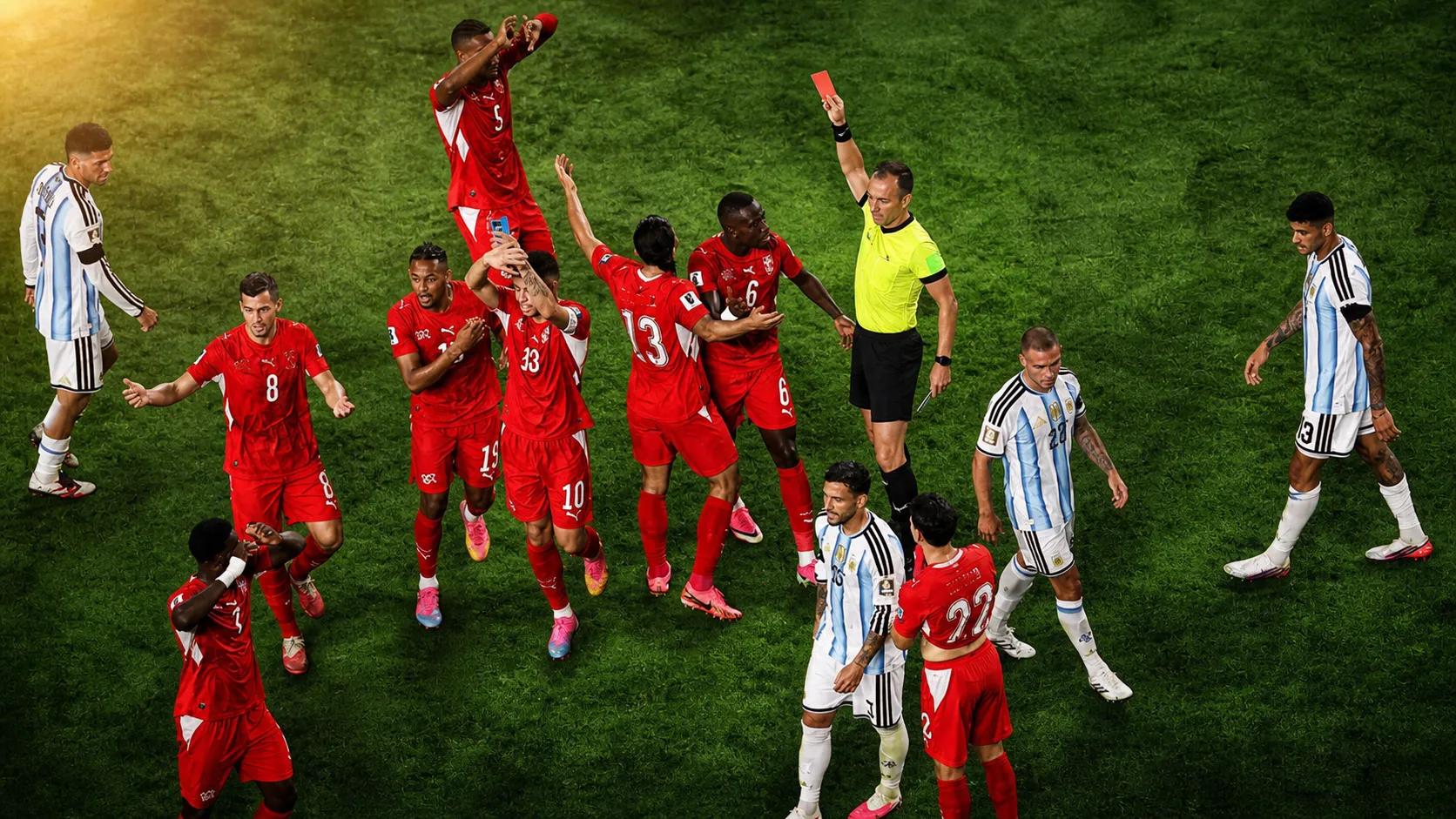
A controversial new World Cup regulation has triggered a backlash after influencing a key sending off in a tense quarter-final clash.
The incident has put FIFA’s new mistaken-identity review powers under the spotlight, with the law designed to let officials correct a card if the wrong player has been punished.
Breel Embolo of Switzerland became the first player at this summer’s competition to be dismissed under FIFA’s new ‘mistaken identity’ rule, as his team fell to Argentina in the last eight.
Already on a yellow card from the opening half, Embolo was booked again in the 72nd minute for simulation, only moments after Switzerland had drawn level against the reigning champions.
The striker walked off the field in Kansas City visibly emotional, with teammates trying to comfort him as Switzerland’s hopes began to fade.
The flashpoint came after Argentina midfielder Leandro Paredes was initially cautioned for what appeared to be a late challenge on Embolo. VAR then asked referee Joao Pinheiro to take another look at the incident on the monitor. After reviewing it, Pinheiro cancelled Paredes’ yellow card and instead penalised Embolo for diving.
Argentina eventually came through 3-1 after extra time thanks to strikes from Julian Alvarez and Lautaro Martinez, booking a semi-final meeting with England. For Switzerland, it ended a memorable run that had taken them to their first World Cup quarter-final in 72 years.
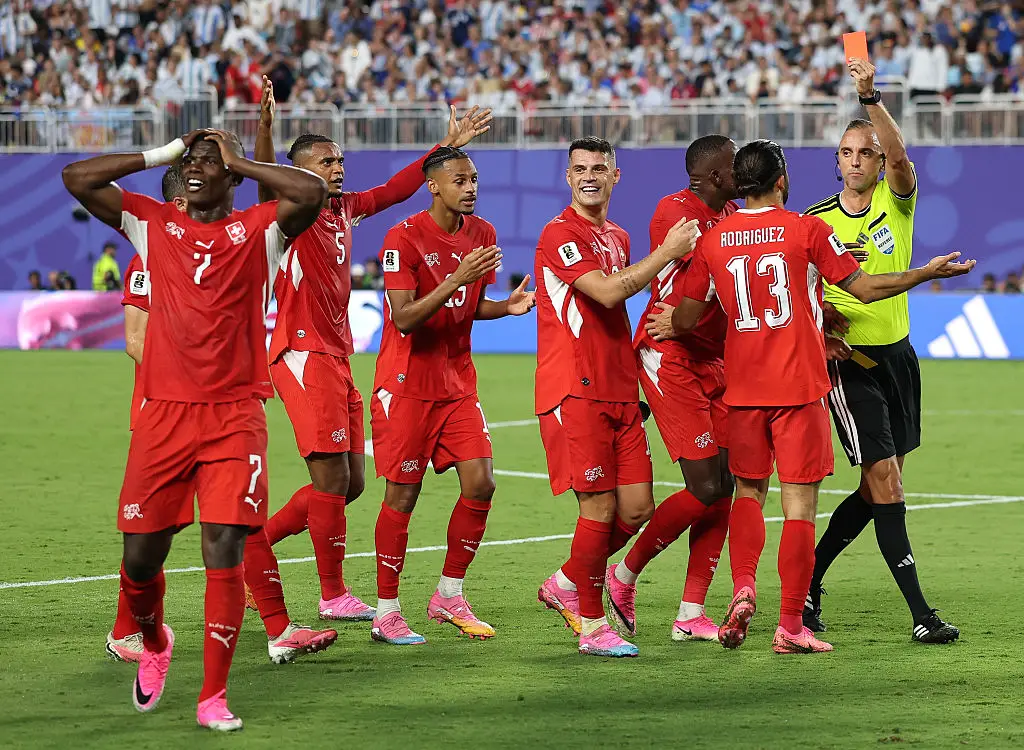
FIFA brought in several rule updates ahead of this tournament, and one of the most significant was the introduction of the mistaken identity law, pushed by referees chief Pierluigi Collina.
The law allows match officials to overturn a caution or dismissal if review shows that the wrong player was punished and to sanction the correct player instead. Under the revised VAR protocol, that review is specifically permitted when a referee cautions or sends off the wrong player of the offending team.
In this case, once Paredes’ booking was removed, Pinheiro was able to assess Embolo’s involvement separately and chose to caution him for simulation, which resulted in his second yellow.
The same rule had already been seen earlier in the tournament in the United States’ match involving defender Tim Ream and Paraguay’s Miguel Almiron.
After play was restarted from the initial free-kick, referee Danny Makkelie was instructed to revisit the challenge and reversed his original call, something referees had not previously been able to do during the match itself, before cautioning Almiron for simulation.

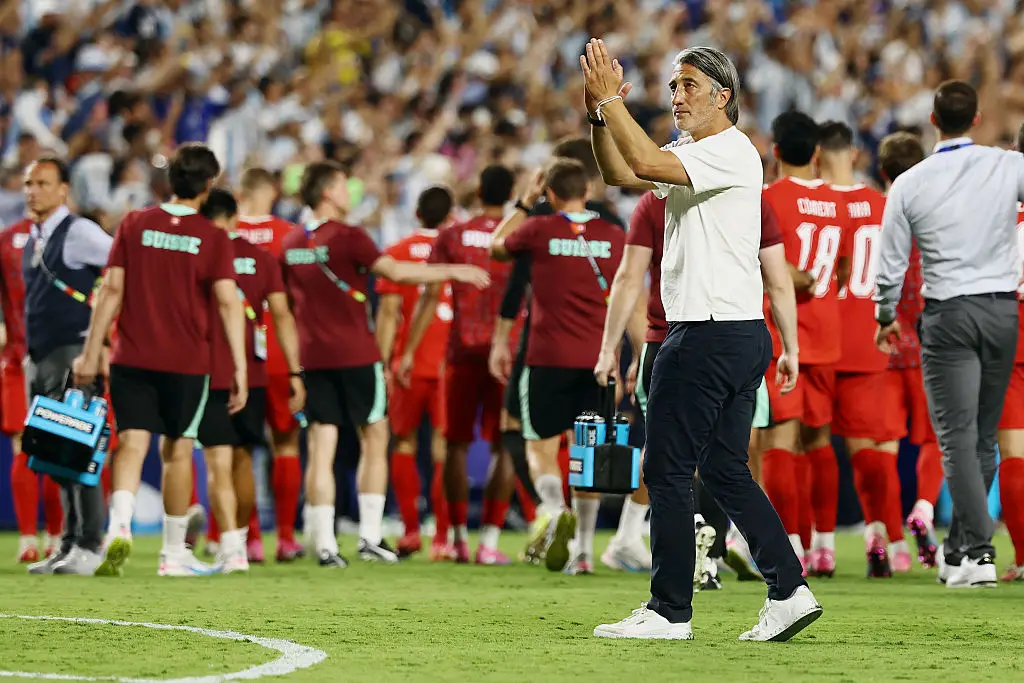
Switzerland boss Murat Yakin made his feelings clear after the match, arguing that the decision — and the rule behind it — had a decisive effect on the outcome.
“There was definitely no reason to award a yellow card,” Yakin said. “It was a harmless situation. He should have let play continue. We were punished because of a rule that is unacceptable. I don’t understand it. The fact that they intervened unnecessarily is extremely hurtful. It’s a rule that has nothing to do with football.”
He also said Embolo had been deeply affected by what happened and rejected any suggestion that the forward should shoulder responsibility.
“I don’t blame him at all. That would be absurd. Obviously, he is shattered. He couldn’t help the team today and it hurts him and us. I think it was a referee mistake.”
Not everyone covering the match shared Yakin’s view. On ITV, former MLS forward Bradley Wright-Phillips said his sympathy was more with Switzerland’s other players than with Embolo, suggesting the incident may have denied them a semi-final place. Former Jamaica international Jobi McAnuff also believed it was simulation, though he acknowledged the harshness of the outcome.
Yakin, though, still praised the effort of his squad after the defeat.
“This team has so much passion,” he said. \”Despite the fact we were one man down, we gave it all. I’m extremely proud of everyone.”
FIFA has been approached for comment.