

—
President Donald Trump announced Monday that the United States will reinstate a naval blockade of Iranian ships in the Strait of Hormuz and charge a 20 percent fee on cargo from other nations transiting the critical waterway, escalating tensions after months of fragile ceasefire negotiations deteriorated into renewed military exchanges with Iran.
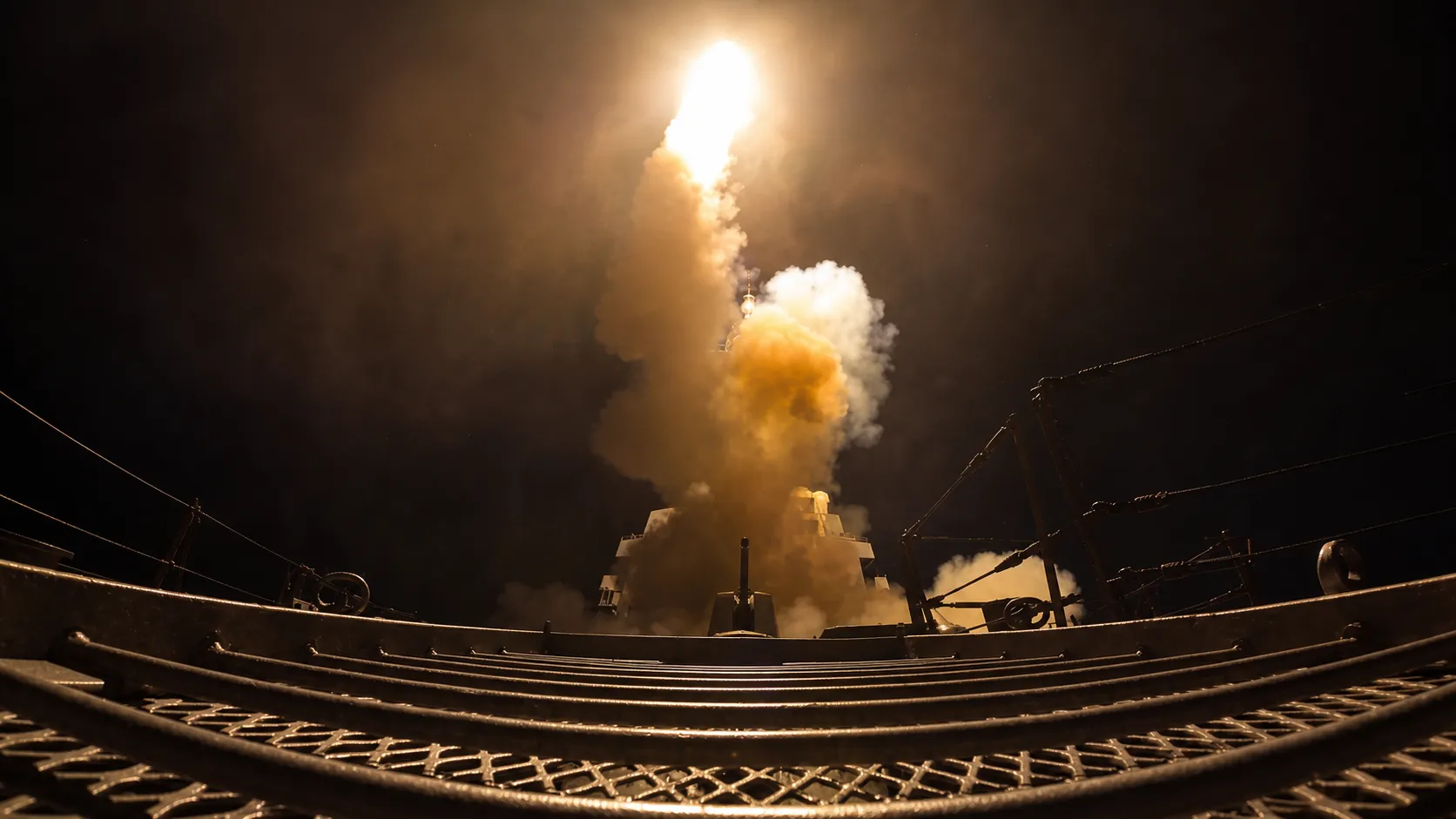
Trump declared that the United States would become the “guardian” of the Strait of Hormuz, a vital conduit for global energy supplies through which approximately one-fifth of the world’s oil passes. He made the announcement via social media and in interviews with news outlets Monday morning, shortly after the U.S. Military conducted fresh strikes against Iranian targets in response to another round of attacks that threatened what remained of the interim peace agreement signed just weeks earlier.
“The Hormuz Strait is OPEN, and will remain OPEN, with or without Iran. We are reinstating the THE IRANIAN BLOCKADE, so named because it is only stopping Iran’s ships or customers from entering or leaving. All other countries will have fair and open use of the Strait,” Trump said on Truth Social. He emphasized that while Iranian vessels would be barred from the waterway, all other nations would maintain unrestricted passage.
The centerpiece of Trump’s plan is the 20 percent fee on cargo, which he characterized as necessary reimbursement for U.S. Security operations. “The U.S.A. Will be, from this point forward, known as ‘THE GUARDIAN OF THE HORMUZ STRAIT,’ but as such, and as a matter of FAIRNESS, will be reimbursed, at the rate of 20% on all cargo shipped, for any and all costs necessary to do the job of providing safety and security to this very volatile section of the World,” he said. Trump emphasized that the process would begin immediately.
The announcement represents a dramatic reversal of Trump’s previous position. Just three weeks ago, he had claimed that Iran had assured him there would be no tolls or charges of any kind for ships passing through the strait during the 60-day interim period of ceasefire negotiations. The shift underscores the rapid deterioration of the agreement signed in mid-June, when the United States and Iran had established a framework for ending the broader conflict that began in late February.
The latest escalation was triggered by renewed clashes over the strait itself. On Sunday, Iranian forces attacked a container ship in the waterway, prompting U.S. Military retaliation. The U.S. Military said it targeted dozens of Iranian sites Monday, including air defense systems, radar sites, missile equipment, and small boats intended to degrade Iran’s capability to attack commercial vessels.
The conflict between the United States and Iran ignited on February 28, when the U.S. And Israel launched major strikes against Iranian military and government targets, killing Supreme Leader Ali Khamenei and numerous other senior officials. Iran retaliated with hundreds of missiles and thousands of drones, sparking a broader war that drew in regional actors and disrupted global energy markets. After months of low-intensity fighting and negotiations, both sides signed a memorandum of understanding in mid-June that was meant to establish a 60-day period to negotiate a final peace deal.
The interim agreement explicitly required the Strait of Hormuz to remain open toll-free for the negotiation period. However, disputes almost immediately emerged over Iran’s insistence on the right to manage traffic through the waterway and potentially charge fees, while the U.S. And international community cited international law guaranteeing freedom of navigation.
Iran responded swiftly to Trump’s announcement. An adviser to Iran’s supreme leader, Mohammed Mokhber, stated that Tehran would defend the strait and resist any foreign control. “We defend it so that in the future, for the passage of our ships, we are not forced to pay tribute to the enemy!” he wrote on social media. Iran’s paramilitary Revolutionary Guard called the Strait of Hormuz “our territory” and warned against U.S. Interference, declaring it would “respond forcefully” to any disruption of commercial passage by the American military.
The European Union’s top diplomat, Kaja Kallas, called for the strait to be open as it was before the war, emphasizing that “freedom of navigation has to be respected.” Regional partners are also expressing concerns. The U.S. Military has not discussed the toll proposal with its Gulf allies, according to reporting, raising questions about how the policy would be implemented and received by regional states that depend on the waterway.
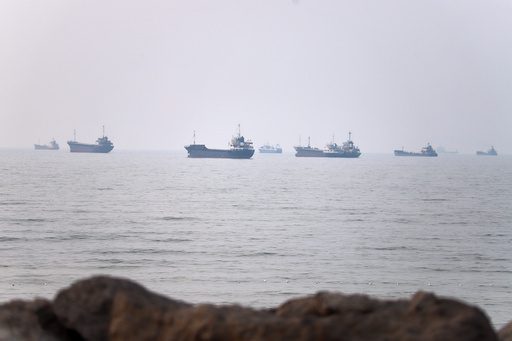
The Strait of Hormuz’s importance to the global economy cannot be overstated. The narrow passage between Iran and Oman typically carries roughly 20 percent of the world’s maritime oil trade, along with significant volumes of liquefied natural gas and other commodities. Asian countries, particularly China, India, Japan, and South Korea, depend heavily on energy transiting through the strait. A prolonged disruption could significantly disrupt global energy markets and trigger economic repercussions worldwide.
Shipping traffic has already dropped dramatically. Over the weekend, traffic along the southern route near Oman that the U.S. Has supported as an alternative fell to minimal levels, according to ship-tracking data, as operators prioritized perceived security over more direct transit options. Oil prices have spiked since the latest round of attacks, reflecting market concerns about supply disruptions.
The U.S. Military has been supporting commercial vessels and preparing to enforce Trump’s blockade plan, including clearing mines in the strait and establishing safer passages outside Iran’s direct control. The military clarified that Iran does not control the Strait of Hormuz and that it remains open to international traffic.
The breakdown of negotiations comes at a precarious moment. The U.S. And Iran were supposed to spend 60 days negotiating a final settlement to the war, including addressing Iran’s nuclear program, the country’s ballistic missile capabilities, and the long-term administration of the Strait of Hormuz. Those talks have effectively stalled as both sides trade accusations of violating the interim agreement.