

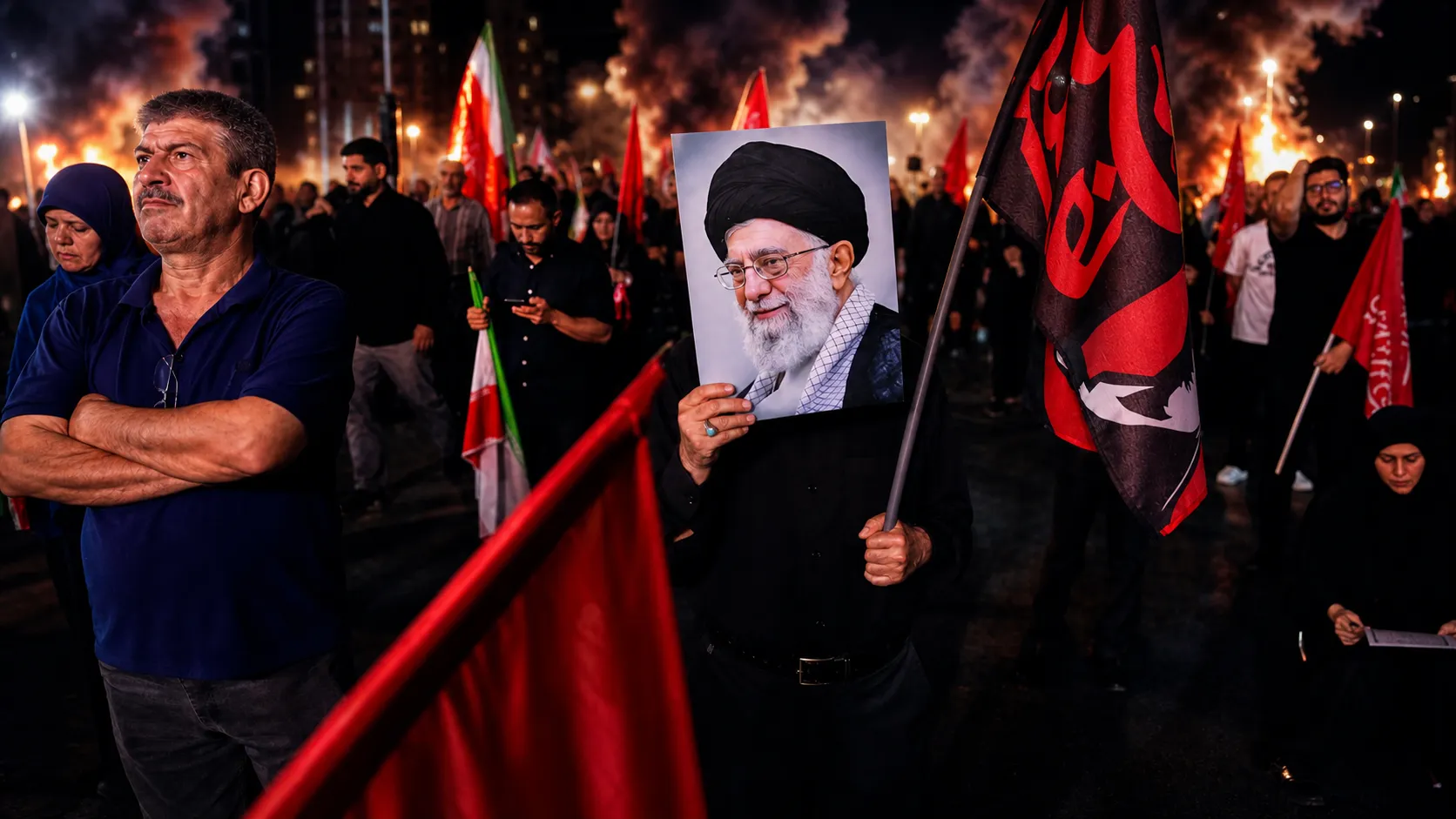
The United States and Iran escalated their military conflict dramatically this week, exchanging waves of strikes that shattered a ceasefire signed just weeks earlier and threatened to trigger a broader war across the Middle East. The fighting centers on control of the Strait of Hormuz, one of the world’s most critical energy corridors, through which roughly a quarter of the world’s seaborne oil trade and a fifth of its liquefied natural gas flows each day.
The current round of hostilities began in early July when Iran attacked several commercial vessels transiting the waterway, saying they violated an interim peace agreement signed on June 17. The United States retaliated with strikes targeting Iranian military capabilities near the strait, and Iran responded with missile and drone attacks on American military bases and allied nations across the region.
By Tuesday, the escalation had reached a new intensity. Iran launched cruise missiles at two tankers flying UAE flags, the Mombasa and Al Bahiyah, killing one Indian crew member and wounding eight others. The Revolutionary Guard claimed the vessels had ignored warnings and entered a minefield. Hours later, the U.S. Military launched its third consecutive night of strikes, hitting areas around Iranian coastal cities including Bandar Abbas, Bushehr, and Chahbahar with what officials said was a comprehensive assault on Iranian air defenses, missile sites, and maritime capabilities.
The cycle of retaliation expanded beyond the strait itself. After U.S. Strikes, Iran fired missiles and drones at multiple countries hosting American forces, including Bahrain, Jordan, Kuwait, Qatar, and Oman. Jordan’s military intercepted four Iranian missiles over its airspace. Bahrain activated its missile alert sirens, and Kuwait reported dealing with hostile aerial targets. The UAE, hit directly by Iranian attacks on its tankers, threatened to retaliate, potentially dragging the country back into direct combat with Tehran.
The fighting marks the dramatic unraveling of the memorandum of understanding signed in June, which was supposed to establish a 60-day ceasefire while both sides negotiated a final peace agreement. The deal promised to reopen the Strait of Hormuz to international shipping without tolls and to address Iran’s nuclear program. It represented the first attempt to end a war that began on February 28 when the United States and Israel launched coordinated airstrikes on Iran.
The disagreement centers on how the strait should be managed and who controls it. The U.S. And its allies argue the waterway should remain open to international traffic without restrictions. Iran asserts sovereignty over the strait and says it has the right to impose fees for ships transiting its waters. The U.S. Has attempted to establish a shipping route along the Omani coast outside Iranian control, but Iran has repeatedly attacked vessels using that path, saying it violates the agreement.
Tensions escalated further when President Trump announced a dramatic policy shift. After declaring the ceasefire “over,” Trump said the United States would reinstate a naval blockade of Iranian ports and proposed charging other nations a 20% fee to use the strait for safe passage. This upended traditional American policy supporting freedom of navigation and free passage through international waterways. Secretary of State Marco Rubio had just weeks earlier dismissed the idea of tolls as “not even workable,” but Trump appeared to reverse course, saying the U.S. Would be “THE GUARDIAN OF THE HORMUZ STRAIT” and would be “reimbursed” through cargo fees.
Iran’s Foreign Minister Abbas Araghchi responded sardonically to the proposal, first endorsing the concept of compensation for protection before countering that 20% was excessive. “Iran has always been the GUARDIAN of the Strait and will remain so FOREVER,” he wrote on social media.
The disruption to the Strait of Hormuz carries enormous consequences for global energy markets. Oil prices have climbed sharply in response to the renewed fighting. Brent crude, the international benchmark, rose to over $83 per barrel, and WTI crude jumped nearly 10% in a single day. The increases, though below the peak of over $110 during earlier phases of the war, threaten to push gasoline and heating costs higher worldwide. Shipping traffic through the strait has plummeted, with vessels declining to enter the waterway despite the presence of the U.S. Navy in the region.
The chokepoint’s importance cannot be overstated. Nearly 15 million barrels of oil per day flow through the 21-mile-wide passage at its narrowest point, and an additional roughly 110 billion cubic meters of liquefied natural gas transits annually. Asia absorbs the vast majority of these exports, with China, India, Japan, and South Korea the primary importers. A prolonged closure would disrupt supplies to some of the world’s largest economies and could trigger severe shortages and price spikes affecting food production, electricity generation, and manufacturing globally.
The conflict threatens to pull additional nations into the fighting. The United Arab Emirates, increasingly under Iranian fire, faces pressure to join the military response. Kuwait and Qatar, major energy exporters whose access to world markets depends on the strait remaining open, have absorbed multiple Iranian attacks on their territory. Even regional powers like Jordan, which hosts U.S. Forces, find themselves under bombardment from Tehran.
Trump said the military campaign would continue and intensify if Iran persisted in attacking commercial shipping. “We’re hitting them very hard. And it’ll continue, and we’ll see what happens,” he told reporters from the Oval Office. “We’re knocking out all of their offensive capability and we’re controlling the straits.”
The dispute reflects a fundamental disagreement about power and sovereignty in the region. For the United States, maintaining free navigation through the Strait of Hormuz is essential to global commerce and stability. For Iran, control over this waterway represents both strategic leverage and a matter of territorial right. With both sides now openly rejecting the recent ceasefire agreement and preparing for sustained military operations, the prospect of resolving this conflict through diplomacy appears increasingly remote.