

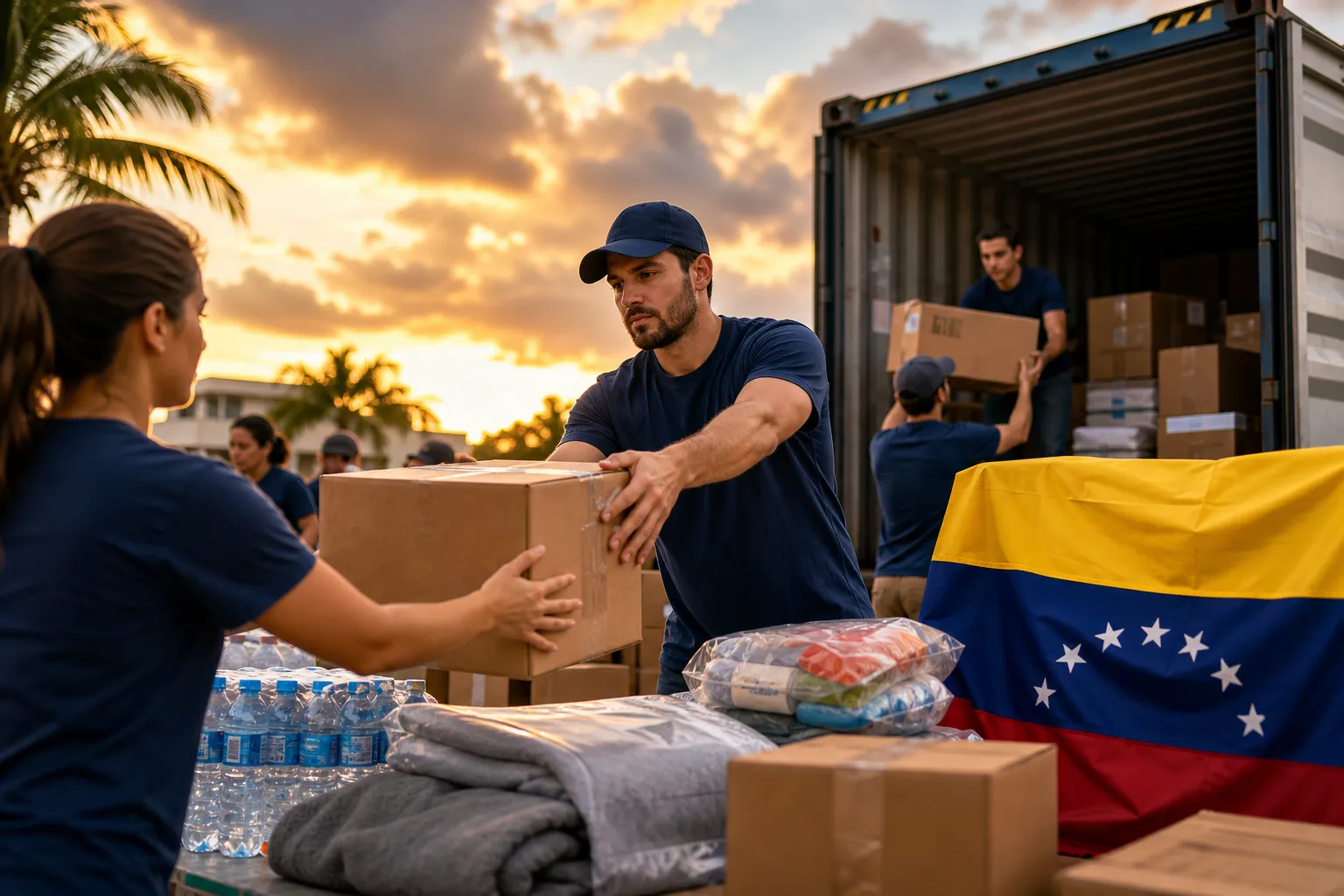
When a pair of devastating earthquakes struck Venezuela on June 24, measuring 7.2 and 7.5 in magnitude and arriving just 39 seconds apart, the destruction was immediate and catastrophic. Buildings collapsed across northern Venezuela, particularly in the coastal city of La Guaira and the capital Caracas, leaving thousands dead, injured, and missing. But from thousands of miles away, an unexpected surge of humanitarian support began flowing from South Florida, driven by personal connections, community spirit, and the determination of thousands of volunteers united in one mission: to help.
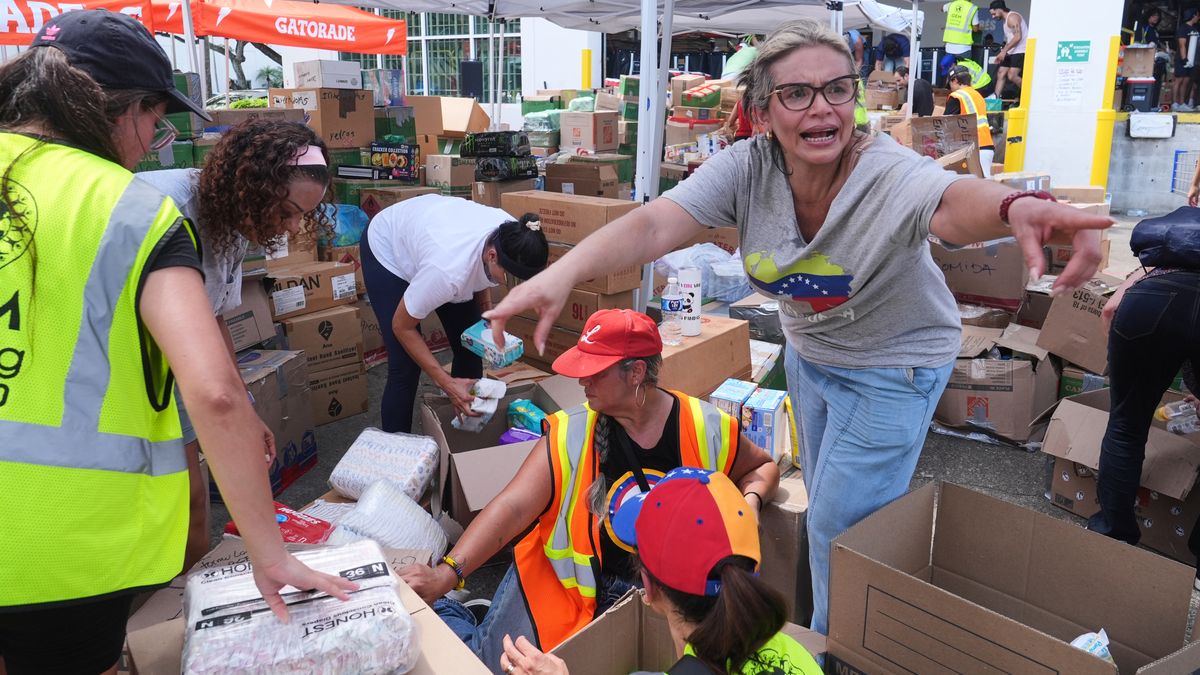
Nearly three weeks after the tremors, the relief effort shows no signs of slowing. At the Global Empowerment Mission headquarters in Doral, Florida, as many as 1,000 volunteers work across three warehouses each day, sorting donations and assembling care packages destined for Venezuelan survivors. The organization’s warehouse became an immediate collection point after the quakes, and what began as an emergency response has evolved into what officials describe as one of the most impressive humanitarian efforts they have ever witnessed from the Venezuelan diaspora community.
Alessandra Izaguirre, an 18-year-old whose grandmother’s house narrowly survived the earthquakes, has spent the last couple of weeks preparing food for volunteers at GEM headquarters. “Seeing my grandma and all these people affected made me feel like I had to do something, even if it was from the U.S.,” she said. She represents thousands of people who have transformed their shock and concern into action, working shoulder to shoulder with others who share the same deep desire to provide relief.
The scale of donations has been extraordinary. Supplies have arrived from across North America, with two brothers driving a U-Haul full of goods from Canada, another group traveling from Mexico, and trucks rolling in from Nevada, Texas, and California. At times, lines of donors waiting to drop off aid have stretched so long that police had to help manage traffic. Walmart partnered with stores across the greater Miami area to raise awareness of needed items and provide drop-off locations, while other businesses and faith-based organizations mobilized their resources.
Billy Richardson, director of U.S. Operations for Global Empowerment Mission, described the response as extraordinary. “It is one of the most impressive turnouts we’ve seen from the Venezuelan community in South Florida,” he said. “Everybody is turning out in huge support.” Donations topped 5 million dollars and continue to grow, though organizers emphasize that financial contributions are especially valuable because they allow the organization to purchase supplies locally inside Venezuela rather than shipping items internationally, a process that is both slower and more expensive.
Inside the warehouses, volunteers work with precision and care. They fill pallets with essentials like diapers and assemble individual care packages containing enough food and hygiene items to sustain two people for approximately five days. Volunteers also tuck notes of encouragement into packages, with messages reading “Te queremos Venezuela”—”We love you, Venezuela.” Some volunteers have taken vacations from work to put in hours at the operation, underscoring the personal commitment driving the effort.
The logistics are complex but have proven effective. GEM aims to deliver at least 100,000 care packages monthly for the next three to six months, with supplies transported on daily flights to Caracas. One 50-ton shipment departed from Miami International Airport, representing the organization’s largest delivery to date. Each package is carefully curated to address the latest evolving needs of survivors.
The earthquakes killed at least 4,500 people, with thousands more still missing. They destroyed and damaged over 850 buildings, displaced approximately 17,000 people, and devastated critical infrastructure providing electricity, clean water, and sanitation across multiple states. The scale of the tragedy is staggering, and the need for sustained aid remains immense.
What makes this relief effort particularly significant is the trust it has earned. When the earthquakes struck, some donors were initially skeptical that aid could reach those who needed it without being stolen or misused by a government with a history of rejecting humanitarian assistance. But Global Empowerment Mission’s track record and operational model have allayed those concerns. The organization lands private planes that are unloaded by U.S. Soldiers, places supplies in trucks they pay for and control directly, and maintains warehouses that bypass government hands entirely, ensuring aid reaches intended recipients.
In the coastal city of Maiquetía, recipient Yoniel Reyes sat in a tent examining the contents of a GEM package he had just received—instant meals, bottles of water, canned food, hydration powder, and hygiene kits, all packed 1,300 miles away in Doral. “I never imagined I would be receiving aid from the U.S.,” Reyes said. “We Venezuelans are thankful, very thankful.”
The U.S. Government has also made significant commitments. The State Department has deployed disaster response teams and search-and-rescue units, with the U.S. Contributing over 386 million dollars to earthquake response efforts. Amazon announced it will establish a humanitarian air bridge, fully funding seven cargo flights per week to transport emergency supplies. The company partnered with the U.S. Department of State, Airlink, and the United Nations World Food Programme to accelerate relief delivery and prevent airport bottlenecks.
As recovery operations continue and the immediate crisis gradually stabilizes, Global Empowerment Mission is already planning for long-term needs. Beyond emergency supplies, the organization aims to address housing solutions for displaced families and help rebuild schools and educational infrastructure. The effort represents a commitment to not just immediate relief, but to helping Venezuelan communities recover with dignity and build stronger communities for the future.
The outpouring from South Florida demonstrates that when disaster strikes, ordinary people can accomplish extraordinary things. Whether motivated by family ties, community bonds, or simple human compassion, thousands of volunteers continue showing up daily to sort, pack, and ship hope across the Caribbean to a nation in desperate need.