

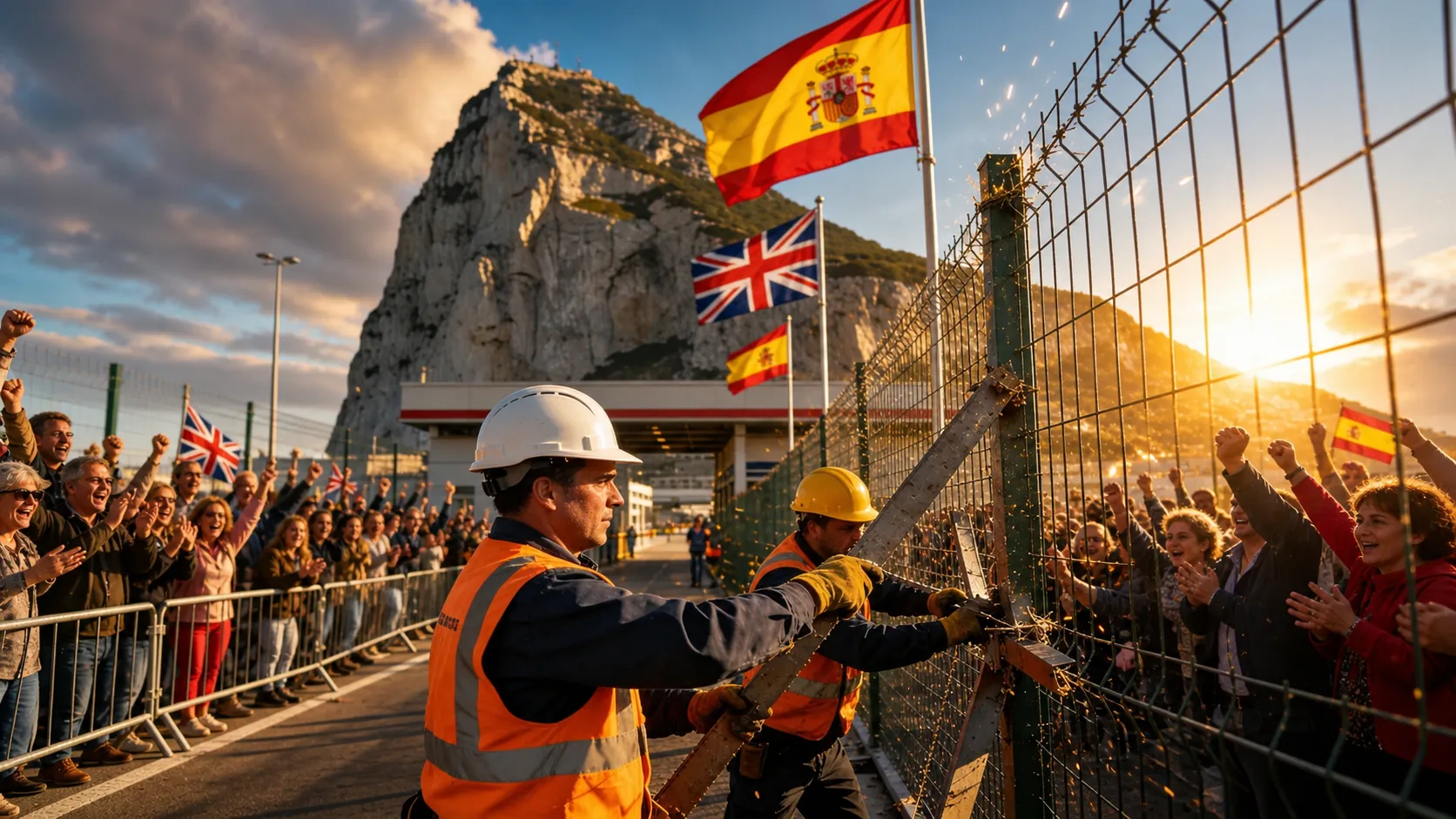
After more than three centuries of separation, Gibraltar and Spain are entering a historic new era as the British territory’s border fence falls for the first time in modern history. On July 15, the border between the tiny British Overseas Territory and neighboring Spain will effectively disappear, ending centuries of physical barriers and removing routine passport checks at one of Europe’s most politically sensitive crossing points.
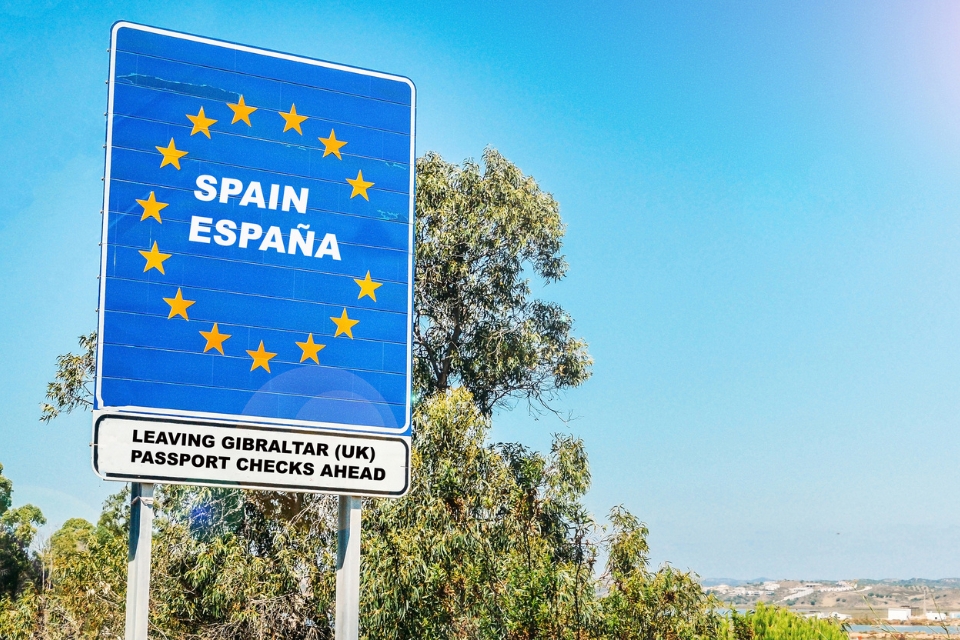
The landmark transformation comes after the European Union and the United Kingdom formally signed a breakthrough agreement on July 14 in Brussels, resolving what had been the final major outstanding issue from Brexit negotiations. Workers have been dismantling sections of the old chain-link fencing in recent weeks, preparing for the momentous shift that will allow an estimated 15,000 cross-border workers to move freely between Gibraltar and Spain without undergoing routine identity checks.
The removal of the fence, which has stood for more than a century, represents a profound shift after generations of tension and division. The border’s most painful chapter came in 1969 when Spanish dictator Francisco Franco ordered a complete closure of the frontier after Gibraltarians overwhelmingly voted to remain British. That closure lasted 13 years, during which supply lines were cut, families were separated, and telecommunications ceased. Workers were unable to cross, devastating communities on the Spanish side where roughly half the male workforce depended on Gibraltar for income. Unemployment rates in the neighboring Spanish town of La Línea de la Concepción soared above 50 percent in the immediate aftermath. The border finally fully reopened to vehicles in 1985, but physical barriers and passport checks remained for four decades.
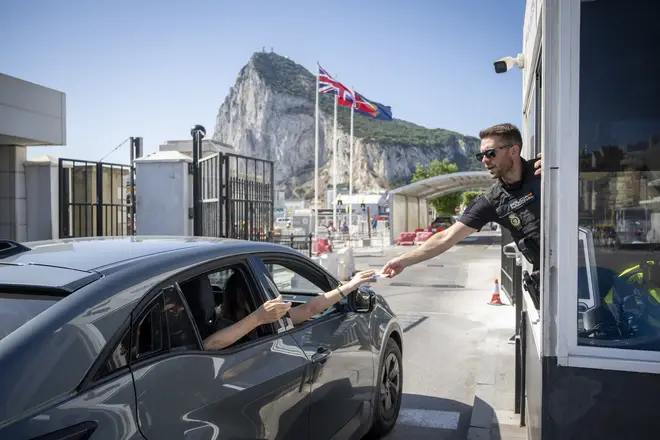
The new agreement transforms this arrangement fundamentally. Rather than conducting immigration checks at the land border, authorities will now process all passport controls at Gibraltar’s airport and port. For the thousands of Spanish workers who have endured lengthy rush-hour queues during the past four decades, particularly during periods of diplomatic tension between Britain and Spain, the change promises dramatic relief. Workers will now be able to cross between Gibraltar and Spain much like moving between neighboring European countries within the Schengen border-free zone.
Gibraltar Chief Minister Fabian Picardo, who played a central role in negotiations, described the agreement as historic, calling it Gibraltar’s most important international accord since the 1713 Treaty of Utrecht that ceded the territory to Britain. Picardo noted that Gibraltar will remain British while becoming more closely connected to European systems. Spanish Foreign Minister José Manuel Albares hailed the accord as opening “a new era” for Gibraltar and the surrounding region, emphasizing the potential for increased cooperation and economic opportunity after three centuries of division.
The agreement also brings Gibraltar into effective alignment with Europe’s Schengen free-travel system while maintaining Britain’s security interests. Gibraltar will remain connected to the Schengen Area for border management purposes without formally becoming part of it. Spain will carry out Schengen controls at Gibraltar’s air and sea borders, using a system similar to how French and British authorities jointly manage immigration checks at London’s Saint Pancras station for Eurostar passengers.
Security concerns prompted Gibraltar’s government to implement new safeguards even as the physical fence comes down. A new high-security fence with advanced surveillance technology has been constructed further inside Gibraltar to protect the airport and military facilities. The territory will become what Picardo called “a digital fortress,” with live facial-recognition cameras, expanded CCTV coverage, and additional police officers operating at the frontier. The new security measures include automatic number plate recognition and enhanced lighting. According to officials, these arrangements strengthen rather than weaken security, with a safeguard clause allowing the border to close in exceptional cases.
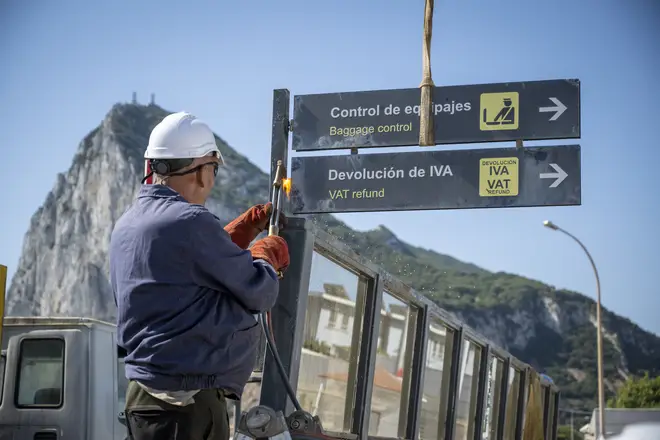
The agreement comes with economic and social adjustments for both communities. Gibraltar has agreed to align tobacco prices more closely with Spain’s and introduce a VAT-style sales tax beginning at 15 percent, rising to 17 percent over time. Spain will gain veto power over future residency permits, leading to a surge in applications from workers seeking to secure their status before the new rules take effect. However, the agreement explicitly stipulates that while people will be able to move freely across the frontier, this does not grant automatic rights to live in Gibraltar.
Owen Smith, head of the Gibraltar Federation of Small Businesses, emphasized the practical benefits. “It’s been a big factor in retention, and certainly a fluid border is going to make life much easier,” he said, noting that the easier border crossing will help Gibraltar businesses recruit and retain workers from Spain. Various airlines have already expressed interest in launching flights between Gibraltar and Schengen-area airports, potentially boosting tourism.
For La Línea de la Concepción and the surrounding Campo de Gibraltar region, the removal of border obstacles comes as welcome economic news. The area has historically suffered from high unemployment—close to 30 percent in recent years—far higher than Gibraltar’s prosperity. Many local businesses depend heavily on Gibraltar workers and visitors for a significant portion of their income. Juan Franco, mayor of La Línea, stressed the historic nature of the moment, explaining that roughly one-third of income for average companies in his town comes from clients in Gibraltar. Hotel occupancy has already increased in anticipation of the changes, and new restaurants and bars have opened along the waterfront.
The treaty still requires formal ratification by the European Parliament, though preparations are well advanced. The agreement resolves the last major unresolved issue from nearly four years of complex Brexit negotiations involving Spain, the United Kingdom, the European Union, and Gibraltar itself. Notably, while the fence disappears and border controls change fundamentally, the long-standing sovereignty dispute between Britain and Spain over Gibraltar remains unresolved, with both nations maintaining their respective claims.
For the people whose lives have been shaped by this border—workers, families, and businesses on both sides—July 15 marks the beginning of a chapter fundamentally different from what has defined the past three centuries. As machinery finishes removing the last sections of fencing, Gibraltar and its Spanish neighbors prepare to discover what free movement and unrestricted daily commerce can mean for communities separated for so long by steel and politics.