

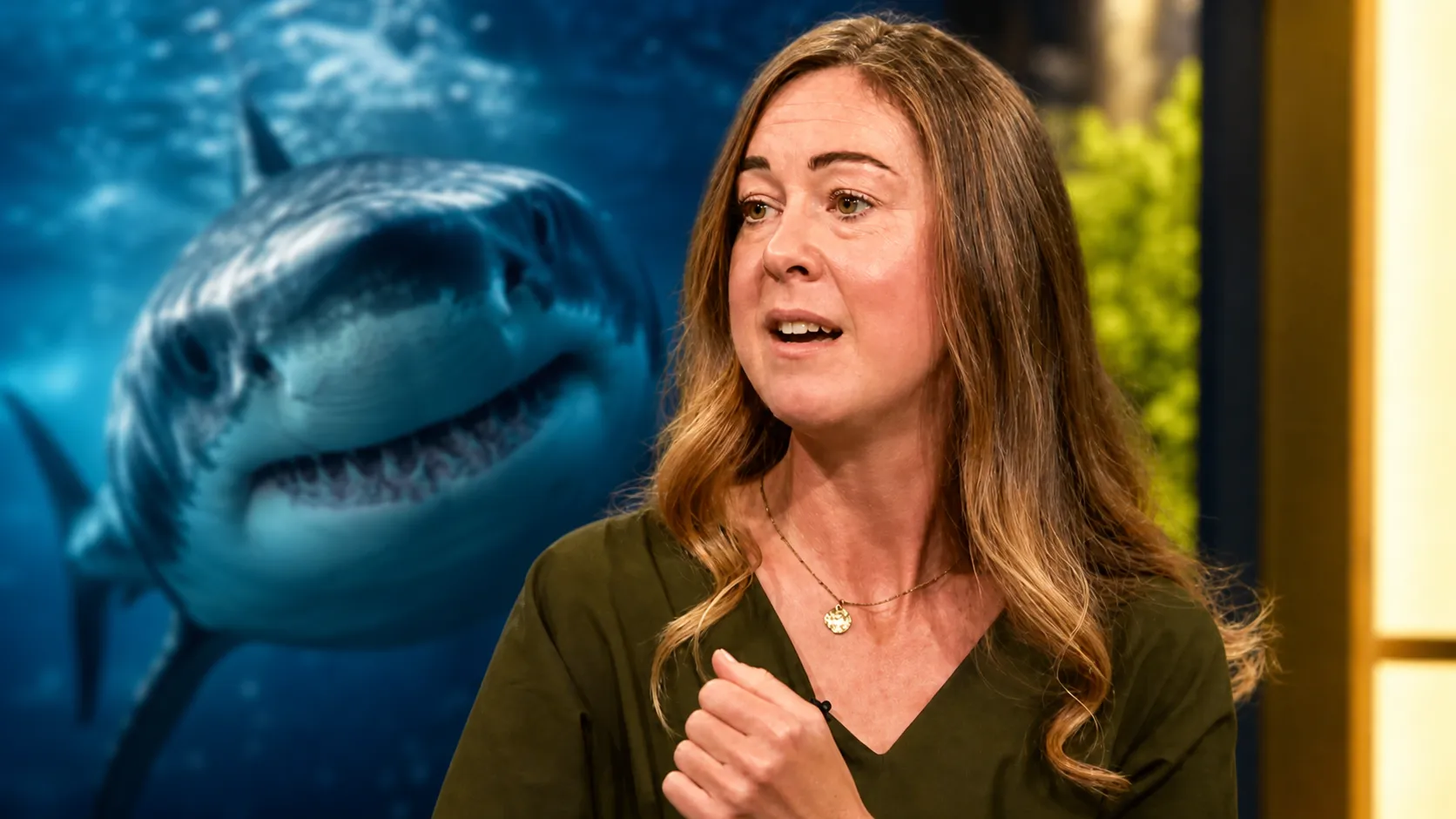
Helen Fairlamb has shared the harrowing details of the shark attack that left her without part of her arm, explaining the moment she sensed the encounter was likely to turn dangerous.
The conservationist survived a reef shark bite in 2024 while free diving near a remote island southeast of Hawaii, joining a very small group of people who have lived through an attack by one of the ocean’s top predators.
Reef sharks are commonly encountered around tropical coral ecosystems and are generally regarded as much less dangerous to humans than species such as tiger sharks or bull sharks. Even so, shark bites can happen suddenly, and authorities in Hawaii have repeatedly stressed that serious incidents remain rare in proportion to the number of people using the ocean each year.
Speaking on ITV’s This Morning, she recounted the incident and the lengthy medical fight that followed after she was critically injured in the water.
Fairlamb said reef sharks are typically seen as posing little risk to humans, but she could tell from the animal’s sudden movement that something had changed.
“So, I was free diving on a breath hold just looking at a school of unicorn fish just immersed in an environment that I love.
“And I noticed some movement out of the corner of my eye, and a reef shark had whipped around quite quickly, and then her style of swimming changed completely and she just very directly moved efficiently like a bullet almost towards me.
“I knew that it was likely going to end with a bite.”

She said the shark latched onto her upper arm, and she responded by striking the areas she knew would be most sensitive in an effort to make it let go.
“She bit me on my upper arm and kind of shook me, so I just hit at the sensitive areas (eyes, nose, and gills), and the shark released.”
According to Fairlamb, attacks from reef sharks are exceptionally uncommon. She believes the shark involved may have been pregnant and acting defensively to protect its unborn young.
After the bite, her colleagues paddled her back to shore while she lost a significant amount of blood. The journey lasted around an hour and 20 minutes, and she said she started to drift in and out.
“A medic was there immediately and he was phenomenal in getting IV access and increasing my blood pressure from a dangerously low level,” she explained.
“But I do remember him saying this is a life over limb situation, ‘you’re probably going to use lose your arm here’.”
By chance, a large plane was flying near the island and made radio contact, allowing her to be airlifted to Guam Regional Hospital for urgent treatment.
She spent three weeks in intensive care before she was well enough to return to the UK, where her recovery continued at the Greater Manchester Major Trauma Hospital.
Doctors there initially told her that amputation would be necessary. However, just one day before the operation was due to take place, they suggested waiting to see whether the arm could still recover.
“They said, ‘look if you can tolerate the pain then let’s see if you can keep the arm for a little longer, who knows what the healing capability of the body is’.”
In the end, Fairlamb kept the arm, though she said she lost half of her bicep as a result of the attack.
“I’ve been incredibly lucky,” she added.
Reef shark encounters are among the most closely watched types of ocean incidents in the Pacific, but wildlife officials note that they account for only a tiny share of the millions of visits people make to Hawaiian waters each year. Experts also caution that the circumstances surrounding a bite often matter as much as the species involved, since sudden movement, low visibility, schooling fish and defensive behavior can all play a role in a shark’s response.
For Fairlamb, the attack has not ended her connection to the sea, but it has changed the way she approaches it. Her account is a stark reminder of how quickly a routine breath-hold dive can become a life-or-death emergency, even in waters where sharks are usually seen as shy and elusive rather than aggressive.