

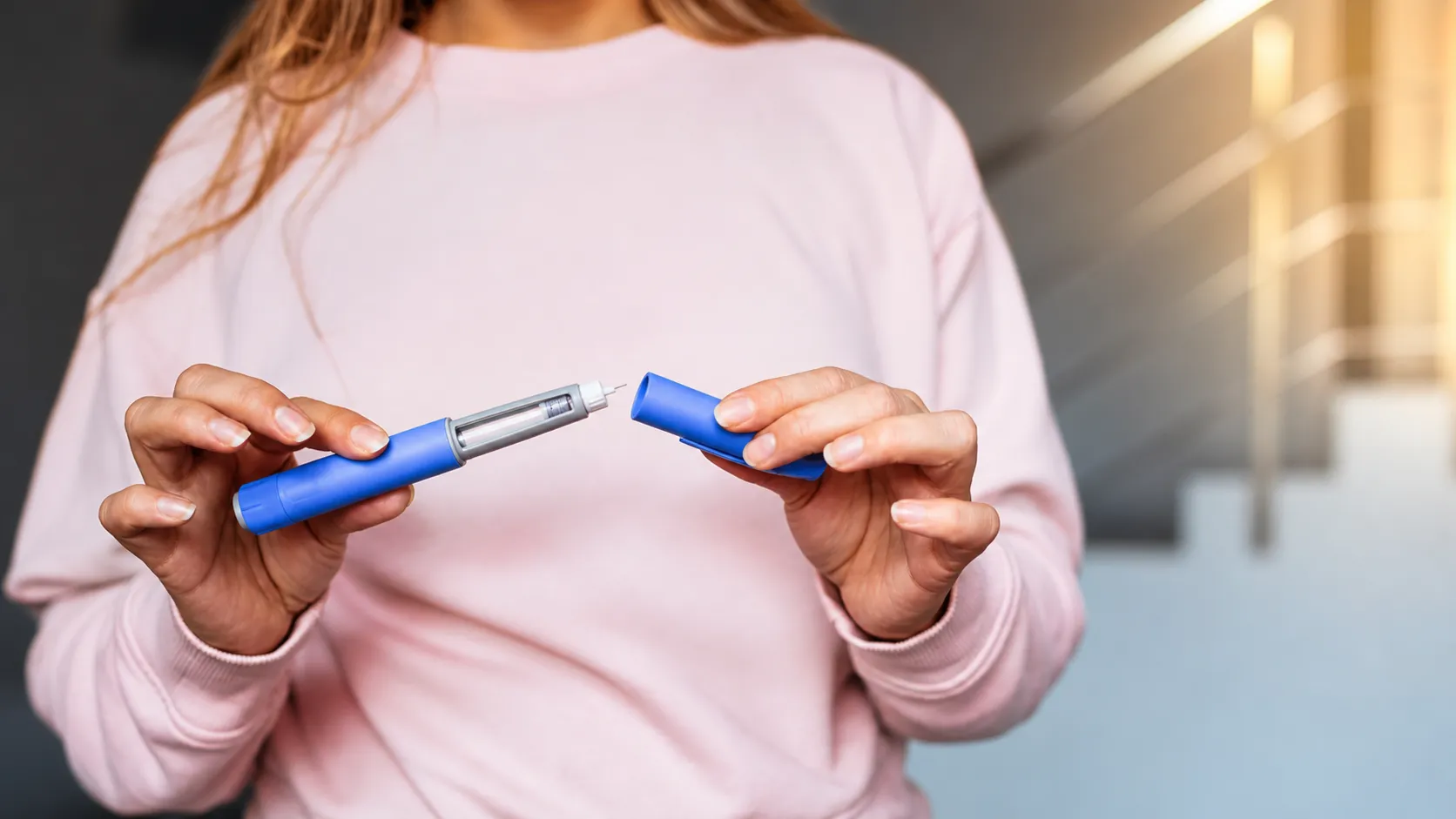
GLP-1 medications can be highly effective for weight loss, but one doctor says people need to avoid three common mistakes if they want to protect their health while using them.
These drugs were first approved to help treat diabetes, and some are also approved for chronic weight management. They work by targeting hormones involved in regulating blood sugar, slowing digestion and affecting the area of the brain linked to appetite.
That’s why many people taking them end up eating less, but experts say the medications work best when they’re paired with a reduced-calorie diet, regular physical activity and a plan to keep nutrition on track.
Even so, not everyone knows how to use GLP-1 medications safely enough to benefit from the weight-loss effects without running into unpleasant side effects.
In some cases, people try to rush the process and go all-in straight away in the hope of losing as much weight as possible.
With 11 per cent of people in the US currently taking a GLP-1 for weight loss, there is a growing need for clear advice on how to use these medications properly.
That is why one specialist has spoken out about the kind of misuse he strongly advises people to avoid.

Dr Spencer Nadolsky, an obesity specialist and co-host of the Docs Who Lifts Podcast, outlined three things people should never do while taking a ‘GLP1 medicine’.
The first point, he said, is to ‘not go up on your dose if you don’t have to’.
He stressed that if ‘you’re having great appetite’ and ‘feeling great’, there is no need to raise the dose purely in an attempt to lose more weight.
He said:
“The rule of thumb is if you’re losing about a half a per cent to one per cent of your total body weight and you’re feeling really good, there’s literally no reason to go up.”
Dr Nadolsky said that if ‘200 pounds and you’re losing one to two pounds per week’, that counts as solid progress, provided you still feel well on that dose.
He also cautioned that ‘if your doctor is forcing you’ to increase it, then you should ‘push back’ on that recommendation.
That advice lines up with current prescribing guidance, which calls for gradual dose escalation and allows clinicians to delay increasing the dose if patients are not tolerating it well.
The second mistake on his list is being too extreme with cutting back food.
He explained that just eating less than usual is not necessarily enough, unless your diet is already well balanced.
Dr Nadolsky explained:
“Sometimes people really want to stress test these medicines, so instead of eating five or six slices of pizza, they’ll just eat one or two.”
He added:
“But in the beginning, the medicine can make you nauseous and high fat foods can make you feel even worse and then make you want to quit the medicine.”
According to him, people may need to ‘nudge yourself to a healthier dietary pattern’ if they want to get the most from a GLP-1 medicine.
That means focusing more on foods such as fruit, vegetables and other whole foods, while also making sure they get enough protein, fluids and other nutrients.
His final warning was against increasing the ‘dose so much that you absolutely cannot eat’ and fully ‘eliminating your appetite’.
He explained that the ‘goal is to eat fewer calories, not no calories’ and that progress should happen at a manageable, steady pace.
Nutrition experts say people on GLP-1 medicines should be especially careful not to under-eat protein or skip resistance exercise, since rapid weight loss can also mean losing muscle and bone mass.
Doctors also advise people to watch for common side effects such as nausea, vomiting, constipation and dehydration, and to speak to a clinician if symptoms become severe or persistent.
GLP-1 medicines are intended to be used with medical supervision, and people with diabetes who take insulin or certain other glucose-lowering drugs may need extra monitoring because of the risk of low blood sugar.