


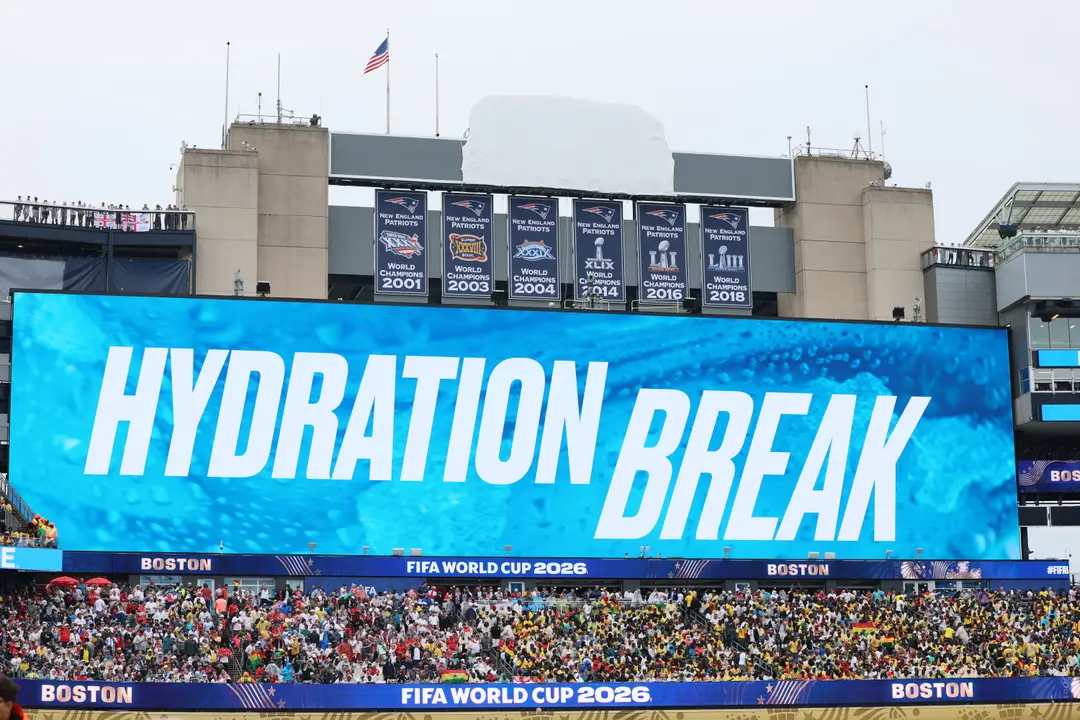
Hydration stoppages at this year’s World Cup have sparked plenty of debate, but the brief pauses could have a major impact on performances on the pitch.
The breaks were introduced because of the intense heat players are dealing with during this summer’s tournament.
At FIFA World Cup 2026, hydration breaks are now part of every match, with referees stopping play for three minutes in the 22nd and 67th minutes to give players a chance to rehydrate and reset. FIFA has said the measure is designed to protect player welfare and ensure equal conditions across all venues, while the sport’s Laws of the Game also allow competition rules to include drinks and cooling breaks in hot conditions.
July is typically the hottest month across North America, with temperatures climbing to around 95°F. While co-host Canada is usually cooler than parts of the US, summer conditions in Mexico can also rise to 95°F.
With those high temperatures in mind, FIFA opted to allow two hydration intervals of three minutes each during matches.
Although some fans have questioned whether those stoppages are needed, Warrior Performance Nutritionist Dan Richardson believes they are essential and could even influence which teams reach the World Cup final this weekend.
Richardson explained: “The hydration breaks have become one of the biggest talking points of this World Cup, but in temperatures above 30°C (86°F) they’re absolutely justified. Players can lose close to a litre of fluid an hour, and sweat is never just water.
“It carries sodium out with it, which is what allows muscles to fire and nerves to signal properly. Lose enough of it and your muscles physically can’t work the way they’re supposed to, which is why replacing electrolytes matters as much as replacing fluid.”
He went on: “Losing as little as two percent of body mass through sweat is enough to affect passing accuracy, shooting and sprint speed, and that drop-off gets worse in the final 15 minutes of a match.
“In a semi-final, that’s the difference between making the right pass in the 89th minute and going home instead of playing in Sunday’s final.”
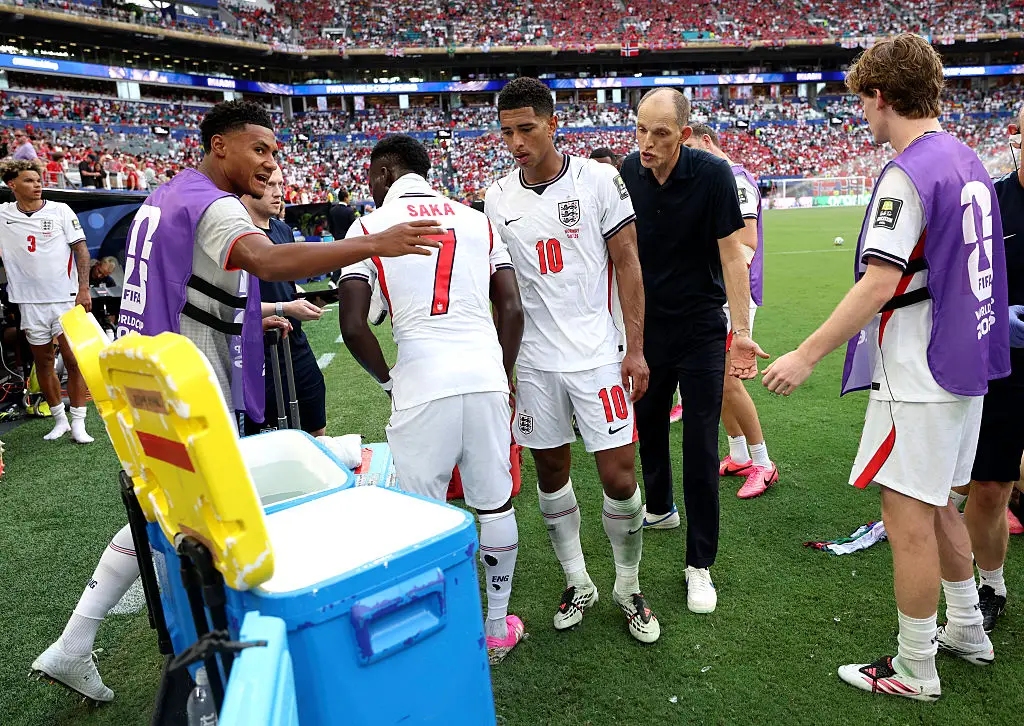
His remarks arrive before England’s semi-final against Argentina, a match that will decide who meets Spain in Sunday’s final in New Jersey.
The appointment of Ismail Elfath as referee has also drawn attention.
Some have pointed out that Elfath is said to be Lionel Messi’s “favorite referee” and has even been described as something of a lucky charm for the Inter Miami star.
That has led to accusations from some supporters that the tournament has been “rigged” in Argentina’s favor, while others have brushed that off and argued Messi is talented enough not to need any assistance.
The semi-final is scheduled to begin at 3pm ET and 12pm PT.

This tournament has also brought in a wide range of rule changes, many aimed at reducing time-wasting and keeping matches moving. Several of them are expected to divide opinion.
Players being substituted are now required to leave the field within 10 seconds using the nearest exit. If they fail to do so, the incoming substitute must wait an extra minute until the next stoppage, meaning their team will temporarily continue with 10 players.
Referees can also begin a five-second countdown if they feel a player is delaying a throw-in or goal kick. If the ball is not back in play by the end of that count, possession changes hands: the opposition gets the throw-in, or in the case of a goal kick delay, they are awarded a corner.

Any injured player who receives treatment off the field must then remain off it for a full minute, leaving their team a player short during that spell.
VAR has also been expanded. It can now check wrongly awarded corner kicks, second yellow cards that lead to a red, cases where the wrong player is shown a yellow or red card, and attacking fouls that happen before the ball comes back into play.
Players who cover their mouths during confrontations will be shown a red card. The thinking behind this is that some players may try to hide abusive language from lip readers, including possible racist remarks.
Any player who walks off the field in protest at a referee’s decision will also receive a red card. If an entire team leaves the pitch and causes a match to be abandoned, that side will forfeit the result.