

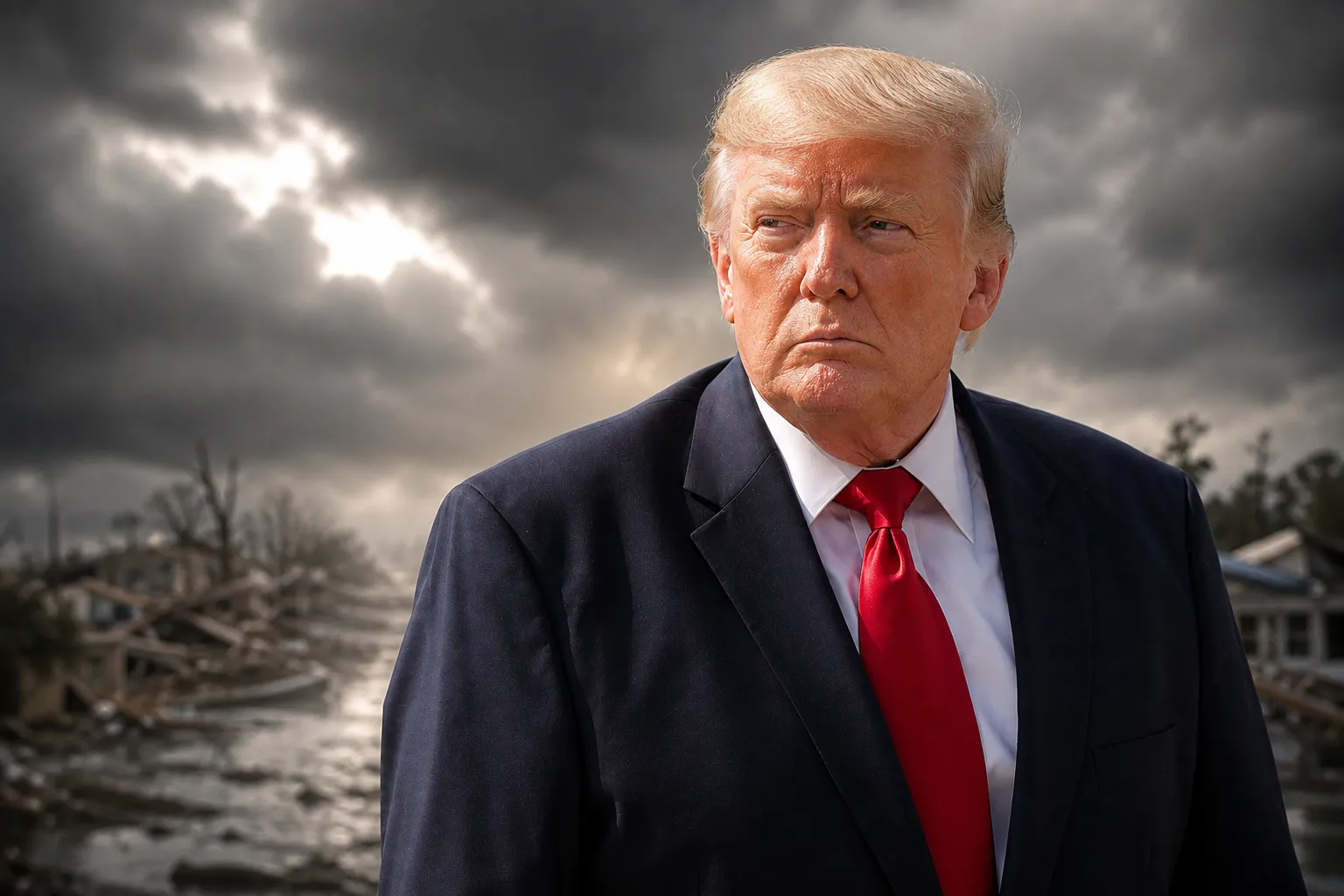
Americans seeking federal disaster aid are experiencing unprecedented delays and rejections under President Donald Trump, with data showing a stark partisan divide in how the administration handles disaster declarations.
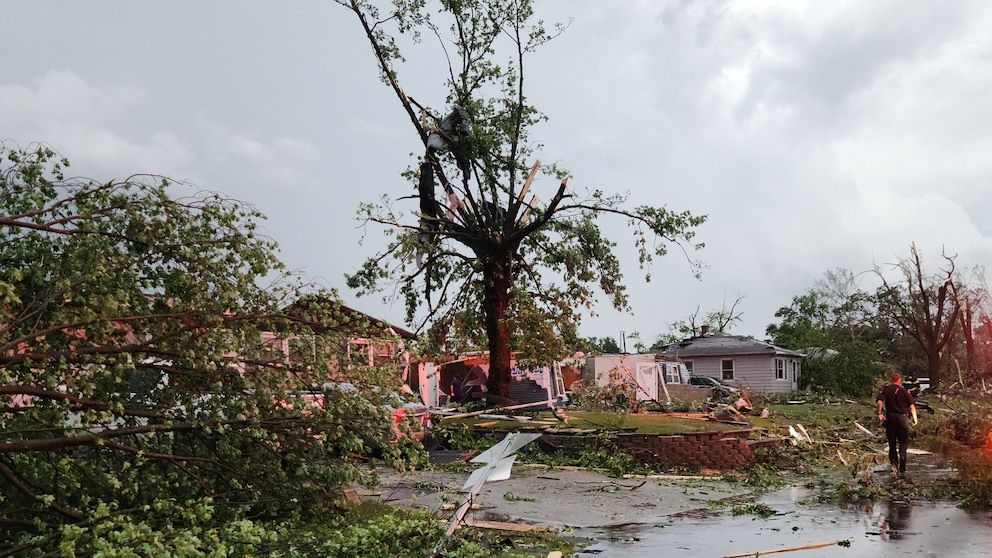
Since taking office last year, Trump has approved about 65 major disaster declaration requests and denied more than two dozen others from states, tribes and territories. An analysis of Federal Emergency Management Agency data shows that the president has approved 80 percent of disaster requests from Republican governors but only about 60 percent from Democratic governors—a disparity unprecedented in the agency’s 47-year history.
The delays are equally striking. Trump takes an average of 80 days to respond to disaster requests from Democratic-led states compared to 39 days for Republican-led states. In contrast, his predecessors including Barack Obama, George W. Bush, Bill Clinton and George H.W. Bush all had average disaster approval times of less than two weeks. Of Trump’s approvals, 70 percent have taken at least a month, up from about one-quarter of requests during Trump’s first term and the Biden administration.
The partisan gap widens further when examining approval rates based on the 2024 presidential election. Trump has approved more than three-fourths of requests from states that voted for him but less than half from states that did not. Among states with Democratic governors and two Democratic senators, Trump approved just 23 percent of requests, compared to 89 percent for states with all Republican leadership.
The consequences of these delays and denials are severe for disaster survivors. When the approval process stretches on for weeks or months, residents must wait longer to receive federal aid for daily living expenses, temporary lodging and home repairs. Delays also hamper recovery efforts by local officials uncertain whether they will receive federal reimbursement for cleaning up debris and rebuilding infrastructure.
The partisan pattern became especially visible in July when Trump rejected $227 million in aid requests from New York, New Jersey, Massachusetts and Rhode Island following a major snowstorm in February. Two days earlier, he had approved Federal Emergency Management Agency disaster aid for six Republican-led states, while publicly praising GOP politicians and candidates in those states. New Jersey officials documented $84.4 million in damage that exceeded the state’s roughly $18.5 million qualification threshold. Similarly, FEMA documented $79 million in damage in New York, $45 million in Massachusetts and $19 million in Rhode Island—all exceeding their respective thresholds.
“On the same day you approved major disaster declarations for several Republican-led states, you chose to leave Rhode Islanders out in the cold,” Rhode Island’s congressional delegation wrote to Trump. “It is unacceptable to politicize the disaster declaration process.”
Trump has also mixed disaster aid announcements with political endorsements on social media. When announcing approval of $8.6 million for Louisiana after a tropical storm, he praised Republican politicians and endorsed GOP Senate candidate Julia Letlow. Democratic senators have demanded documents and explanation from the White House, questioning whether Trump is approving aid based on political considerations rather than damage assessments.
White House spokesperson Abigail Jackson has denied politicization claims, stating that Trump “conducts a more thorough review than any administration before him, ensuring American tax dollars are used appropriately and efficiently by the states.” However, Trump’s track record contrasts sharply with his first term, when he approved 93 percent of disaster requests from Democratic-led states and 89 percent from Republican-led states, with political affiliation having what former FEMA administrator Peter Gaynor called “zero” effect on decisions.
The delays and denials occur as the Trump administration pursues major changes to FEMA. A council appointed by Trump has recommended shifting greater responsibility to states and raising thresholds for federal assistance. The proposed changes would reduce the federal government’s share of disaster aid from a minimum of 75 percent to 50 percent of costs, require states to meet annual minimum expenditures before qualifying, and consolidate multiple aid categories into single capped payments for survivors.
Some proposals would make it significantly harder for states to qualify. The recommended increase in the “per-capita indicator” threshold—from $1.94 to $2.99—would have excluded 29 percent of major disaster declarations made between 2012 and 2025, according to analysis by disaster experts.
Cameron Hamilton, awaiting Senate confirmation as FEMA’s permanent director, pledged during a recent committee hearing to try to speed up disaster declaration decisions and reimbursements. But Democratic governors and state officials remain skeptical about the administration’s intentions.
“Never in my lifetime has a president treated disaster relief as a political cudgel,” said Washington Senator Patty Murray, the top Democrat on the Appropriations Committee. “What President Trump has done to politicize disaster relief and hold up support for Americans who need it is frankly unforgivable.”
When requests are denied, individuals, insurers and local governments are left to shoulder recovery costs themselves—a burden that ripples through communities for years.