

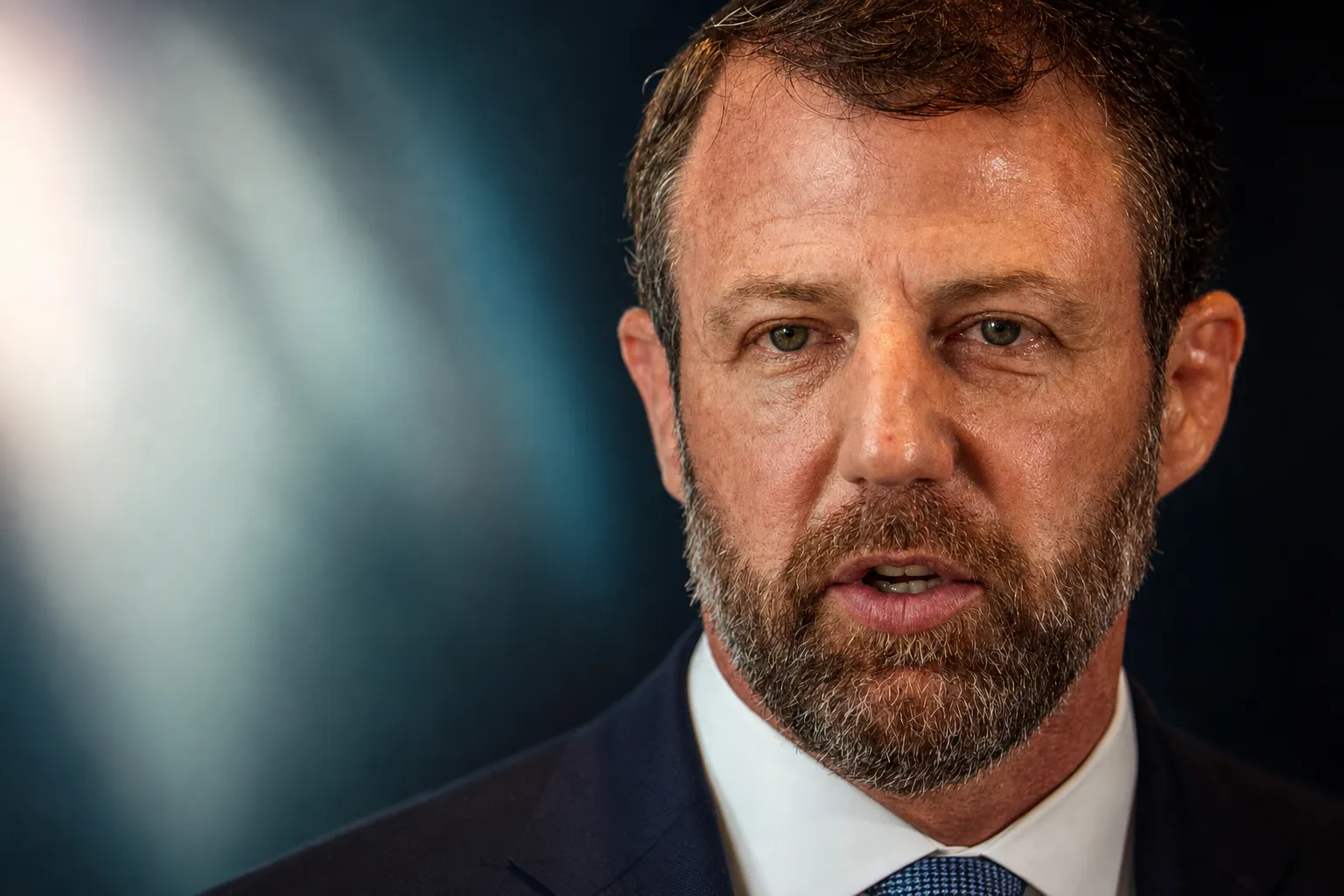
Markwayne Mullin is facing his first major test as Homeland Security secretary after three people were killed in encounters with ICE officers in less than a week, marking a significant challenge to the strategy that has defined his early tenure at the department.
When Mullin took over from Kristi Noem in late March, he pledged to take a markedly different approach than his predecessor. While Noem was known for inserting herself into immigration raids and making aggressive public statements about controversial incidents, Mullin promised to keep the department out of the headlines while still delivering on the Trump administration’s mass deportation priorities. For months, that approach appeared to work. The department continued intensive immigration enforcement—arresting 10,000 people over a five-day period in late June alone—but largely without the dramatic public visibility that defined Noem’s tenure.
That careful balance has now collapsed. The recent deaths in Houston, Maine, and Florida have thrust the department back into national scrutiny and exposed the fundamental tension that defines Mullin’s position. He is caught between two competing demands: the White House’s insistence on aggressive immigration enforcement and mounting pressure from his former colleagues in Congress and local officials seeking answers about the escalating violence.
The three fatal incidents occurred in quick succession. ICE officers in Houston and Maine shot and killed individuals in their cars during immigration operations. In Florida, a man fleeing from ICE officers was killed in a car crash. Mullin has not spoken publicly about any of the deaths, with the department’s public affairs office releasing only brief statements after each incident. Behind the scenes, however, Mullin has been more active, according to multiple reports, sharing information with lawmakers and talking directly with both senators from Maine.
The political fallout has been immediate and severe. Democratic Representative Seth Magaziner said on the House floor this week, while waving a newspaper: “Well, you’re back on the goddamn front page now,” a direct reference to Mullin’s stated goal of keeping DHS out of the spotlight.
Conservative criticism of Mullin has centered on his decision to order ICE to suspend most vehicle stops following the second shooting death in Maine. Conservative influencer Nick Sorter called the suspension “TOTAL CAPITULATION to the left,” while activist Mike Davis claimed Mullin was heeding advice from Maine Senator Susan Collins. The suspension sparked a direct confrontation with President Trump, who posted on social media that the nation “CANNOT give up one of ICE’s most important and effective Crime Fighting tools, THE TRAFFIC STOP!”
Mullin quickly moved to repair the damage with Trump, reposting the president’s words on social media and stating that he and Trump were “on the same page.” It was unclear whether vehicle stops would actually resume, but the episode illustrated the razor-thin margin Mullin must navigate between maintaining order and satisfying Trump’s enforcement demands.
Mullin, a former senator from Oklahoma who gave up his Senate seat for this assignment, was widely seen as a more measured choice than Noem after her tenure ended in controversy. The Minneapolis incidents in January that killed two U.S. Citizens at the hands of federal immigration officers had forced Noem out. She had faced intense criticism for her aggressive public statements defending the shootings and characterizing the killed drivers as domestic terrorists.
Trump heaped praise on Mullin early in his tenure, calling him “so incredible” and “amazing” for sacrificing his Senate career. The president’s support appeared to have given Mullin some latitude to implement a quieter approach to enforcement. The administration moved away from the high-profile immigration raids in major cities that had characterized Noem’s leadership, and Mullin signaled a willingness to impose some constraints on ICE’s tactics, including requiring judicial warrants for home entries in most circumstances.
Yet the recent deaths have upended that narrative. Tom Warrick, a former counterterrorism official at Homeland Security who is now at the Atlantic Council, said Mullin faces an exceptionally difficult challenge. “Trying to deal with competing policy objectives is a challenge for any Cabinet secretary, but Mullin has this worse than most,” Warrick said, noting that the White House wants the department to meet ambitious deportation targets while simultaneously maintaining public trust.
Republican lawmakers have offered some support. Representative Andrew Garbarino of New York, who chairs the congressional Homeland Security Committee and has requested a bipartisan briefing on ICE’s use of force policies, said Mullin “has lived up to what he’s wanted to do to try to change the atmosphere over there,” adding that “nobody is celebrating that ICE is back in the headlines.”
The deaths have also raised questions about the legacy burdens Mullin inherited from his predecessor. Under Noem, DHS purchased a $70 million luxury Boeing 737 specifically designated for deportation flights and executive travel, complete with a bedroom and bar. The acquisition sparked bipartisan criticism and became a symbol of Noem’s controversial leadership. Mullin is now reportedly considering selling the aircraft, though no final decisions have been made.
These early weeks have proven that Mullin’s strategy of quieter, less visible enforcement cannot withstand the pressures that come from actual enforcement operations. Immigration enforcement by its nature involves police encounters that sometimes turn violent. The challenge facing Mullin is finding a way to carry out the Trump administration’s aggressive deportation agenda without the deaths and confrontations that inevitably draw public attention and political backlash. So far, that balance remains elusive.
The incidents also raise broader questions about how the Trump administration will manage immigration enforcement in American cities where there is significant opposition to the program. Mullin has suggested he wants a different approach than Noem’s, but the pressure from the White House to demonstrate results may ultimately limit his options. His handling of the coming weeks will likely determine not just his political future, but also the trajectory of immigration enforcement policy under Trump’s second term.