

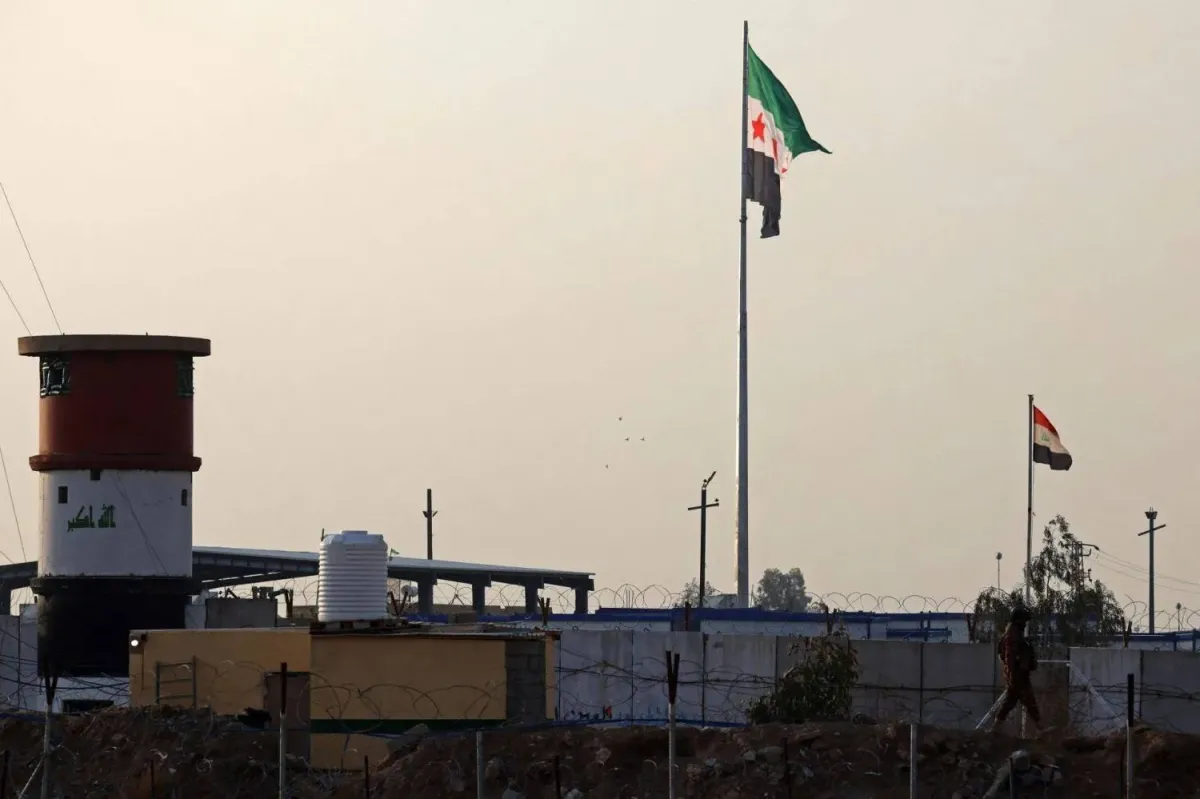
Syrian authorities have intercepted another major shipment of advanced weapons allegedly destined for Lebanon’s Hezbollah, marking the latest in a series of seizures that underscores the post-Assad government’s aggressive security pivot. Syrian state media announced Thursday that specialized security units had intercepted a truck carrying advanced weapons and missiles at the Syrian-Iraqi border before the cargo could enter Syrian territory.

An Interior Ministry source told Syria’s state news agency that preliminary investigations indicated the weapons were intended to transit Syria and be delivered to Hezbollah. The announcement reflected a significant shift in Syria’s approach to the militant group, which once operated openly throughout the country under the previous government of Bashar al-Assad.
The interception represents the first such seizure announced along Syria’s border with Iraq, though Syrian authorities have repeatedly disrupted alleged smuggling attempts along other routes in recent months. The seizure is part of a broader pattern this year in which Syrian security forces have intercepted anti-tank guided missiles, rockets, drones, and other weapons bound for the Lebanese organization.
Sources told regional media outlets that the hidden shipment contained missiles, booby-trapped drones, shells, and explosives that were concealed in oil tankers supposedly headed from Iraq to Syria’s Banias oil refinery. No arrests were immediately announced following the interception.
Under former President Bashar al-Assad, Syria functioned as a primary transit route for Iranian weapons flowing to Hezbollah. For decades, the Syria-Iraq-Lebanon corridor served as a key smuggling path for the Iranian-backed militant group. The situation changed dramatically following Assad’s removal from power in December 2024 by a coalition of former rebel groups that had fought bitterly against Hezbollah during Syria’s civil war.
The new Syrian administration has made clear its intention to prevent its territory from being used for illicit weapons transfers. Interior Ministry officials stated that protecting Syria’s borders and safeguarding national sovereignty remained top priorities, and that the country would not allow its territory to be used as a transit route for arms smuggling or other activities threatening Syrian or neighboring security.
Syria’s crackdown reflects shifting regional dynamics and international pressure. U.S. President Donald Trump said in June that he had discussed combating Hezbollah with Syrian President Ahmad al-Sharaa. However, al-Sharaa has resisted suggestions that Syria should intervene militarily in Lebanon, instead emphasizing that he wants to prevent his country from being drawn into wider regional conflicts. Lebanese President Joseph Aoun’s office has stated that al-Sharaa assured Beirut that Syria would not interfere in Lebanon’s internal affairs while pledging greater security cooperation.
The latest seizure also comes as regional tensions remain high following months of conflict between Israel and Hezbollah. Fighting broke out in early March after Hezbollah attacked Israeli territory, drawing Lebanon into the broader Middle East war. Israeli forces subsequently conducted operations across the Lebanese border and have made repeated incursions into Syrian territory as well.
Iraq’s Joint Operations command announced that it formed a committee to investigate the smuggling attempt and would coordinate with Syrian counterparts, though officials did not provide additional details about the operation or the suspected smugglers’ identities.
Hezbollah has not commented on the announcement. The group has consistently denied Syrian government accusations about its activities in Syria since Assad’s fall, insisting it maintains no presence or operational activity within Syrian territory. These denials come despite repeated seizures of weapons that Syrian officials say originated from the group.
The pattern of seizures demonstrates both the determination of Syria’s new authorities to reassert control over their borders and the ongoing attempts by Hezbollah to maintain supply lines. Analysts note that while Syrian forces may disrupt some smuggling routes, Hezbollah continues to rely on remaining networks to move weapons across the porous Syrian-Lebanese border. The group is attempting to rebuild its capabilities following significant losses in recent military conflicts while facing unprecedented pressure from Israeli operations and changes in regional power dynamics.