

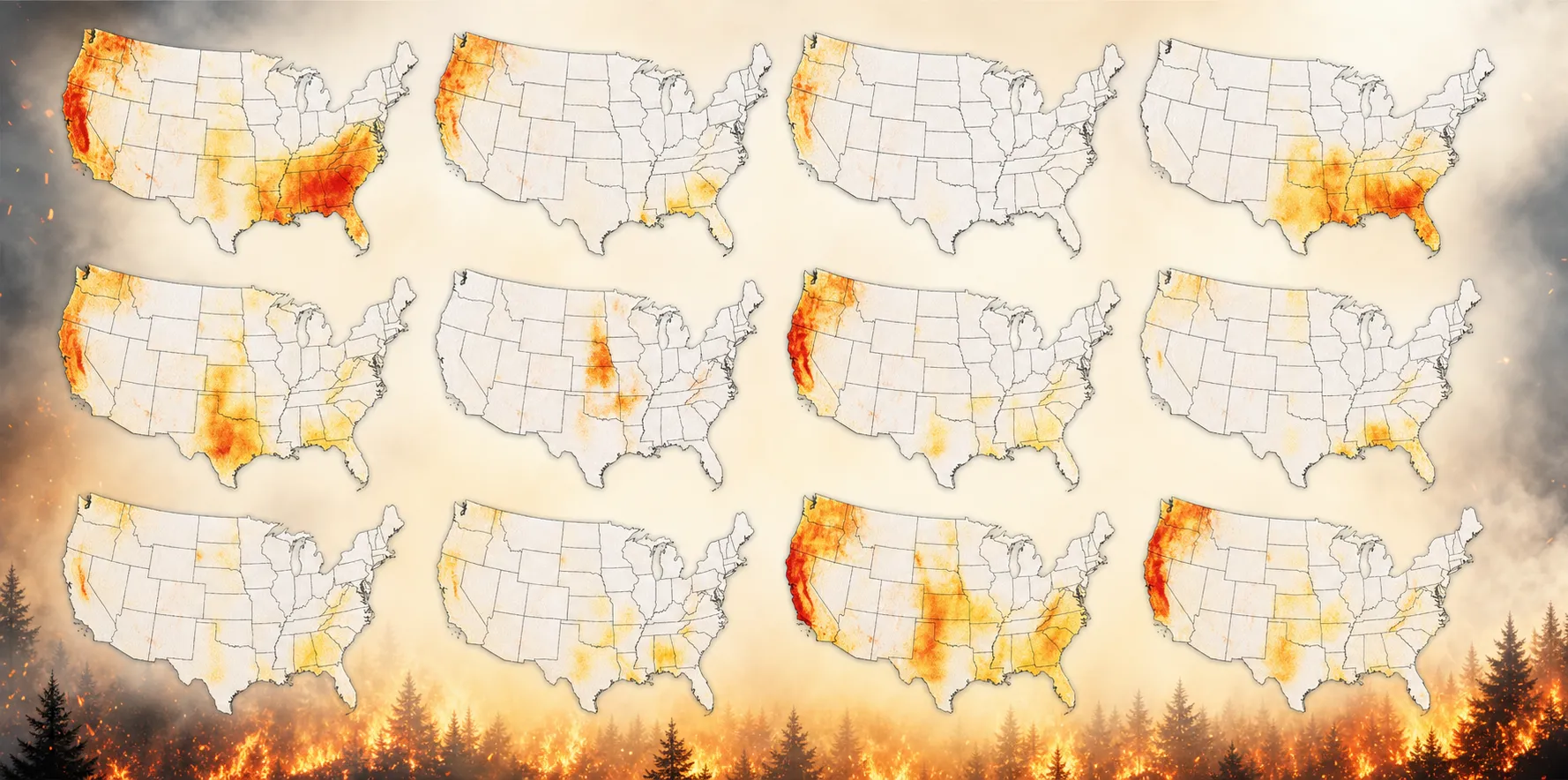
Millions of Americans are facing dangerous air quality in the middle of July as wildfire smoke spreads across the country. With smoke reaching from Canada all the way to the Northeast, understanding how to protect yourself and your family from the health hazards of wildfire smoke has become essential knowledge for anyone breathing affected air.
Wildfire smoke is not ordinary air pollution. When wood and vegetation burn in large fires, they produce a complex mixture containing fine particulate matter smaller than 2.5 microns, known as PM2.5, along with toxic gases and chemicals. These particles are so tiny that 30 of them could line up across a single human hair. Despite their microscopic size, they pose serious health risks by traveling deep into the lungs and even entering the bloodstream, potentially triggering heart attacks, strokes and respiratory problems.
The health effects of wildfire smoke range from immediate irritation to long-term damage. Exposure can cause burning eyes, a runny nose, coughing and difficulty breathing. For people with asthma, chronic obstructive pulmonary disease (COPD), heart disease or other chronic conditions, the effects can be significantly more severe. Children, older adults and pregnant people face heightened risks, along with outdoor workers who cannot easily avoid smoky conditions. Crucially, everyone is vulnerable to wildfire smoke exposure, not just sensitive groups, especially when air quality reaches hazardous levels.
The best defense against wildfire smoke starts indoors. Staying inside with windows and doors closed provides the most effective protection, reducing exposure to ambient air pollution by at least one-third or more. When smoke is visible or present in your area, keep windows and doors closed and use air conditioning set to recirculation mode to keep outdoor smoke from being drawn inside. If your home has an HVAC system with a fresh air intake, close the outdoor intake damper or switch to recirculation mode during smoky periods.
For additional indoor protection, a portable air cleaner with a HEPA filter can significantly reduce smoke particles indoors. Air purifiers with high-efficiency MERV filters (MERV 13-16) combined with activated carbon can capture fine smoke particles and reduce odors. Research shows that well-designed air purifiers can reduce particle concentrations by as much as 85 percent. If you cannot afford a commercial air purifier, a do-it-yourself unit made by attaching furnace filters to a box fan can serve as a temporary solution when commercial products are unavailable or unaffordable, though it should not be considered a permanent replacement.
When you must go outside during smoky conditions, wear a properly fitted N95 or KN95 mask. If fitted correctly and worn properly, an N95 mask filters out 95% of particles larger than 0.3 microns, making it highly effective against the 2.5-micron particles in wildfire smoke. The key is fit: the mask must seal closely to your face around all edges, or smoke will slip around the filter instead of passing through it. Look for masks with the NIOSH approval stamp and select models with two straps that cross over your head rather than looping around the ears, allowing for a tighter seal. Cloth masks and surgical masks provide minimal protection against wildfire smoke particles. Reusing N95 masks lowers their effectiveness, so starting with fresh masks before heading outdoors offers the best protection.
Understanding air quality levels helps you make informed decisions about outdoor activities. The Air Quality Index (AQI) provides a color-coded scale showing how clean or polluted the air is. At AQI levels of 0-50 the air is good, 51-100 is moderate, and 101-150 is unhealthy for sensitive groups. Levels of 151-200 are unhealthy for everyone, 201-300 is very unhealthy, and 301 and above is hazardous with emergency conditions. Check your local AQI at AirNow.gov, through weather apps or by searching online with your ZIP code. AQI values change throughout the day as smoke shifts with the wind, so checking frequently during smoky conditions is important.
When air quality reaches unhealthy levels, reduce outdoor physical activity and exercise indoors instead. Avoid strenuous outdoor activity when the AQI exceeds 100, and seriously consider staying indoors when levels reach 200 or higher. For people with respiratory or cardiovascular disease, avoiding outdoor exercise is especially critical. If you must work outdoors during smoky conditions, take frequent breaks to rest, remove your mask briefly in less smoky areas if you feel dizzy or unwell, and monitor your symptoms carefully.
Other practical steps include keeping all your medications on hand, particularly inhaled asthma medications, and avoiding swamp coolers or evaporative coolers during smoke events since they draw outdoor air directly into your home. Reduce other indoor pollution sources as well. Smoking cigarettes, using gas stoves, burning candles and vacuuming all increase indoor particle levels that compound wildfire smoke exposure. If you must vacuum, use a HEPA-filter-equipped vacuum to avoid resuspending particles.
Stay informed about conditions by following local news and official guidance from health authorities. If you experience severe symptoms like chest pain or difficulty breathing, seek medical attention immediately. For ongoing respiratory or cardiac concerns during smoke events, contact your healthcare provider for personalized guidance. Check in on neighbors, friends and family members who fall into at-risk categories, particularly during prolonged smoky periods, ensuring they have access to safe indoor spaces and necessary medications.
While wildfire smoke can spread hundreds or even thousands of miles from the source, taking these protective measures significantly reduces your personal exposure and helps safeguard your health during smoke events.