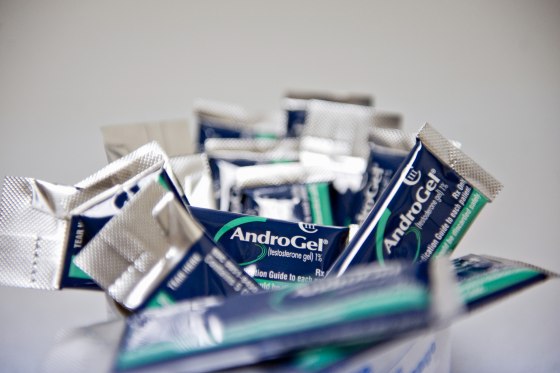
Health officials serving under President Donald Trump want to make it easier for men to get a prescription for testosterone, marking the latest twist in a decades-long debate over the benefits and risks of replacing the hormone that affects sex drive, mood and other health factors.
The shift is backed by Health Secretary Robert F. Kennedy Jr. And other top officials, and aligns with the messaging of online influencers and podcasters who tout testosterone as a way to boost muscle and energy. This week, Defense Secretary Pete Hegseth announced that the military would begin screening troops for low testosterone and offering the hormone as a way to help them operate at their “absolute best.”
Simultaneously, the Food and Drug Administration has been moving to ease access to testosterone replacement therapy. Last year, the agency removed a boxed safety warning about possible heart risks from testosterone products. Last month, it proposed rewriting prescribing instructions to clear the way for using testosterone against age-related symptoms, such as low libido and erectile dysfunction.
The timing reflects a major shift in how the government views the treatment. Currently, the FDA label states that testosterone is only approved for abnormally low testosterone levels caused by serious medical conditions or injury. The proposed changes would remove the statement that safety and effectiveness have not been established in men with age-related low testosterone. The agency would also ease longstanding warnings about prostate cancer risks and revise cautions about enlarged prostate.
The proposed changes are based on newer clinical evidence, particularly a large study known as the TRAVERSE trial that followed more than 5,200 men. After two years, that research found no meaningful increase in heart attack, stroke or related problems between men receiving testosterone gel and those getting a placebo. Regulators say this evidence justifies relaxing restrictions that were put in place in 2015, when concerns about cardiovascular risks prompted the FDA to add stern warnings to testosterone products.
Some medical experts support the changes. Dr. Helen Bernie, a urologist and director of sexual health at Indiana University, says the patients she sees complaining of low testosterone symptoms are “regular men” whose symptoms are “dramatically affecting their quality of life.” Research has shown that testosterone therapy can improve erectile dysfunction, libido and other sexual measures, along with effects on mood, muscle strength and bone density in some patients.
But the potential for overprescribing testosterone is real and helped lead to the current restrictions in the first place. In the early 2010s, drugmakers spent millions on television advertisements for testosterone gels, patches and other products, promising relief from “low T” and a laundry list of symptoms including fatigue, muscle loss, brain fog and weight gain. By 2013, the drugs were generating more than $2 billion in sales annually, despite lacking FDA approval for most of the conditions being advertised.
A 2023 study by Michigan researchers found that only 12 percent of men receiving a testosterone prescription met the criteria recommended by medical guidelines, which call for documented symptoms and two separate blood tests confirming low hormone levels.
Current medical guidelines recommend against blanket testing of testosterone levels. Instead, doctors are advised to discuss testosterone therapy only with men who have troubling symptoms and documented low levels of the hormone on two separate tests. Testing is challenging because testosterone levels naturally fluctuate throughout the day.
Some experts worry that easing prescribing restrictions could repeat the overprescribing problems of the past decade. Medical researchers have documented that inappropriate testosterone prescribing can worsen hypertension and sleep apnea, and can shut down the body’s natural testosterone production, leading to low sperm production and infertility. There are also concerns about misuse and abuse, especially when testosterone is used without a clear medical need.
Dr. Adriane Fugh-Berman, a professor of pharmacology and physiology at Georgetown University Medical Center, has criticized the FDA panel for glossing over known risks of testosterone treatment, including high blood pressure.
One urologist raised concerns about how broader access might play out in practice. “I don’t understand how making it easier to prescribe gets it into the hands of endocrinologists and urologists, as opposed to any anti-aging or longevity clinic that can write a prescription,” said Dr. Philip Werthman, director of the Center for Male Reproductive Medicine in Los Angeles.
Experts largely agree on how testosterone therapy should be prescribed when appropriate. None advocate administering treatment based on symptoms alone, and they all agree that men receiving therapy require ongoing monitoring to ensure testosterone levels remain normal and adverse effects are avoided. Some experts caution that it should not be used as a general tonic for people with low energy.
Recent research has bolstered the case for testosterone’s safety for certain conditions. Studies by the National Institutes of Health found that testosterone improved sexual function and had a small effect on mood, though there was little improvement in measures like fatigue, memory or overall well-being.
The administration’s enthusiasm for testosterone reflects a broader push to expand treatment options for men’s health. But the debate exposes fundamental disagreements about how to balance genuine medical benefits against the risks of overprescribing to men who do not truly have a medical condition requiring treatment.