

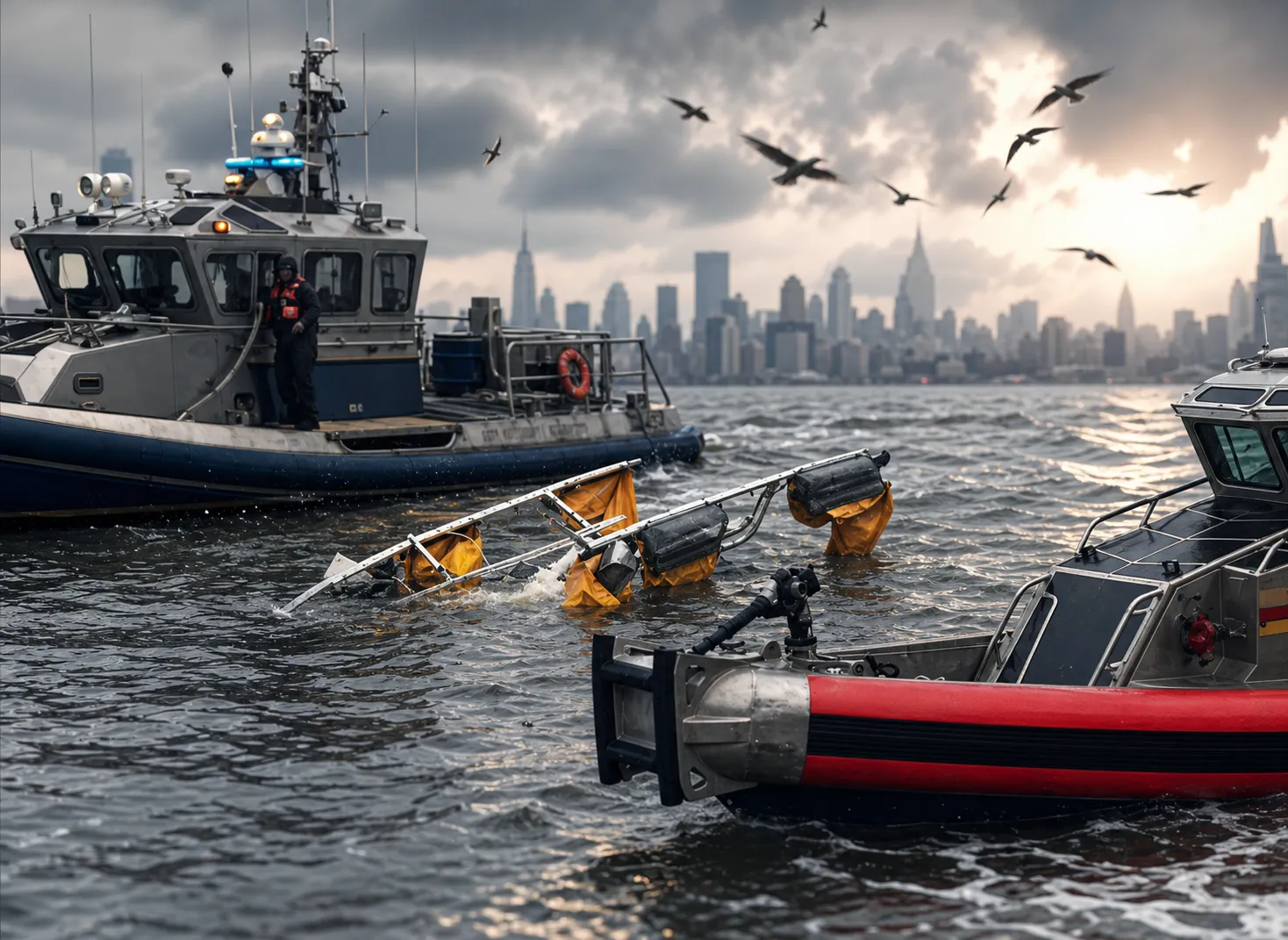
Federal investigators have found evidence suggesting that a bird strike likely caused the catastrophic helicopter crash into the Hudson River in April 2025 that killed six people, according to a National Transportation Safety Board report released this week. The discovery marks a significant finding in the ongoing investigation into one of New York City’s deadliest aviation disasters in recent years.
The Bell 206 LongRanger IV helicopter operated by New York Helicopter plunged into the Hudson River near Jersey City on April 10, 2025, during a sightseeing tour. The aircraft carried five passengers from a Spanish family and pilot Seankese Johnson, a 36-year-old Navy veteran. All six people on board were killed in the crash, which occurred after the helicopter suddenly broke apart in midair while flying at approximately 675 feet altitude.
The passengers were Agustin Escobar, a Siemens executive, his wife Mercè Camprubí Montal, and their three young children—ages 4, 8, and 10. The family had hired the helicopter tour as part of a birthday celebration. Johnson, who had recently relocated to New York City to pursue his aviation career, had accumulated approximately 790 hours of total flight time and held a commercial pilot certificate with instrument and rotorcraft ratings.
The preliminary investigation revealed that the helicopter experienced a catastrophic in-flight breakup, with the tail boom and main rotor system separating from the fuselage while the aircraft was still airborne. The main body of the helicopter crashed into the river in an inverted position. Witnesses reported hearing loud “bangs” or explosive sounds before observing the rotors detach from the aircraft.
The NTSB’s analysis of wreckage recovered from the river floor, combined with surveillance video footage, has pointed toward evidence of a bird strike as a likely cause. Investigators documented physical evidence on key helicopter components that appears consistent with bird strike damage. The finding represents a significant step forward in understanding what triggered the sudden structural failure that led to the in-flight breakup.
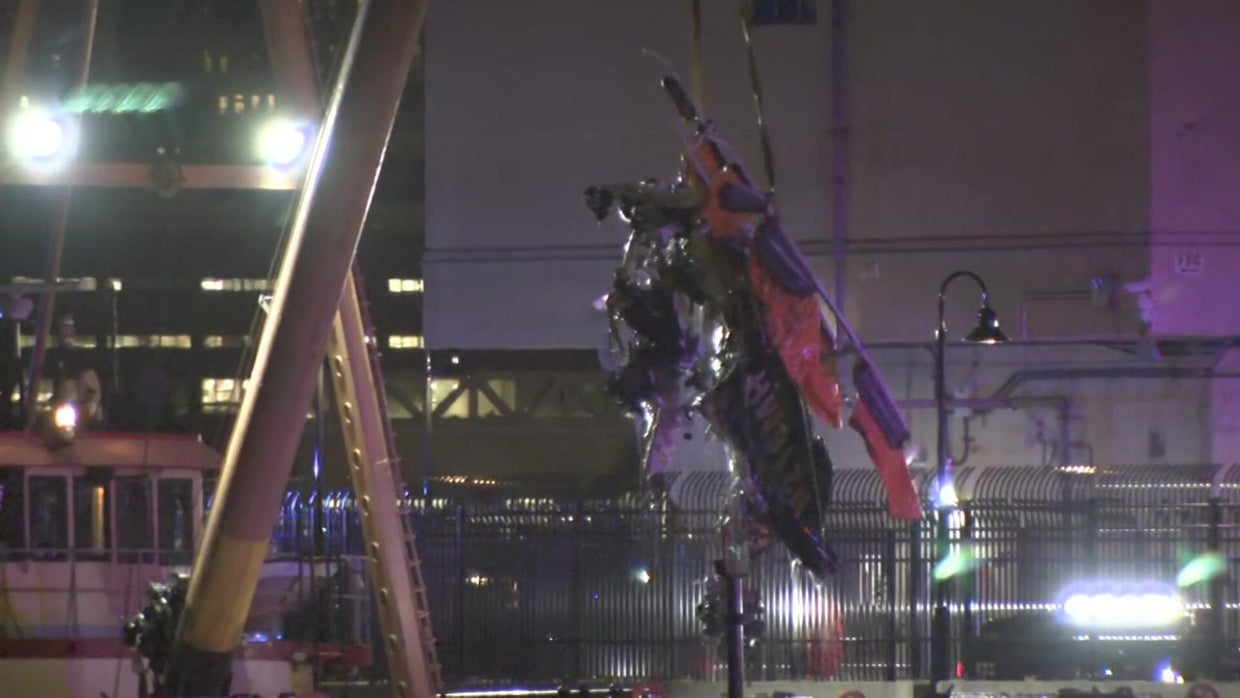
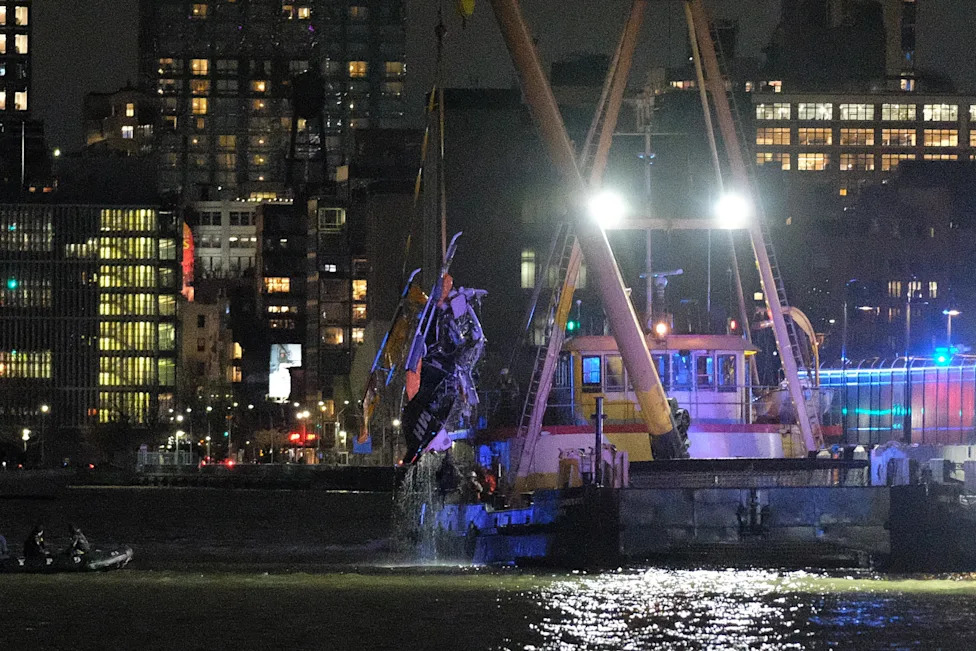
Recovery operations proved challenging, with divers working in the cold Hudson River waters to locate and retrieve critical components including the main rotor, tail rotor, and other structural elements needed for forensic examination. The helicopter, built in 2004, was operating on its eighth flight of the day when the crash occurred. The aircraft lacked flight data recorders, which are not required for helicopters of this type, though the pilot was wearing camera-equipped sunglasses that could have recorded the accident. Those glasses were never recovered.
In the immediate aftermath of the crash, three working theories emerged: bird strike, drone strike, and mechanical failure. While earlier investigations could not rule out any of these possibilities, the NTSB’s examination of physical evidence has increasingly pointed toward the bird strike scenario. The finding is based on careful forensic analysis of the recovered wreckage and examination by multiple agencies including the Federal Aviation Administration, Bell Textron, and Rolls-Royce.
The investigation also revealed that New York Helicopter had a troubled safety history. The company had previously filed for bankruptcy in 2019 and faced scrutiny over past incidents. In 2013, one of its helicopters lost power in midair and was forced to make an emergency landing in the Hudson River, an incident the NTSB attributed in part to improper maintenance. A separate 2015 incident involved a hard landing when pilots lost control of one of the company’s helicopters.
The crash sparked immediate action from federal regulators and lawmakers. The Federal Aviation Administration announced that New York Helicopter Tours was shutting down operations immediately following the accident. The FAA subsequently issued an emergency order grounding the company on April 14, 2025. The agency launched a comprehensive review of the operator’s license and safety record and began analyzing helicopter and airplane collision hotspots nationwide.
U.S. Senator Chuck Schumer of New York called for stricter oversight of helicopter tour companies operating in the city, accusing them of “cutting corners and putting profits over people.” The crash revived long-standing concerns about the safety of sightseeing flights over Manhattan and the Hudson River corridor. In the two decades preceding this accident, five commercial sightseeing helicopters had crashed in the rivers surrounding Manhattan, killing 20 people before this tragedy.
The final NTSB report determining the probable cause of the crash is expected approximately a year from the preliminary investigation’s release. Investigators will continue examining the recovered components and analyzing the forensic evidence to provide a comprehensive understanding of the accident sequence and whether any mechanical, maintenance, or operational factors contributed to the bird strike’s catastrophic effects on the helicopter’s structural integrity.