

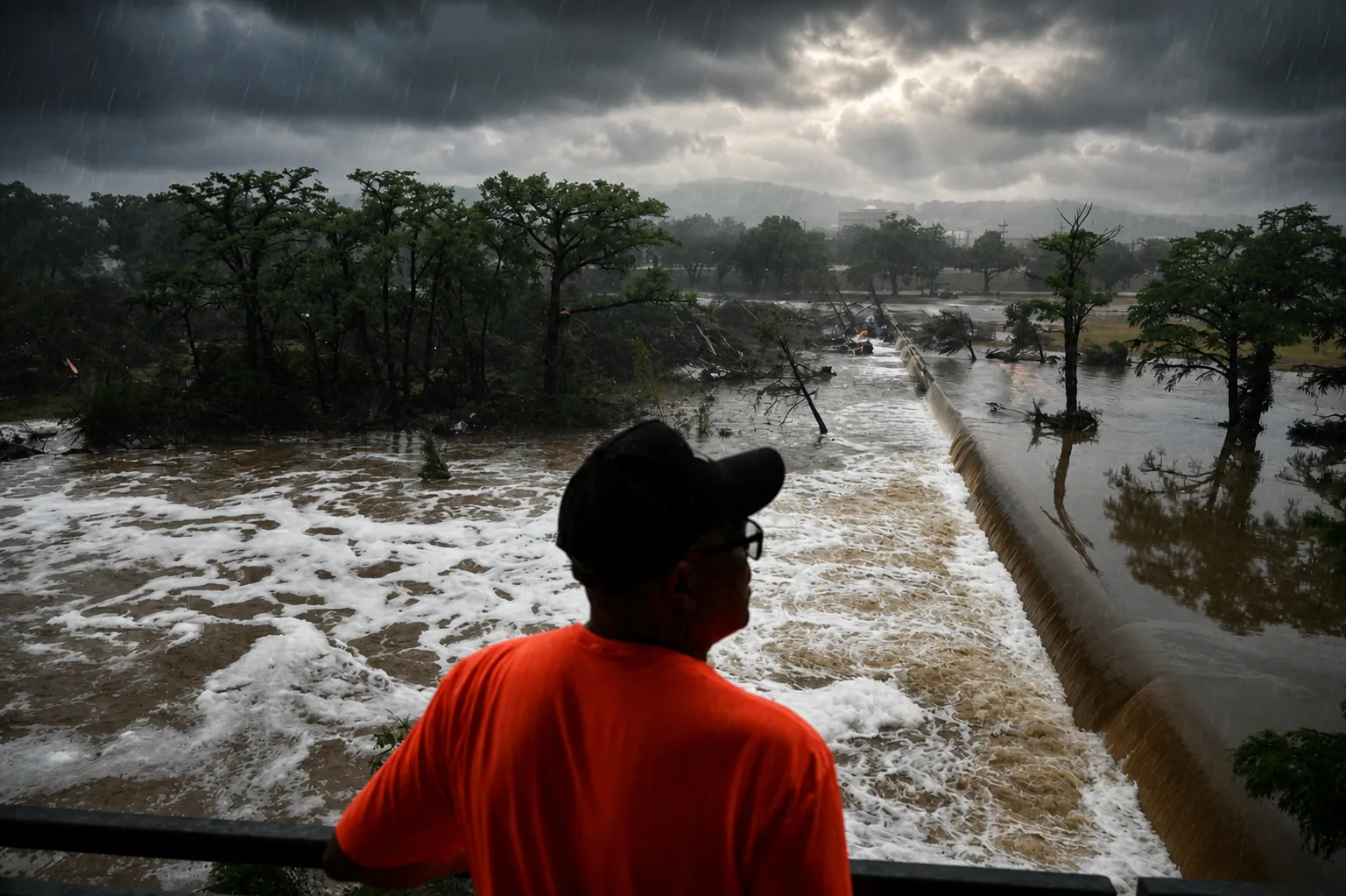
In a striking repeat of disaster, the Texas Hill Country awoke Thursday morning to catastrophic flooding that swept through the same vulnerable communities devastated barely a year ago. As slow-moving storms dumped torrential rain across the region, rivers rose with terrifying speed, forcing hundreds of emergency rescues and claiming at least two lives in areas still reeling from last summer’s deadliest inland flood in modern state history.
The Guadalupe River rose more than 30 feet in some places within just a few hours Thursday morning, creating what forecasters described as “large and deadly flood waves” that raced downstream through communities. The region had already been pounded by nearly two feet of rain over recent days, with Uvalde County receiving as much as 28 inches over three days—more rain in that period than California has seen over the last month, according to former NOAA chief scientist Ryan Maue.
Governor Greg Abbott said two people died in the flooding. One was swept away in an RV near Comfort in Kerr County, while another 74-year-old man died near Uvalde when swept away while driving. Rescuers pulled more than 200 people to safety from rising waters using boats and helicopters, with Texas Game Wardens accounting for close to 150 of those rescues by Thursday afternoon. Video footage captured crews hoisting children from houses surrounded by water into helicopters.
The magnitude of the disaster struck hardest in the same counties hammered by last year’s July Fourth flooding that killed more than 130 people. That event devastated Camp Mystic, a Christian camp for girls where 25 campers and two counselors perished as the Guadalupe River surged through the predawn darkness. The camp has not reopened since the tragedy.
Authorities in Kerr County confirmed all campers at summer camps were safe this time around, a crucial difference reflecting lessons learned from last year’s horror. Nevertheless, the emotional toll was evident. One woman at an RV park in Comfort watched water rise over vehicle hoods as sirens blared, reaching the same level as the massive flood of a year prior. Another wildlife rescuer who had volunteered after last year’s disaster said this new crisis was “one of the hardest things” she had seen in a long time.
What made Thursday’s response different was preparation. Unlike a year ago when residents awoke with no warning to sudden walls of water, this time authorities activated flood sirens installed after last summer’s deadly event. Mandatory evacuations were ordered in Uvalde County before the worst flooding arrived. Over 80 people were evacuated from campgrounds near the river before dangerous water levels were reached. Governor Abbott said that while residents still received warnings this time, they did so with far more advance notice.
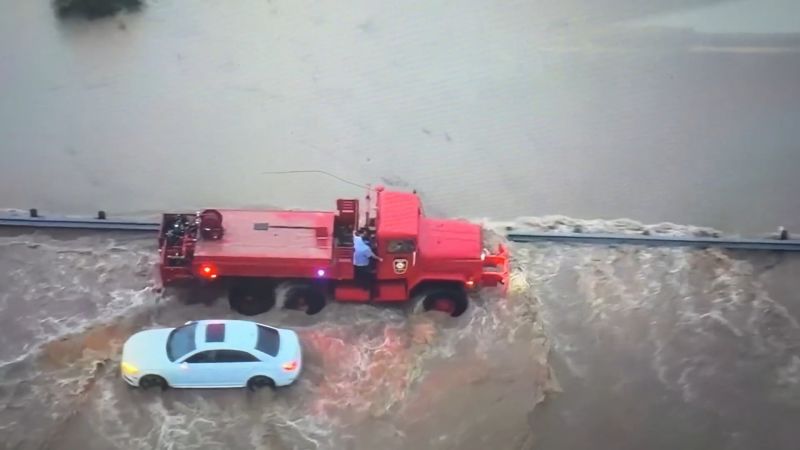
“Last year there was no warning of it,” said Josiah Rodriguez, who awoke to heavy rain around 2 a.m. Thursday in Kerrville. “It just kind of happened overnight and it took everyone by surprise. This year, a lot more alerts have gone into place, a lot more safety measures.” He noted that despite the new warnings, experiencing the flooding again was deeply difficult: “It’s crazy happening two times in one year.”
The Texas Hill Country is known by meteorologists as “Flash Flood Alley” due to its particularly dangerous geography. The region’s steep terrain, shallow soil covering limestone hills, and exposed bedrock cause water to shoot into rivers rather than soak into the ground. This creates rapid and dangerous rises in water levels, sometimes described as occurring “almost like a river tsunami.”
Nearly a trillion gallons of water fell on the three hardest-hit counties over three days. Some parts of the region received more than 12 inches of rain in 24 hours alone. The National Weather Service issued a Level 4 of 4 flood risk for portions of the region west of San Antonio—a rare designation issued only about 4 percent of the time but accounting for roughly a third of all flood-related fatalities nationally.
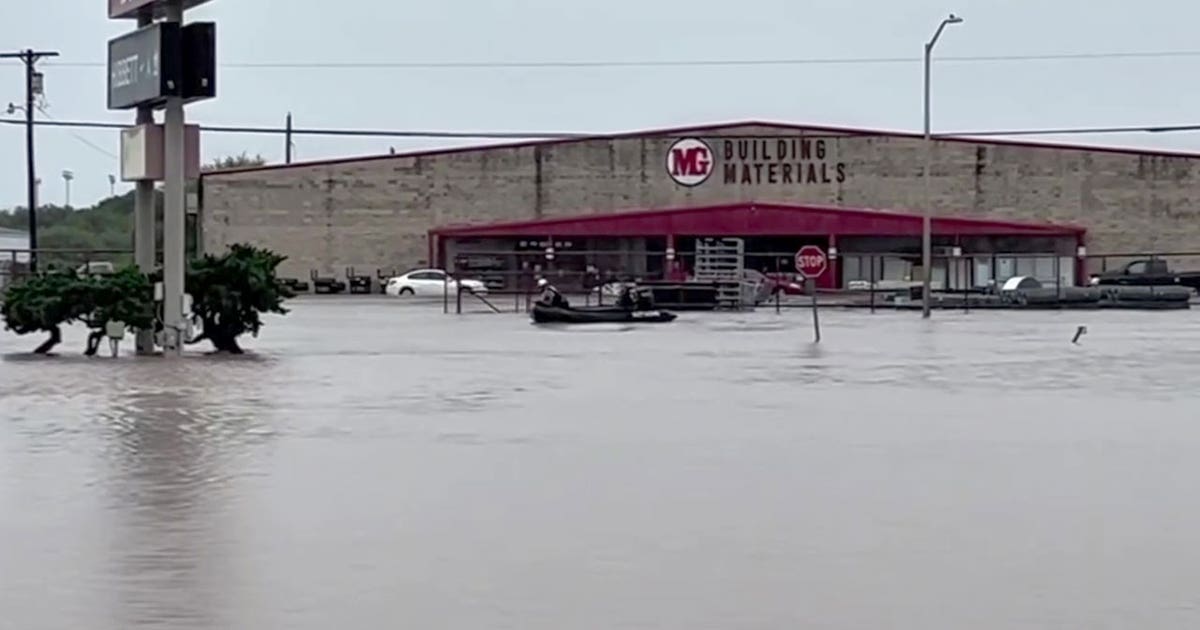
Governor Abbott declared a disaster in 59 counties, mobilizing more than 800 vehicles and 1,300 personnel across 30 agencies statewide. State leaders issued dire warnings that South Central Texas should expect “life-threatening catastrophic floods” through Thursday. Some rivers were forecast to reach historic levels that might exceed even the devastating heights of a year prior.
The flooding extended far beyond the Hill Country’s traditional epicenter. Communities throughout south-central Texas near the Mexico border and toward San Antonio faced severe threats. In Boerne, northwest of San Antonio, high-water rescues continued throughout the day as the city’s busiest intersection became completely underwater. Uvalde, located between San Antonio and the Mexico border, saw the Leona River—normally dry most of the year—fill streets with water, cutting off most routes in and out of the city.
Multiple state highways and local roads were forced to close due to flooding and damage, with the Texas Department of Transportation reporting at least 125 affected roadways by Thursday afternoon. A barge struck the Sidney Baker Bridge in Kerrville during the flooding, forcing its closure pending structural assessment. Other bridges throughout the region were also closed due to possible damage.
More than 2.5 million people remained in flood watch zones through the end of the week. Forecasters warned that additional rounds of heavy rain were possible through Friday, with some areas potentially receiving a foot of additional rain. Governor Abbott warned that residents should expect “more rain than what occurred during the flood last year,” though officials noted water was not predicted to rise quite as rapidly as it did in 2025.
For residents and first responders who worked so hard to rebuild after July 2025’s catastrophe, the return of such devastation delivered an almost incomprehensible blow. Yet the relative preparedness this time—with working sirens, advance warnings, and pre-positioned rescue teams—demonstrated that lessons from the previous tragedy were being applied, potentially saving lives even as nature once again threatened this vulnerable region.