

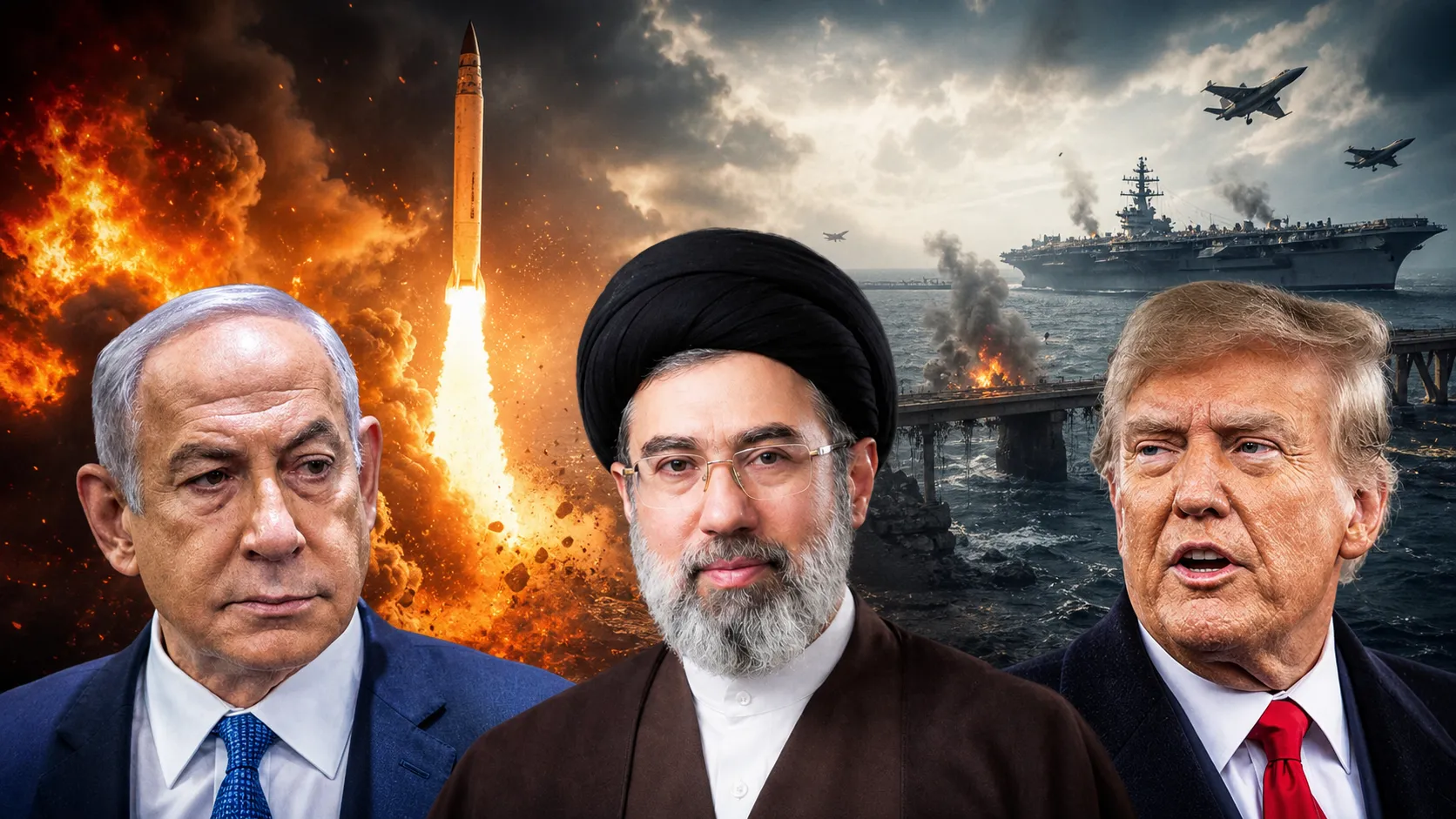
The United States expanded its airstrike campaign against Iran early Friday by hitting more bridges and collapsing a tower at a key Iranian port, marking the sixth consecutive night of American attacks as control of the strategic Strait of Hormuz remains the central flashpoint in the escalating conflict. The strikes represent a dramatic intensification in the tit-for-tat violence that has consumed the region since an interim ceasefire agreement collapsed in early July.
The U.S. Military’s Central Command said it hit dozens of targets in the overnight strikes that concluded at dawn Friday. The U.S. Airstrikes hit bridges in Iran’s southern Hormozgan province, killing at least seven people according to Iranian state television. The attacks struck Bandar Khamir, a city on Iran’s coast on the Strait of Hormuz, with the highway and railway bridge strikes appearing aimed at cutting off Bandar Abbas, Iran’s main port, from roads leading into the Islamic Republic’s central region and onward to Tehran. While other routes still remain open, U.S. Military officials suggest the strikes could expand further, potentially disrupting both the movement of military equipment and goods needed for Iran’s 90 million people.
The strikes also collapsed a tower at Iran’s Chabahar port on the Gulf of Oman, a key trade route for landlocked Afghanistan. Defense Secretary Pete Hegseth posted a picture on social media showing the tower collapsing as plumes of smoke rose around it. Chabahar port, which Iran had been running with support from India, has been a repeated target of American airstrikes. Iran described the tower as overseeing commercial traffic into the port, though Iran’s paramilitary Revolutionary Guard also operates at ports across the country.
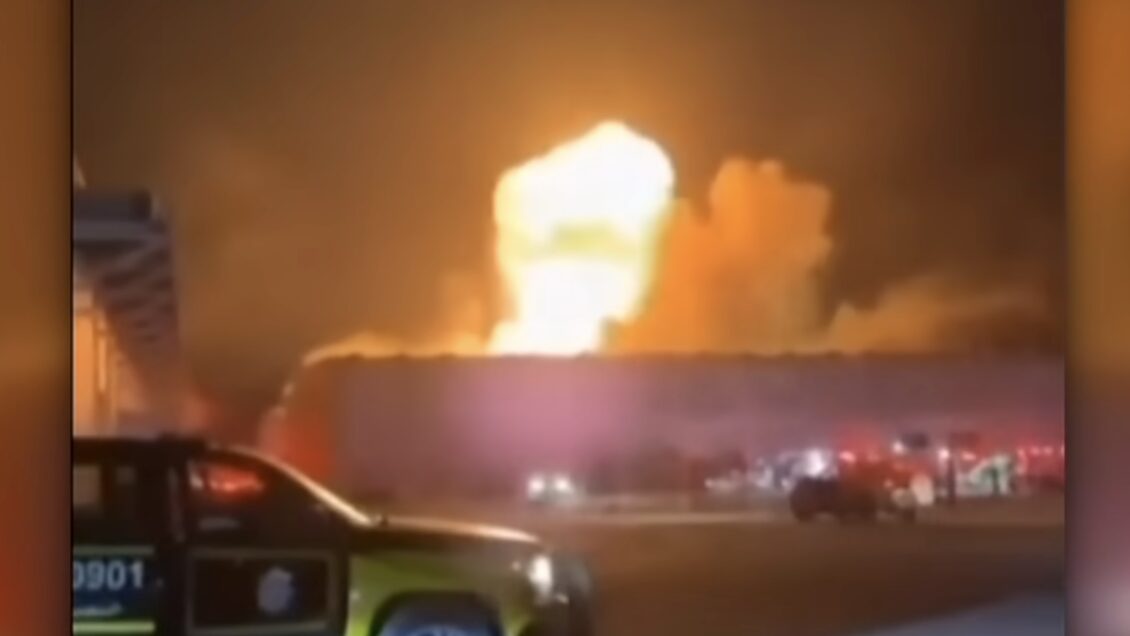
According to Iranian officials, the broader campaign has taken a heavy toll. As of Friday morning, the U.S. Strikes had killed at least 38 people and wounded more than 400 in Iran, according to Health Ministry spokesperson Hossein Kermanpour. The strikes also marked the first time Iran publicly acknowledged attacks on its power infrastructure, with the Energy Ministry calling on people in southern provinces to use less electricity due to damage from the campaign.
The American offensive is part of President Donald Trump’s strategy to pressure Tehran to relinquish control of the Strait of Hormuz, through which about a fifth of all oil and natural gas traded in peacetime. Trump has threatened to target additional Iranian power stations and bridges as part of this pressure campaign. The U.S. Also reimposed a naval blockade on Iranian ports to halt shipments of crude oil, moves designed to cripple Iran’s economy and military capabilities.
The collapse of the interim ceasefire has led to days of strikes and counterstrikes. The 60-day ceasefire agreed to in a mid-June Memorandum of Understanding fell apart just over a week after it was signed, when Iran launched attacks on commercial shipping in the strait. The U.S. Responded with strikes, and the situation spiraled into the current escalation.
Iran has retaliated by launching strikes against U.S.-allied nations in the Middle East. On Friday, Qatar twice warned the public to take shelter as a barrage of Iranian missiles targeted the nation. Explosions were heard overhead as air defenses fired to intercept the missiles, with falling debris wounding a child according to Qatar’s Interior Ministry. Iran also targeted Bahrain and Kuwait early Friday, and in Kuwait, authorities said Iran attacked a power and water desalination plant, causing widespread damage—a particularly critical strike in a desert nation where about 90 percent of drinking water comes from desalination.
The Iranian military also claimed to have targeted U.S. Military forces in Bahrain and Syria. Jordan’s military said Friday it intercepted three incoming missiles from Iran, with no damage or casualties reported. Explosions could also be heard Friday morning in Irbil and Sulaymaniyah in northern Iraq’s semiautonomous Kurdish region as air defenses targeted incoming fire. The attack apparently targeted the Iranian Kurdish dissident group Komala, killing at least nine people.
Meanwhile, a tanker traveling through the Strait of Hormuz on Friday came under attack, according to the British military. The report from the United Kingdom Maritime Trade Operations center said the ship sustained minor damage without any crew injuries. Iran has been repeatedly attacking tankers traveling on routes other than those it has designated as approved.
The battle over the Strait of Hormuz reflects deeper tensions that have defined the conflict since the U.S. And Israel launched large-scale strikes against Iran on February 28, when Supreme Leader Ali Khamenei was killed. Iran has maintained that control of the strait is a core national interest and has called it an “unbreakable red line.”
Qatar, along with Pakistan, has served as a key mediator in attempts to reach an end to the war. But talks have broken down over Iran’s chokehold on the Strait of Hormuz and disagreements over what access looks like under any future agreement. Cargo shipments through the strait dropped by almost a quarter at the beginning of July, according to maritime data firm Lloyd’s List Intelligence. Some oil shippers are now transiting the strait with their location devices turned off, while many are simply staying put as the risks mount.
Neither side has publicly signaled any willingness to return to negotiations. Iran has warned it will continue to restrict passage through the waterway if U.S. Military operations continue, while Trump has doubled down on his threats to expand the strikes, declaring during a primetime address to the American people that the U.S. Was “winning big in Iran” and that Americans would “see the fruits of that labor very, very shortly.”