

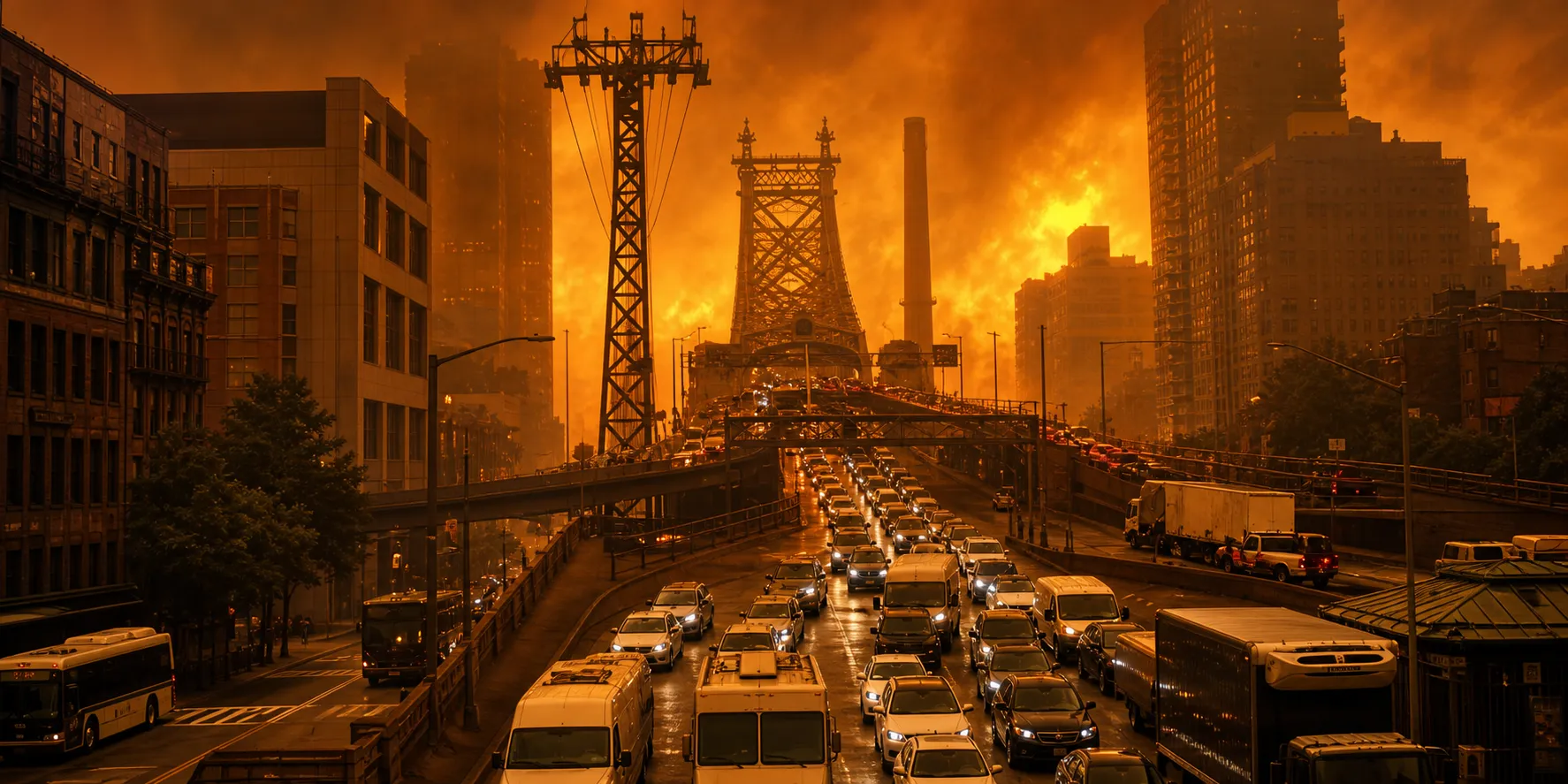
Massive plumes of wildfire smoke from Canada and northern Minnesota have pushed across the Midwest and Northeast, enveloping Washington, D.C., and major cities across the region in an eerie haze and driving millions of people into unhealthy air quality conditions.
The smoke is casting thick blankets over iconic landmarks from the Capitol to the Washington Monument, reducing visibility and turning skies orange and yellow. The nation’s capital has been placed under Code Purple air quality alerts, the highest warning level, as the thick smoke settles closer to the ground following a shift in weather patterns. Detroit, Chicago and Washington, D.C., were ranking among the world’s most polluted major cities early Friday.
“Air quality in the D.C. Region is very poor, as plumes of smoke blown down from Canadian wildfires make for hazy skies that reek,” according to local weather officials.
More than 830 wildfires are burning across Canada, with nearly 900 active fires recorded late Thursday afternoon, including over 100 categorized as out of control. The wildfires stretch across northern Minnesota and western Ontario in Canada, with smoke already having engulfed the Great Lakes region and the Northeast since Wednesday. Dangerous smoke is now impacting more than 100 million Americans across more than a dozen states, from the Midwest through the Great Lakes to the Northeast and Mid-Atlantic.
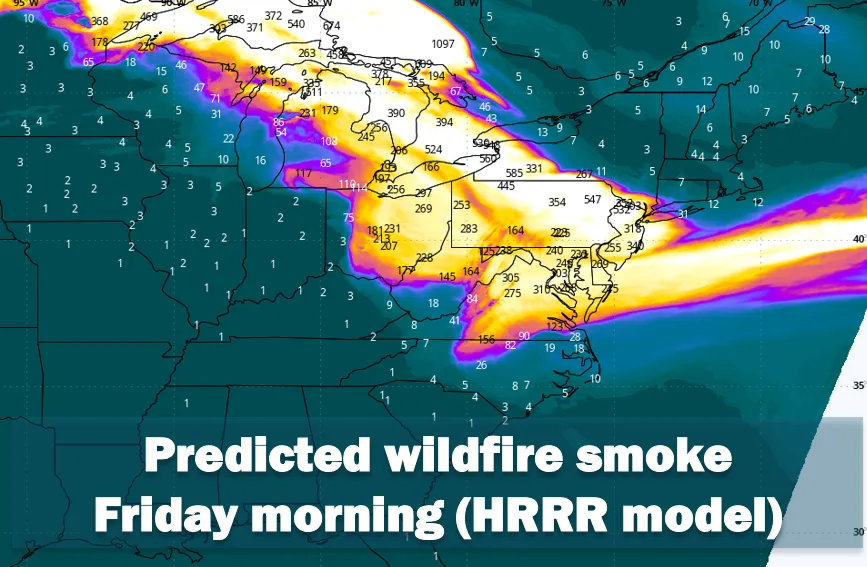
The extraordinary air quality crisis is being driven by a combination of intense wildfire activity and an unusual weather pattern. A record-breaking heat dome is parked over the central part of the country, with its northern edge positioned directly over northern Minnesota and southern Ontario where the massive fires are raging. This atmospheric setup creates ideal conditions for smoke to flow east and south, funneling thick plumes into the Midwest and Northeast.
Philadelphia has issued a “Code Purple Air Quality Emergency Day” alert, with officials warning that “everyone may experience negative health effects from particulate matter in the air.” Pennsylvania escalated its alert to Code Purple on Friday, up from Code Red the day before. Boston’s skies morphed from milky white to an ominous brown-yellow as the smoke seeped into the city. New York City’s iconic skyline was shrouded in an orange haze, with Mayor Zohran Mamdani warning of “a combination of dangerous heat and unhealthy air” and offering free masks to residents.
The smoke is coinciding with extreme heat across the region, creating a particularly dangerous situation for public health. Many areas in the Northeast and upper Midwest are experiencing temperatures in the high 90s to triple digits. The combination of heat and smoke is especially concerning because exposure to both simultaneously amplifies health risks.
Wildfire smoke contains fine particles called PM2.5 that are so small they bypass the nose and throat’s natural filters and travel deep into the lungs. These particles can enter the bloodstream and trigger a cascade of health problems. Fine particle pollution from wildfire smoke can cause shortness of breath, coughing, dizziness and fatigue, while aggravating heart and lung diseases and other chronic health issues. For vulnerable populations including children, older adults, and people with asthma or other respiratory conditions, the risks are heightened significantly.
“Just walking around outside, I could feel a little bit of tightness and burning in my chest,” said Dr. Bobby Mahajan, Chief of Interventional Pulmonary with Inova Health System, describing the effects of the smoke in the region.
Air quality alerts stretch from Minnesota to parts of the East Coast. Minnesota officials issued an air quality alert extending into the weekend for much of the state, with very heavy smoke across the state’s northeastern corner. Air quality levels in northeast Minnesota reached hazardous levels, making it unsafe for everyone. The entire state of Michigan was under an air quality alert Friday, with officials warning smoky conditions could linger into Saturday. Officials in Wisconsin also warned residents about poor air quality, while air quality alerts have been issued from Massachusetts to North Carolina.

Health officials are urging people to stay indoors as much as possible. Experts recommend limiting or eliminating outdoor activities, wearing N95 masks if you must go outside, and keeping indoor air cleaner by closing windows and running air purifiers or air conditioners. New York City is distributing free KN95 masks at hundreds of locations, while Detroit is offering free masks to residents.
The smoke is reaching extraordinary levels. Air quality values as high as 373 AQI were observed in Ashburn, Virginia, Friday morning, compared to a maximum of 273 AQI during the historic wildfire smoke outbreak in June 2023. Chicago officials stated the city was experiencing its worst air quality in recorded history, while the Federal Aviation Administration slowed arriving flights into Philadelphia International Airport due to low visibility from wildfire smoke.
The Canadian wildfire situation is substantial. In Canada, 3,500 fires have burned more than 6 million acres this summer, with roughly 200 of the fires burning in Ontario alone. A dramatic video earlier this week captured a freight train near Armstrong, Ontario, suddenly surrounded by a wall of burning trees, with panicked crew members watching everything around them burn as they were unable to move until another train passed. The Canadian National Railway suspended rail operations in that area.
Current wildfire activity in Canada this year is not approaching the hyperactivity of 2023, when records were shattered with 4,300 fires burning 25 million acres. However, the combination of active blazes in Ontario and the strategically positioned heat dome has created the perfect conditions for disaster-level smoke events. Scientists say that planet-heating fossil fuel pollution is increasing the chance of prolonged smoke seasons, making extreme wildfire seasons like 2023 less likely to remain an outlier.
According to the Canadian Wildland Fire Information System, so far this year Canada has had 3,549 wildfires that have burned a total of 2.3 million hectares, or more than 93,000 square miles, roughly the size of the United Kingdom. Stateside, wildfires in the United States have burned more than 3.6 million acres, mostly in the western half of the country.
Relief appears to be coming. Rain is forecast for Friday over the upper Midwest and Saturday for the Northeast, which should help disperse some of the smoke. By Saturday, shifting wind patterns are expected to help clear the haze from the region, with conditions gradually improving over the weekend. However, the thick haze is expected to remain in place through much of Friday in the Mid-Atlantic and Northeast before beginning to ease Saturday evening.