

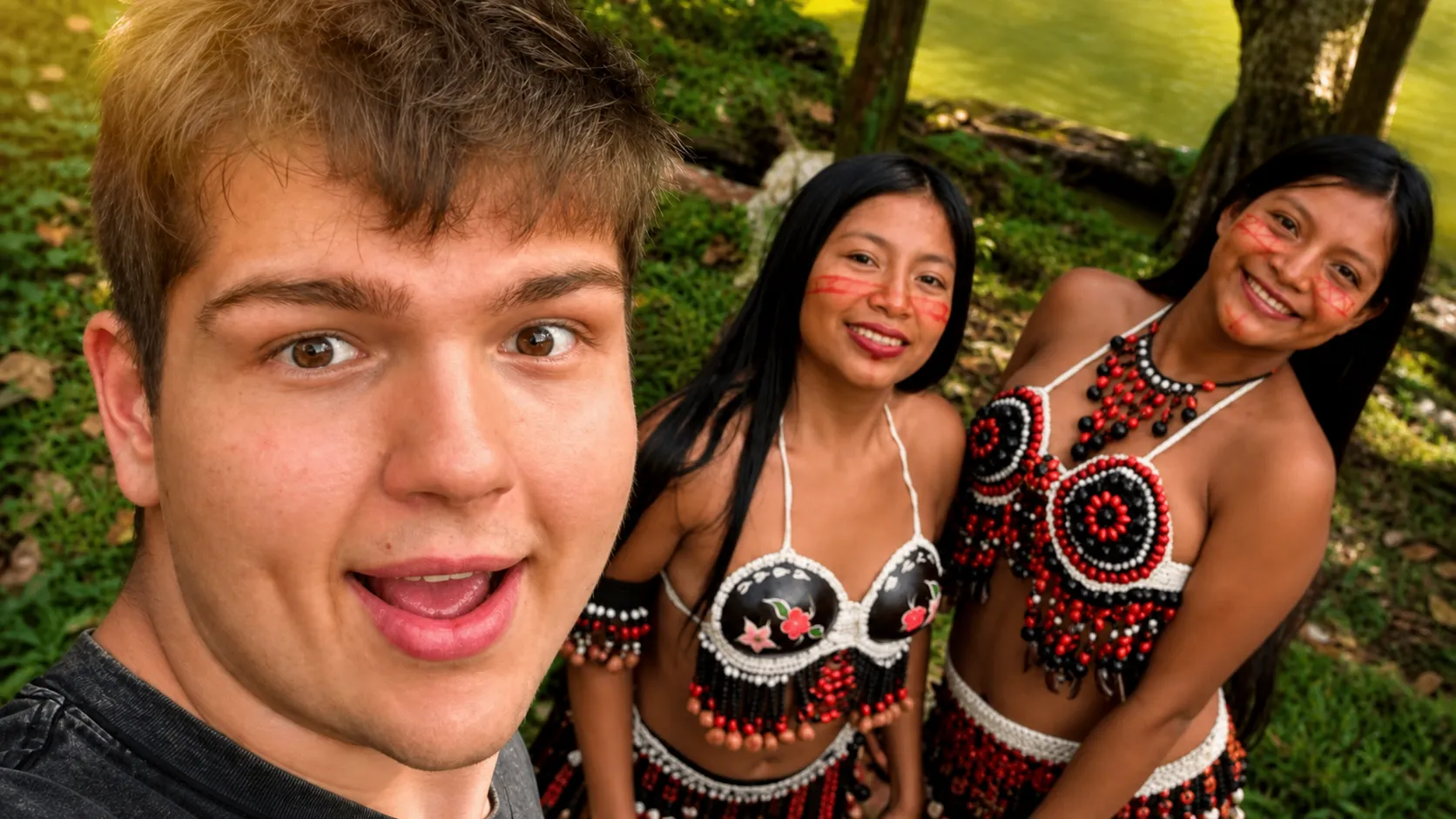
After leaving the United States for life in the heart of the Amazon rainforest, a 23-year-old says love reshaped everything he thought his future would look like.
Justin Alvo was raised in the US, but through his father he has Amazonian roots, and he says he spent much of his life feeling like a part of his identity had never fully come together.
His father was born in Tres de Noviembre, an extremely remote area in the eastern Ecuadorian Amazon. The village was so cut off that he did not encounter a radio until he was 14, and birthdays were not formally recorded within the community.
In time, Justin’s father left the region hoping to build a different life. That journey eventually led him to the US, where he met Justin’s mother in an unexpected place: a Chinese restaurant.
As he got older, Justin chose to travel back to his father’s homeland and record the traditions and daily life he had long felt separated from, sharing that experience through his YouTube channel.
During that trip, he met Maria, who was working as a chef in an Amazonian restaurant and would later become his wife.
“I basically said, ‘Hey, I like you a lot, you’re really cute, and I want to make documentaries and videos about the Shuar people,'” Justin recalled. “She said yes, let’s do it.”
Even getting in touch with her at first came with challenges. According to Justin, Maria used a basic “‘$20 phones that barely works,’” mostly kept for important calls to relatives rather than regular texting.
Still, she gave him the number, and the two started messaging before arranging to see each other again.
Justin said he was seriously anxious before that first proper meeting.
“I genuinely thought I might get kidnapped, we were meeting in the middle of nowhere,” he said. It was only when they made their way down to a river to film their first video together that he began to feel at ease.
Although he is partly Amazonian by heritage, Justin said actually living alongside the tribe felt completely unfamiliar at first, describing it as stepping into “an alien world.”
Because he had spent time in Amazonian towns rather than deep jungle communities, he did not know which plants were hazardous, which insects should be avoided, or which snakes posed a deadly threat.
Community members quickly began teaching him about the risks around him, including the macanche, a venomous snake Justin says can kill in just two minutes.
Even so, curiosity got the better of him more than once.
On one jungle outing, Justin and members of the tribe spotted a boa moving nearby. He was warned to keep his distance, but decided to approach it anyway.
“They told me, ‘whatever you do, don’t go near that thing’, but I love animals, so of course I caught it and started showing everyone,” he said.
Among the tribe, boas are regarded as spiritual creatures, and touching one carried consequences Justin had not expected.
After handling the snake, he said he was kept away from pregnant women in the community until he had been “cleansed,” because of fears that harmful energy could be passed on.
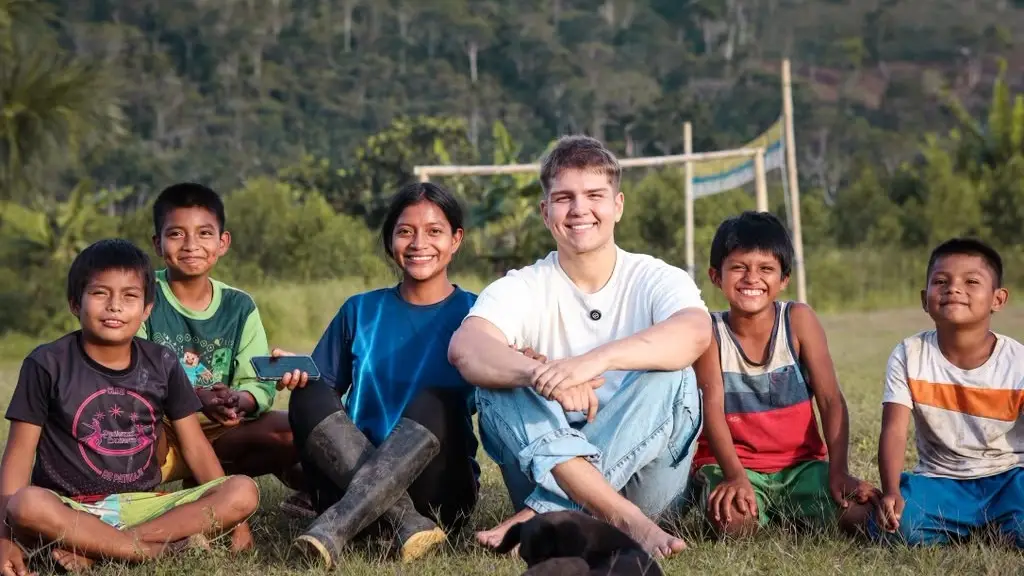
That experience was just one example of the cultural adjustments he has had to make while becoming part of tribal life.
He said that when he first arrived, some of Maria’s relatives welcomed him immediately, impressed by the gifts he brought and his eagerness to take part in local customs.
Others were far more suspicious. Justin said some family members assumed that because he appeared to have money, it must have come from something criminal.
At one point, rumors even spread suggesting he was involved in organ trafficking.
Despite those difficulties, Justin says he has no desire to return to the life he left behind.
He contrasted his former routine in America — waking up, going to work, and returning home to “basically live in a box” — with his current daily life in the Amazon, where he is constantly surrounded by the natural world, with parrots overhead and monkeys calling in the distance.
Along the way, he has also taken in an unusual animal companion: a javelina, a wild peccary he described as “‘the cutest thing I’ve ever seen,’” even though he knows it will not stay small forever.
Justin and Maria are now married and earlier this year welcomed a child together.
In recent videos, Justin has continued documenting family life in the rainforest, including posts about their baby’s first month in the Amazon and the realities of living there as a young family.
He also says the experience has deepened his connection to the Shuar people, whose language and traditions remain a central part of life in Ecuador’s Amazon region.