

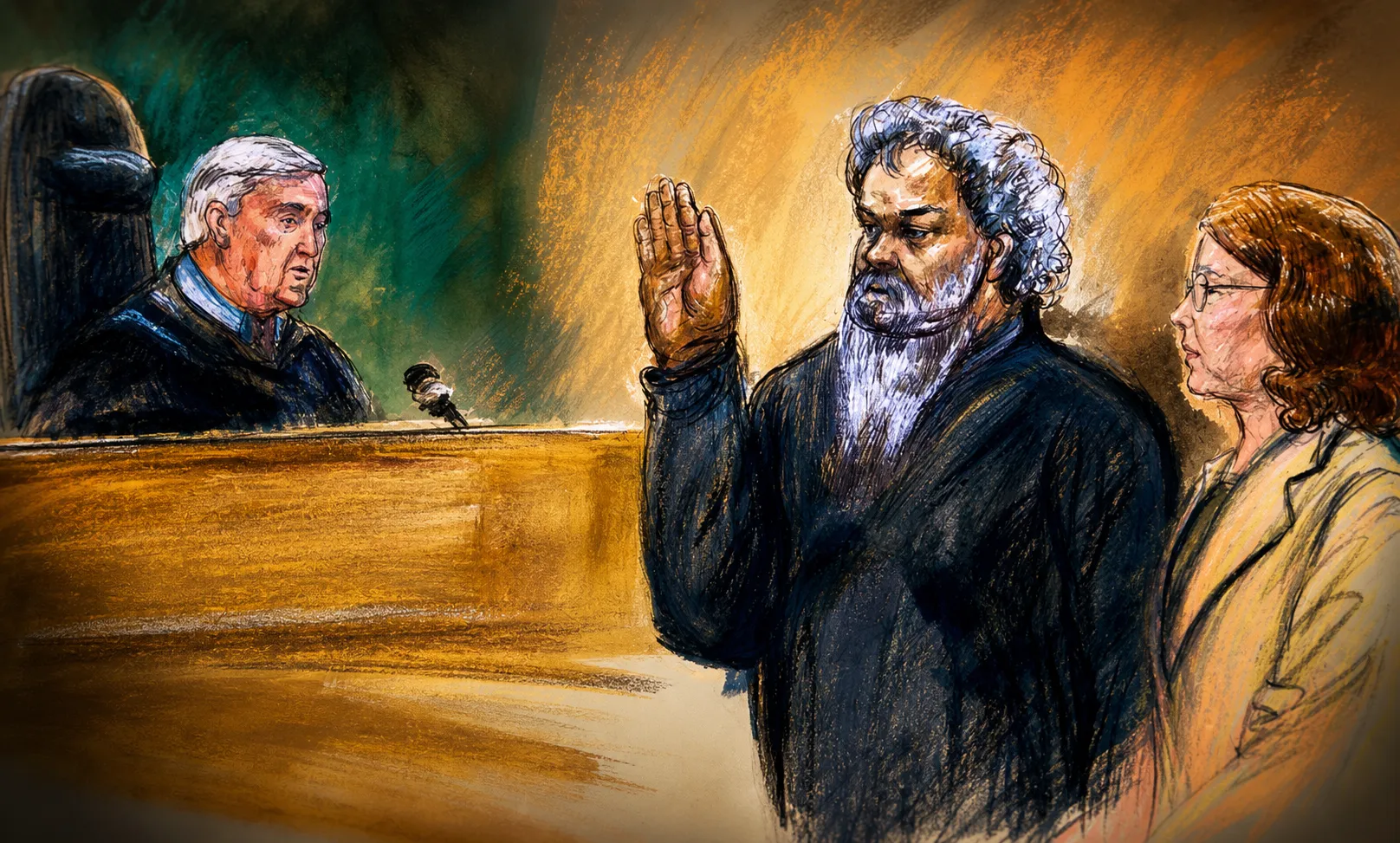
A federal appeals court determined Friday that a 28-year prison sentence remains too lenient for Ahmed Abu Khatallah, the Libyan militant convicted of terrorism-related charges in the 2012 Benghazi attacks. The three-judge panel from the U.S. Court of Appeals for the District of Columbia Circuit has thrown out the sentence and sent the case back to the district court in Washington, D.C., for resentencing.

The attacks on September 11 and 12, 2012, on U.S. government facilities in Benghazi, Libya resulted in the deaths of Ambassador Chris Stevens, Foreign Service officer Sean Smith, and CIA security contractors Tyrone Woods and Glen Doherty. According to the appellate ruling, Khatallah helped prepare for and execute a premeditated, armed attack on the U.S. Special Mission, pressured Libyan security forces not to patrol the compound during the attack, and his only stated regret was that the terrorists did not kill every American at the Mission.
Khatallah was initially sentenced to 22 years in prison in 2018 by U.S. District Judge Christopher Cooper after his trial that year. In July 2022, the appeals court rejected that sentence as “shockingly” light given the gravity of his crimes. When Cooper resentenced Khatallah in September 2024 to 28 years, the appeals court concluded that even that sentence remains unreasonably lenient.
The three-judge panel deciding the latest appeal included Judges Karen LeCraft Henderson, J. Michelle Childs, and Florence Pan.
Khatallah’s role in the attack has been the subject of legal disputes from the beginning. He was captured in Libya in June 2014 by U.S. Army Special Operations Forces working with the FBI and extradited to the United States to face trial. After a seven-week trial in 2017, a jury convicted him on four terrorism-related charges but acquitted him of murder and other charges, finding insufficient evidence that he personally fired weapons or set fires during the assault.
According to the government’s evidence, Khatallah was a leader of an extremist militia named Ubaydah bin Jarrah, which merged with the Islamist group Ansar al-Sharia. In the months before the September 2012 attack, prosecutors said Khatallah sought to incite violence against the U.S. presence in Libya and mobilized his group by stockpiling truckloads of weapons. On the night of the attack, he directed the violence, maintaining contact with his group through cellphone calls and positioning himself on the perimeter of the compound where he kept others, including emergency responders, from reaching the scene.
The attack began around 9:40 p.m. local time when armed militants breached the U.S. Special Mission compound with AK-47 rifles, grenades, and other weapons, setting fires that filled buildings with thick, black smoke. Ambassador Stevens and Smith were fatally overcome by smoke while seeking refuge in a secured area. Later that morning, attackers launched a mortar assault on a nearby CIA annex, killing Woods and Doherty.
The Benghazi attack became a significant political flashpoint in Washington, drawing intense scrutiny of the Obama administration’s security measures and response. A Republican-led congressional panel blamed the administration, including then-Secretary of State Hillary Clinton, for security failures and a slow response to the compound attacks.
The case represents prosecutors’ ongoing challenge in holding accountable those responsible for the attack. Despite initially facing more serious charges that could have carried life sentences, Khatallah was convicted only on the terrorism support and property destruction counts. The appellate panel’s rejection of the 28-year sentence suggests courts may seek substantially higher penalties upon resentencing, though his acquittal on murder charges continues to complicate efforts to impose sentences proportional to the deaths that occurred.