

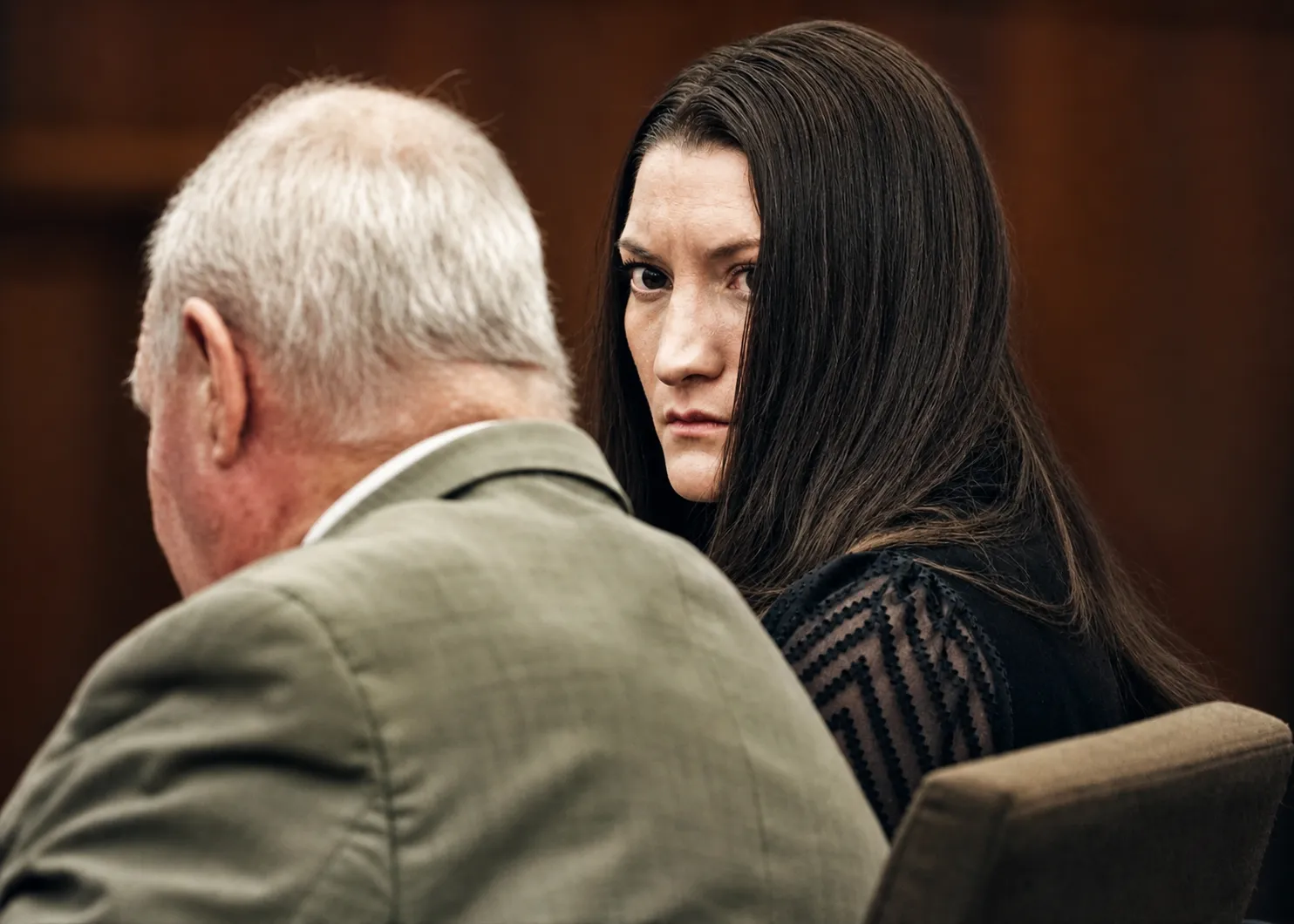
The trial of a Massachusetts mother accused of strangling her three young children began Monday with jury selection in Plymouth Superior Court, bringing into focus one of the most tragic and complex cases involving postpartum mental illness in recent years. Lindsay Clancy, 35, has pleaded not guilty to three counts of first-degree murder in the deaths of her children—5-year-old Cora, 3-year-old Dawson, and 8-month-old Callan—who were killed on January 24, 2023, in their family home in Duxbury, about 30 miles south of Boston.
The case centers on a fundamental legal question: whether Clancy was so mentally impaired by postpartum psychosis that she cannot be held criminally responsible for her actions. Her defense attorney, Kevin Reddington, has signaled he will argue an insanity defense, contending that Clancy was suffering from extreme mental health distress when she used exercise bands to strangle her children while her husband, Patrick, was out picking up takeout food and pharmacy items at his wife’s request.
What is not disputed is what happened that January night. After her husband left, Clancy strangled all three children in the basement of their home. She then slashed her wrists and neck and jumped from a second-story window in an unsuccessful attempt to take her own life. She was left paralyzed from the injuries and has been held at Tewksbury Hospital in Massachusetts since the incident, receiving treatment there for the past three years.
Prosecutors have argued that the killings were premeditated and intentional. They point to Clancy’s actions that day—including asking her husband to leave, searching online for travel times to and from nearby restaurants, and her apparent planning—as evidence of deliberate calculation rather than the conduct of someone in the grip of severe mental illness.
The defense presents a markedly different narrative. Clancy’s lawsuit against her medical providers alleges that her mental health deteriorated rapidly after the birth of her third child in 2022. According to her legal filings, she experienced prolonged insomnia, severe depression, and eventually auditory hallucinations. She sought help multiple times—visiting Massachusetts General Hospital, entering a partial hospitalization program at Women & Infants Hospital in Rhode Island, and admitting herself to McLean Hospital in early January 2023, just weeks before the killings.
Clancy claims she was placed on 13 different psychiatric medications, which her defense contends made her condition worse rather than better. The lawsuit alleges that on the day of the killings, she experienced “command auditory hallucinations”—a voice telling her to kill her children and herself, saying it was her “last chance” to do so. The defense argues Clancy had no control over her actions and was following the voice’s commands.
The challenge for Clancy’s defense is considerable. Insanity pleas in cases involving mothers who kill their children are rare and difficult to win in Massachusetts. Legal experts emphasize that the jury must be convinced not just that Clancy was mentally ill, but that her mental illness prevented her from either controlling her actions or understanding the wrongfulness of what she was doing—a demanding legal standard.
The trial will explore the complicated phenomenon of postpartum psychosis, a rare condition that affects approximately one to two women per 1,000 births. Unlike postpartum depression, which is relatively common, postpartum psychosis involves a severe break with reality characterized by delusions, hallucinations, and sometimes violent ideation. It is considered a psychiatric emergency.
Judge William Sullivan is overseeing the trial, which is expected to last between four and eight weeks. An unusual jury composition of 18 jurors—12 deliberating members and six alternates—will hear the case. The prosecution has listed 168 potential witnesses, while the defense has listed 53. Patrick Clancy, Clancy’s husband who discovered his children’s bodies, is expected to testify for both the prosecution and defense. He has publicly stated his forgiveness toward his wife, saying he was married to someone who got sick, not a monster.
The trial comes nearly 25 years after the case of Andrea Yates, the Texas mother who drowned her five children in 2001 while suffering from postpartum psychosis. Yates was initially convicted despite her insanity defense but later successfully appealed and was found not guilty by reason of insanity. Her case brought significant public attention to postpartum mental illness and led to legislative changes, including the Andrea Yates Bill in Texas requiring prenatal providers to educate women about postpartum mental health.

Clancy’s defense will likely argue that she was overmedicated and improperly monitored by healthcare providers who failed to recognize the severity of her condition. The lawsuit claims that psychiatric professionals misdiagnosed her, rejecting possibilities of postpartum depression and bipolar disorder despite severe symptoms, and prescribed a rotating regimen of medications without adequate supervision. Her attorney has described the situation as “a toxic soup” of psychiatric treatment failures.
The prosecution, meanwhile, contends the evidence shows calculation and planning that undermines a mental illness defense. They have secured permission from Judge Sullivan to play Patrick Clancy’s anguished 911 call for the jury and to allow jurors to tour the Clancy home where the children died—though the property has since been sold to a new owner.
If convicted of first-degree murder, Clancy faces a mandatory sentence of life in prison without parole. If found not guilty by reason of insanity, she would be committed to a state psychiatric hospital, where she would be periodically evaluated. Under Massachusetts law, she could potentially be released someday if authorities determined she no longer posed a danger to the community.
The trial represents one of the most significant tests of how the American justice system grapples with cases involving postpartum mental illness. Legal experts note that such cases force juries to confront deeply human questions: how society balances accountability with compassion, how the law addresses severe mental illness, and what criminal responsibility means when a mother’s mind has broken under the extraordinary circumstances of childbirth and postpartum psychiatric crisis.