

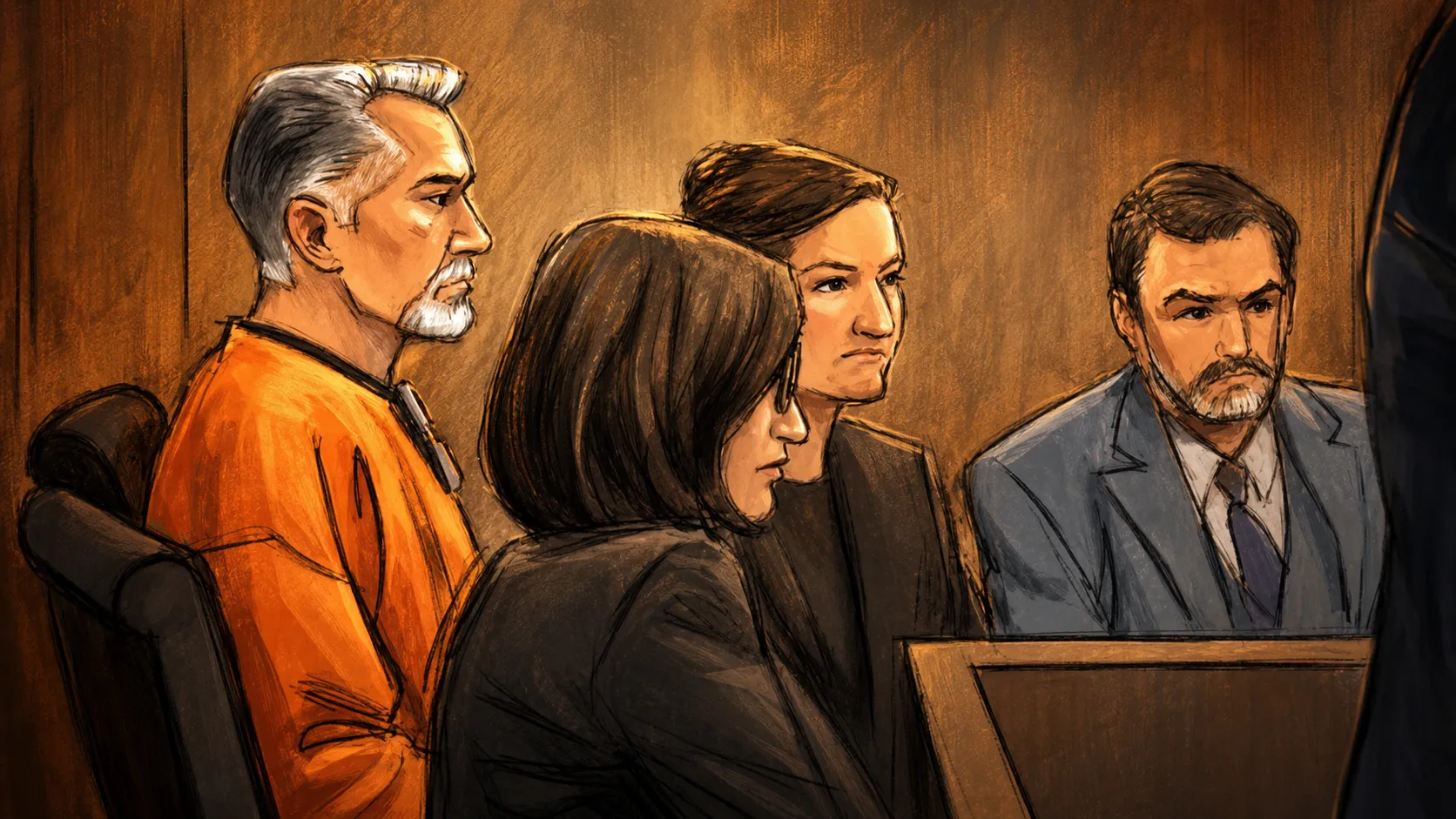
The man who pleaded guilty to killing Minnesota’s top Democratic lawmaker and her husband is scheduled to be sentenced today in federal court, bringing to a close the guilty plea phase of a case that shocked the nation and sparked widespread concerns about escalating political violence in America.
Vance Boelter, 58, is expected to receive two consecutive life sentences plus 40 additional years in federal prison following his sentencing hearing at 10 a.m. At the Minneapolis federal courthouse. U.S. District Judge John Tunheim will preside over the proceedings, which may include statements from victims’ families.
Boelter pleaded guilty in June to six federal charges, including two counts of murder, two counts of stalking, and two counts of firearms offenses. His plea agreement came after federal prosecutors agreed not to seek the death penalty. The sentencing was expedited following the judge’s approval of the plea deal.
The crimes occurred on June 14, 2025, when Boelter carried out a coordinated series of attacks targeting Democratic elected officials across the Minneapolis area. Disguised as a police officer and wearing a tactical uniform and realistic mask, Boelter first went to the home of state Sen. John Hoffman in Champlin, where he shot both Hoffman and his wife, Yvette, causing serious injuries that required hospitalization for roughly six weeks. He also fired at their daughter, Hope Hoffman, though she was not physically harmed.
Approximately 90 minutes later, Boelter drove to the Brooklyn Park home of former Minnesota House Speaker Melissa Hortman. Police had initiated a welfare check on the residence due to concerns about potential politically motivated attacks. Boelter confronted the officers outside, opened fire on them, and forced his way into the home. He shot Hortman’s husband, Mark, in the doorway, then pursued Melissa Hortman inside and shot her at point-blank range in the head just as police officers arrived at the scene.
Boelter escaped the Hortman residence and evaded law enforcement for 43 hours before being captured near his home in rural Sibley County, triggering the largest manhunt in Minnesota history. During his guilty plea hearing in June, Boelter admitted to the specific details of his crimes, including shooting Melissa Hortman point-blank in the head, an admission that prompted emotional responses from family members present in the courtroom.
The shooting spree was not limited to the Hoffmans and Hortmans. Boelter also visited the homes of other Democratic lawmakers, including Rep. Kristin Bahner and Sen. Ann Rest, though he did not locate them at their residences. He attempted to shoot members of the Hoffman family and had researched the homes and movements of multiple state legislators.
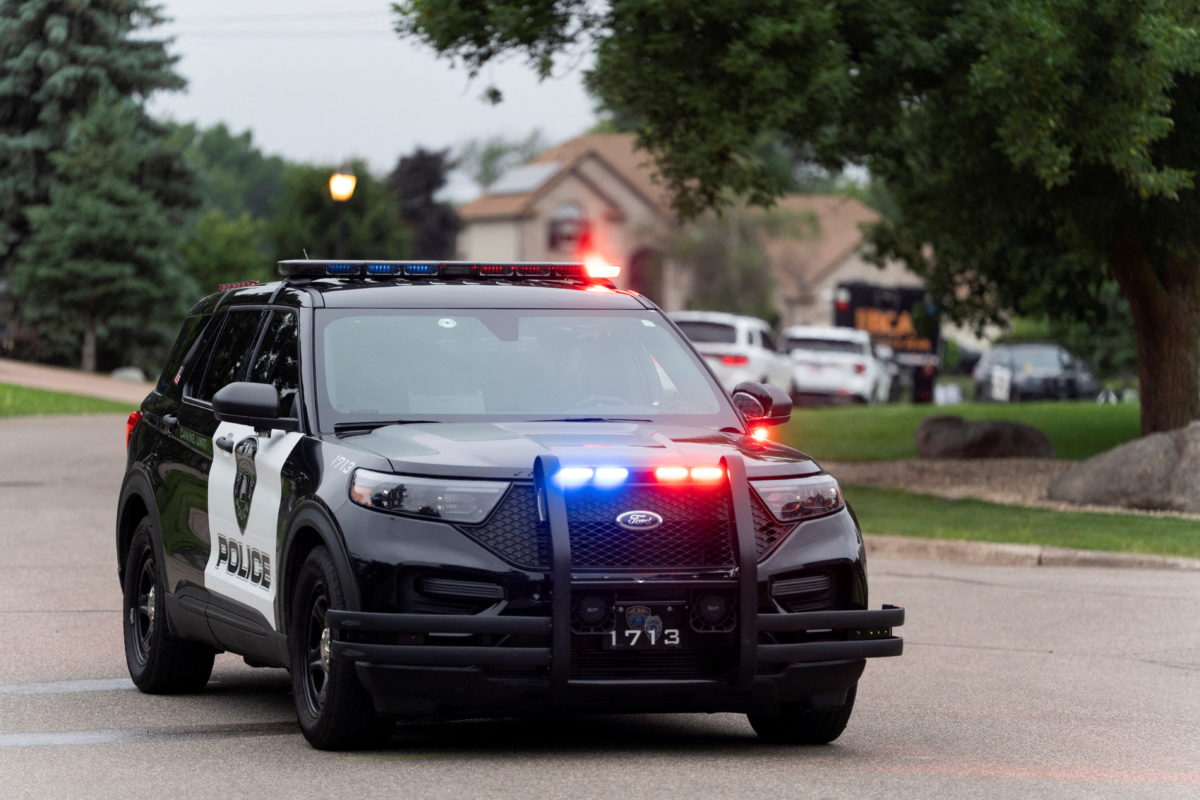
The attacks sent shockwaves through Minnesota and the nation. The two deaths and two serious injuries from the shootings raised alarms among elected officials across the country who feared that escalating political polarization and threats could lead to more violence. Gov. Tim Walz immediately characterized the attacks as politically motivated and ordered flags at half-staff at all state buildings in honor of the Hortmans.
Melissa Hortman, 55, was a prominent figure in Minnesota politics, having served in the state House since 2004 and rising to become Speaker Emerita. She was in her 11th term representing House District 34B, which covers Brooklyn Park, Coon Rapids, and Champlin. At the time of her death, she was the leader of the state House Democratic caucus, and the House was evenly divided with 67 Democrats and 67 Republicans, making her position particularly significant.
During court proceedings, new details about Boelter’s planning emerged. Prosecutors revealed that two days before the shootings, Boelter viewed a map of the Minnesota State Capitol grounds and a flyer for a “No Kings” rally. Court documents also showed that Boelter had frequently searched for information about the balance of power in the Minnesota Legislature and had texted friends about concerns that Democrats might “steal enough elections to tip the balance of power.” He also kept a handwritten list containing the names and home addresses of dozens of Minnesota state and federal elected officials.
U.S. Attorney Daniel N. Rosen stated at the time of the guilty plea that the death penalty was taken off the table only because Boelter agreed to accept the longest possible prison sentence. “Political violence is a scourge plaguing America,” Rosen said. “Those that would commit political violence at any level should take heed: the Justice Department will seek and obtain the longest prison terms available for your crimes.”
Beyond the federal case, Boelter faces additional state charges in Hennepin County, including two counts of first-degree premeditated murder and four counts of attempted first-degree murder, as well as charges of impersonating a police officer and animal cruelty. During the shootings, Boelter also shot and killed the Hortmans’ dog, Gilbert. A conviction on any of the first-degree murder charges at the state level carries a mandatory life sentence without the possibility of parole. His first appearance on state charges is scheduled for August 3.
The case has raised difficult questions about what motivated Boelter. While authorities have confirmed the attacks were politically motivated and focused on Democratic lawmakers, the precise ideological drivers remain less clear. In interviews from jail, Boelter denied that his actions were motivated by abortion or “Trump stuff,” though prosecutors noted his documented opposition to abortion and his apparent concern about the political balance of power in Minnesota.
Boelter’s defense attorneys have requested that he serve his sentence at a federal prison near Orlando, Florida, with hopes he might have employment opportunities with the Bureau of Prisons. However, prosecutors have opposed such considerations, emphasizing the severity of his crimes and the need for him to be held accountable.
The Hoffman family issued a statement after Boelter’s guilty plea, saying there is no justice when families “will never truly heal” from such violence. The case continues to reverberate as a sobering example of how political tensions can escalate to deadly violence against sitting elected officials.