

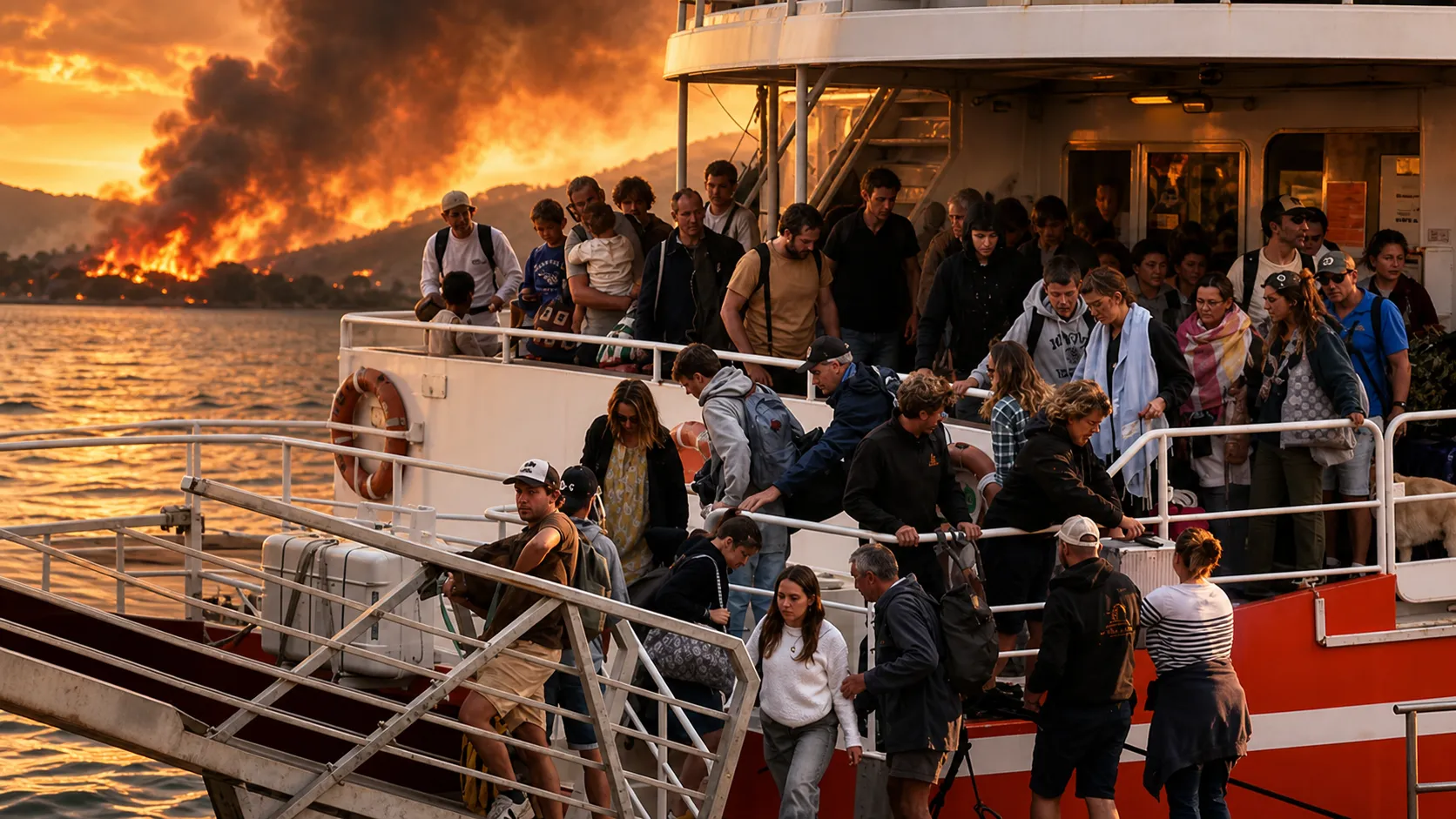
Destructive wildfires fueled by record-breaking heat swept across southern Europe on Thursday and Friday, forcing over 70,000 people to evacuate from their homes in Spain and France while destroying hundreds of thousands of acres of forest. The disasters prompted Spain to declare its first-ever national emergency for wildfires and France to seek emergency assistance from the European Union as temperatures soared and strong winds fanned the flames across the Mediterranean region.
In Spain, the national emergency declared Friday gave the government’s interior ministry control over coordinating firefighting efforts across regions struggling to contain multiple blazes. The Madrid region saw more than 10,000 people evacuated from villages near the capital, while another 1,500 residents fled the province of Ávila, a neighboring area that was also engulfed by flames. The multiple fires burning simultaneously across central Spain threatened towns within 50 kilometers of Madrid itself, prompting widespread road closures and the deployment of hundreds of emergency personnel backed by military resources and water-bombing aircraft.
The largest blaze in the Spanish crisis has become the country’s second-biggest wildfire on record. The Guadalajara fire in the province north of Madrid has scorched over 32,000 hectares, or approximately 79,000 acres, an area that matches Spain’s typical annual burned territory. The disaster comes less than two weeks after another fire killed 13 people in southern Spain, marking one of the deadliest wildfire seasons in decades for the country. Spanish Prime Minister Pedro Sánchez visited the fire-ravaged area and called for a bipartisan political pact to address climate change, which he identified as a key driver of the increasingly fire-prone landscape.

In southwestern France, the situation proved equally catastrophic. Authorities ordered the complete evacuation of the Cap-Ferret peninsula, a popular Atlantic coastal tourist destination known for its pine forests, sand dunes, and exclusive properties. About 40,000 people were evacuated from the area, with many brought to safety by boat as flames advanced toward populated zones. The wildfire broke out in the village of Saumos on Wednesday and rapidly spread across the region west of Bordeaux, devastating over 10,000 hectares of forest. Hundreds of firefighters supported by water-bombing planes battled the blaze, which officials said was triggered by a brush-clearing machine. Two firefighters died while tackling another fire near Bordeaux Airport, adding to the human toll of the crisis.
The scale of destruction across both nations reflects an unusually severe fire season compounded by extreme climate conditions. Spain has already experienced over 100,000 hectares of burned terrain in 2026—matching the country’s full-year average from the previous decade—through just the first half of the year. This year has brought 22 major fires burning more than 500 hectares each, with burned territory far exceeding comparable figures from the previous year. France has been battered by three consecutive heatwaves since May, and Interior Minister Laurent Nunez reported that more than 12,500 wildfires have erupted across the country so far in 2026, with nearly 44,000 hectares already consumed.
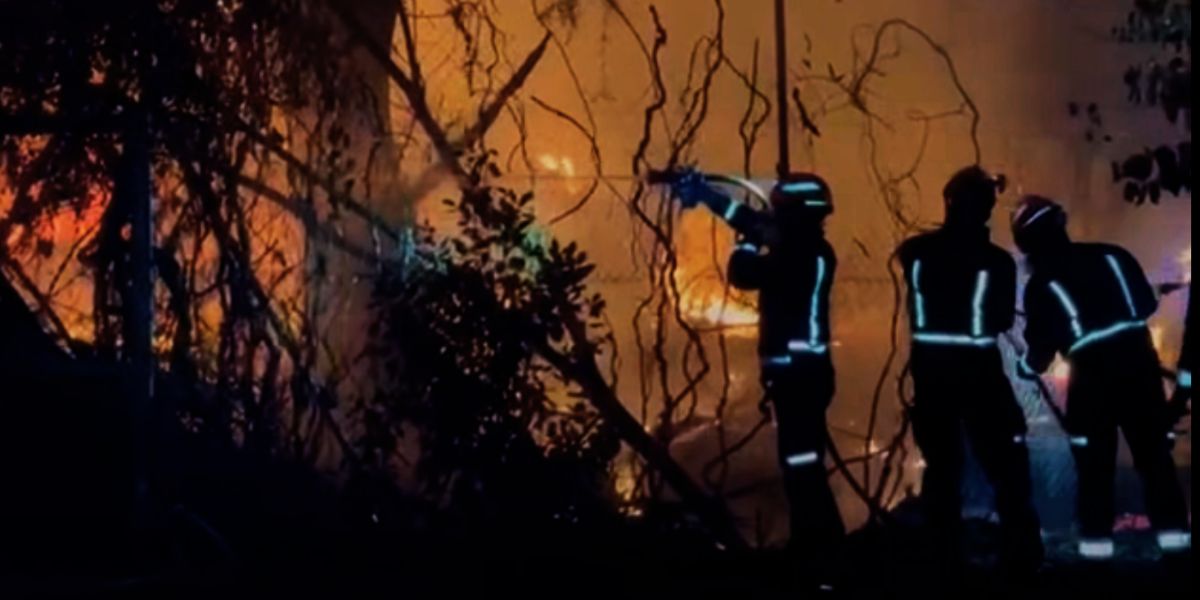
The unprecedented heat gripping the continent has created ideal conditions for rapid fire spread. Temperatures in parts of Spain are forecast to exceed 39 degrees Celsius, with some areas like Almeria in the southeast expecting highs near 44 degrees Celsius. France recorded its hottest day since weather records began in 1947, while the United Kingdom broke its June temperature record on three consecutive days. Scientists attribute the intensifying pattern to climate change, with Europe warming twice as fast as the global average since the 1980s. The combination of record temperatures, severe drought conditions, and strong winds has transformed Mediterranean regions into tinderboxes where small sparks rapidly become catastrophic blazes.
Spain has requested firefighting aircraft through the European Union’s Civil Protection Mechanism, the bloc’s coordinating system for member-state disaster assistance. Greece agreed to send two Canadair water-bombing planes in response. French President Emmanuel Macron also sought EU firefighting support to combat the Cap-Ferret blaze, underscoring how the disaster has overwhelmed individual national capabilities.
Emergency services have mobilized extraordinary resources in both countries, with hundreds of firefighters, military units, and civilian personnel deployed across affected regions. Evacuees have been sheltered in sports centers, hotels, and emergency facilities as officials work to prevent further spread. However, shifting weather patterns and strong winds continue to hamper containment efforts, leaving the situation unpredictable despite intensive overnight fighting. Authorities warned that changing conditions could still alter fire direction and intensity, meaning the crisis remains fluid as high temperatures persist through what are traditionally the hottest weeks of the European summer.