

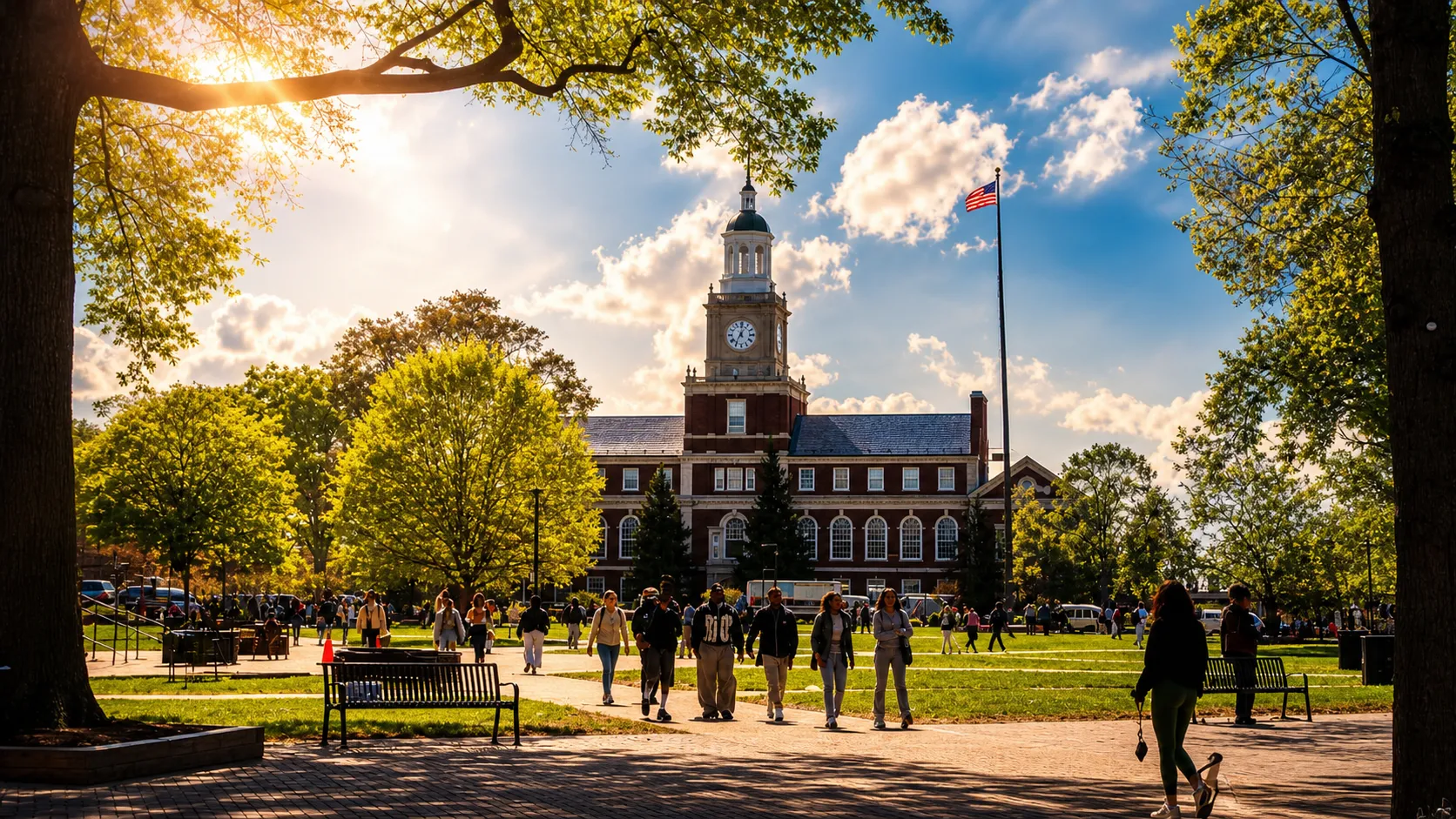
Howard University rocked by massive unenrollment just weeks before fall semester begins as 502 incoming freshmen lose their spots over unpaid tuition balances. The announcement, delivered via email on Wednesday, July 22, sent shockwaves through the institution and ignited anger among students, families, and alumni scrambling to make sense of the abrupt decision days before classes start on August 17.
The university says the 502 first-time-in-college students failed to meet a July 10 payment deadline requiring them to either pay tuition or set up a payment arrangement. But many of the affected freshmen say the university’s action constitutes a mistake, arguing they are still waiting on outside scholarships, military benefits, and financial aid packages that typically don’t post to student accounts until August 1.
Isabella Williams, an incoming political science major from Fort Mitchell, Alabama, was four days away from beginning her 14-hour drive to campus when she received the unenrollment notice. She told reporters she had previously spoken with the financial aid office about her pending scholarships and was assured she would be in good standing. “I know that we deserve better,” Williams said. “I think that Howard will or should give us better, and all that I’m doing is asking for a chance.”
Another student affected by the unenrollment, Dwayne Irving, said he was notified along with roughly 500 others. “I was supposed to be a freshman in the incoming class, but unfortunately, yesterday I received an email informing me and about 500 other students we’d been unenrolled because of unpaid balances,” Irving said. He noted that he had been assured by a financial aid representative that he could still attend class with an outstanding balance given that his scholarship funds were pending.
Chase Alexander, an incoming freshman from New York, said his scholarship program had already sent the payment, but the funds had not yet been posted to the Howard University account. He received notification that he had been unenrolled because he did not submit a good-faith payment equal to 50 percent of his tuition. “Howard has been my dream school since elementary, and to see now that this was my only opportunity, this is the chance that I banked on,” Alexander said. “And now to see that being stripped away from me for something that I had no control over, it’s very disheartening.”
Prince Krlubeh traveled to Howard’s campus with documents to challenge his unenrollment, saying his account incorrectly shows a $20,000 housing balance despite submitting a housing exemption form weeks earlier.
The university says it sent detailed communications from March through July regarding payment deadlines and requirements. According to Howard, the July 10 deadline applied specifically to first-time-in-college students, while continuing students had a different July 15 first payment deadline and August 3 tuition deadline. The school says incoming freshmen received instructions through emails, personalized financial aid information, videos, and orientation sessions known as Bison Prep.
Multiple students told reporters that the notice arrived in the early afternoon on Wednesday, right as university offices were closing for the day, leaving families with almost no window to contact administrators. Some students reported confusion about the deadline, with some saying they were following the August 3 deadline reserved for returning students.
The university has acknowledged the situation is difficult and says it is reviewing how many students with pending outside scholarships and financial aid were impacted. In a statement, Howard said it recognizes that “some students with pending outside scholarships and other financial aid resources may have been impacted by the recent enrollment update.” The school added that it is “reviewing information related to anticipated scholarship funding and other financial aid, where appropriate, and will consider relevant circumstances presented regarding pending scholarship awards and financial aid resources.”
Within 48 hours of the initial unenrollment, some students like Isabella Williams were reenrolled after speaking with the financial office again amid the growing public backlash. However, many other students remained unenrolled. The university has told unenrolled students they can apply again next year as transfer students and said it will refund any payments and scholarship dollars students had already submitted. However, deposits put down for tuition and housing, worth $800, are nonrefundable.
The unenrollment occurs during a period of significant leadership transition at Howard. Wayne A. I. Frederick, who served as president from 2014 to 2023 and helped push the university’s endowment past $1 billion, returned as interim president in September 2025 after Ben Vinson III resigned. The abrupt action has sparked calls for greater accountability from Howard’s administration and financial aid offices.
On Thursday, executives from Howard’s student affairs office met with representatives of HU30, the incoming class leadership, to discuss the unenrollment crisis. They announced a process for students to request reconsideration by filling out a form and providing documentation of their circumstances, particularly for students awaiting external scholarship funding.
The financial challenges facing Howard students are not new. Over the past year, the university has grappled with billing and account issues stemming from a transition to a new billing platform called BisonHub, which caused thousands of students to see unexpected balance charges on their accounts. Some students turned to crowdfunding through GoFundMe to raise money for deposits and other expenses.
Students expressed frustration over what they described as a break from the university’s values. “We know that there can be issues with financial aid, but they have never done this two weeks before school started and dropped hundreds of people out of nowhere,” Williams said. “The way that Howard University has handled this was extremely disrespectful. We’re supposed to be in truth and in service, and I don’t think that this aligns with either of them.”
The timing of the unenrollments creates unprecedented pressure on families already stretched thin by the rising costs of attending college. For many of the 502 affected students, Howard represented their dream education at a historically Black institution. Now they face the prospect of delayed enrollment, unanswered questions about their status, and the frustration of being cut from the incoming class just days before move-in weekend.