

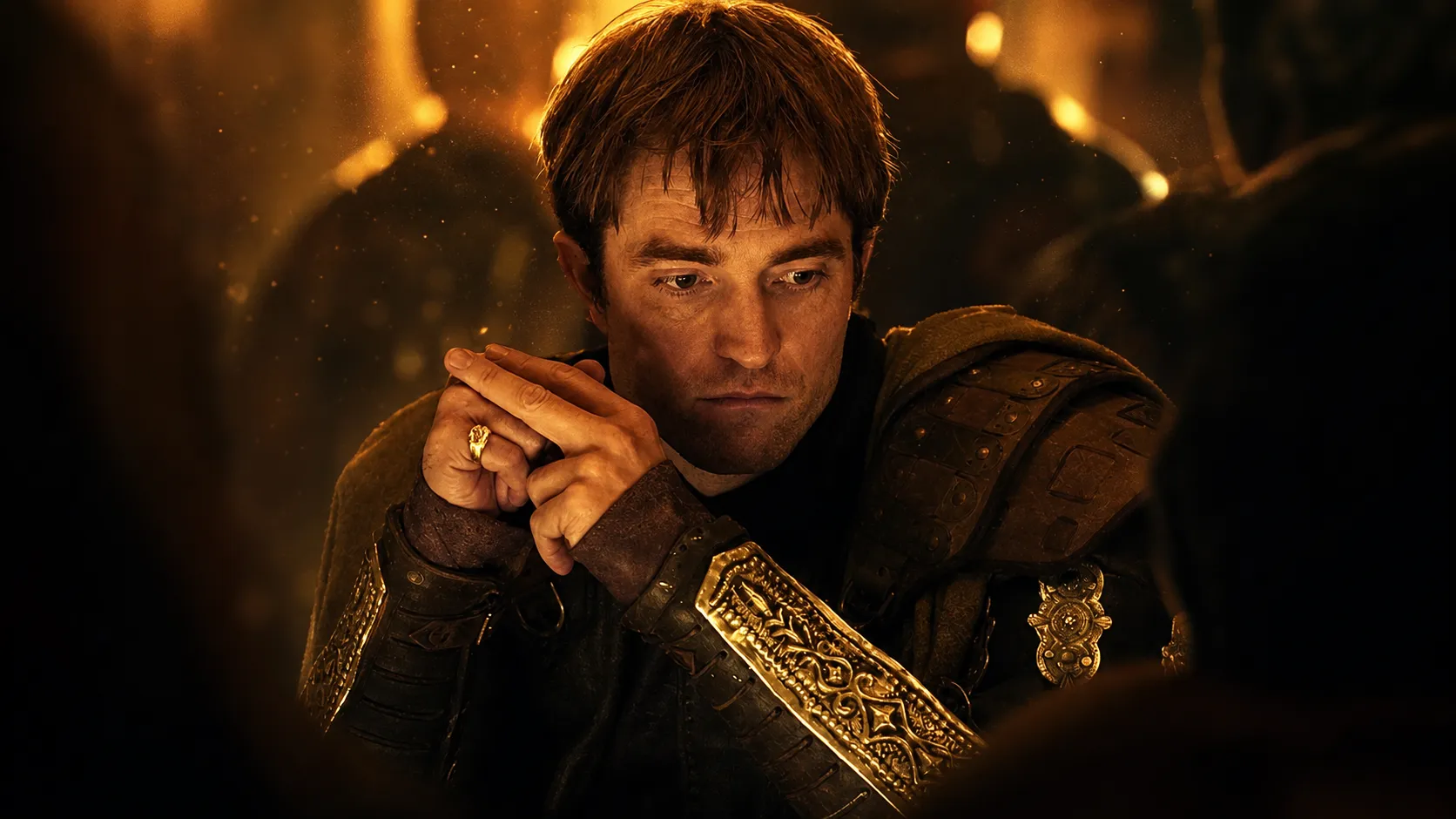
Christopher Nolan’s The Odyssey is continuing to dominate at the box office, clearing the $639 million mark worldwide after only two weekends in cinemas. Even so, the IMAX-shot epic has sparked some discussion among viewers who say parts of it look a little soft.
The production was filmed entirely for IMAX using 70mm film cameras, rather than the more common 35mm frame size, in order to deliver maximum image and sound quality. But despite that premium approach, some cinema-goers have raised complaints about the presentation.
One of the main points people keep coming back to is that the movie can appear blurry at times.
Photographer and full-time content creator Anthony Gugilotta says there is a technical explanation for that.
In a YouTube Short, he said the surprising reason could come down to the 70mm format itself.
“A larger film or a larger sensor means that you get a shallower depth of field, which also means that the focus pullers on the set had a harder time trying to keep everything in focus,” he explained.
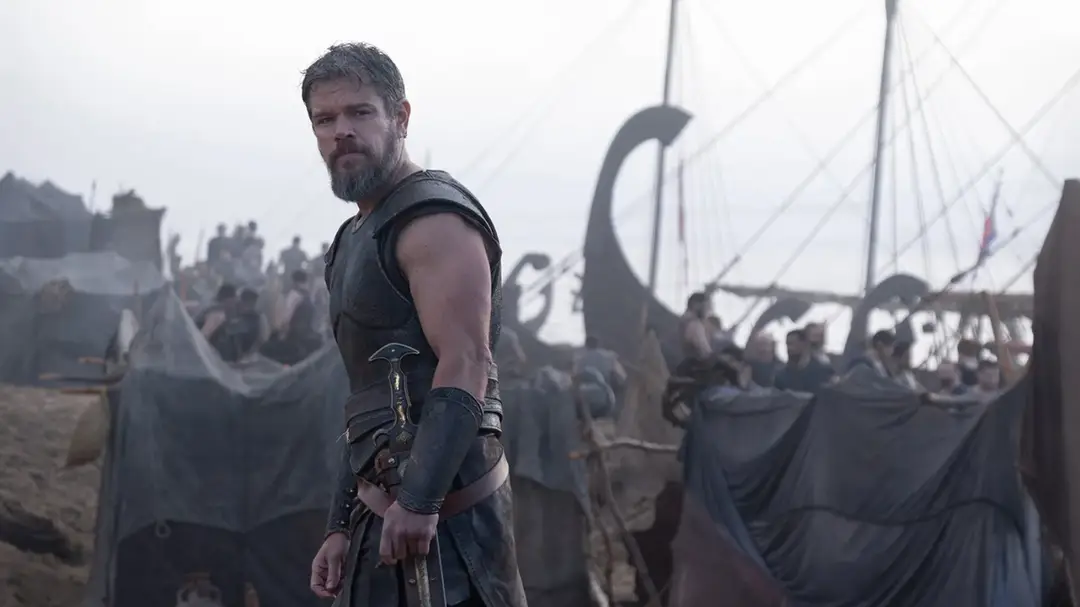
According to Gugilotta, this is one area where modern shortcuts did not really come into play. AI was not stepping in to do the heavy lifting here.
“It is literally a human being trying to manually focus on the actors or on the scene as the camera’s moving, as the actor’s are moving and as there are a ton of different things taking place on set,” he explained.
He also expanded on why that delicate process can make even slight movement noticeable on screen.
“They were focus pulling on an aperture that was so razor thin that if any single element gets out of alignment between the focus puller, between the actor, between the camera puller, the focus is going to look blurry.”
For anyone interested in the camera setup, Anthony said the film used Primo 65 lenses, which are designed for large-format coverage, and he suggested they were adapted for the production with anamorphic elements. In simpler terms, he said that creates more width, character and a softer, more distorted edge to the image.
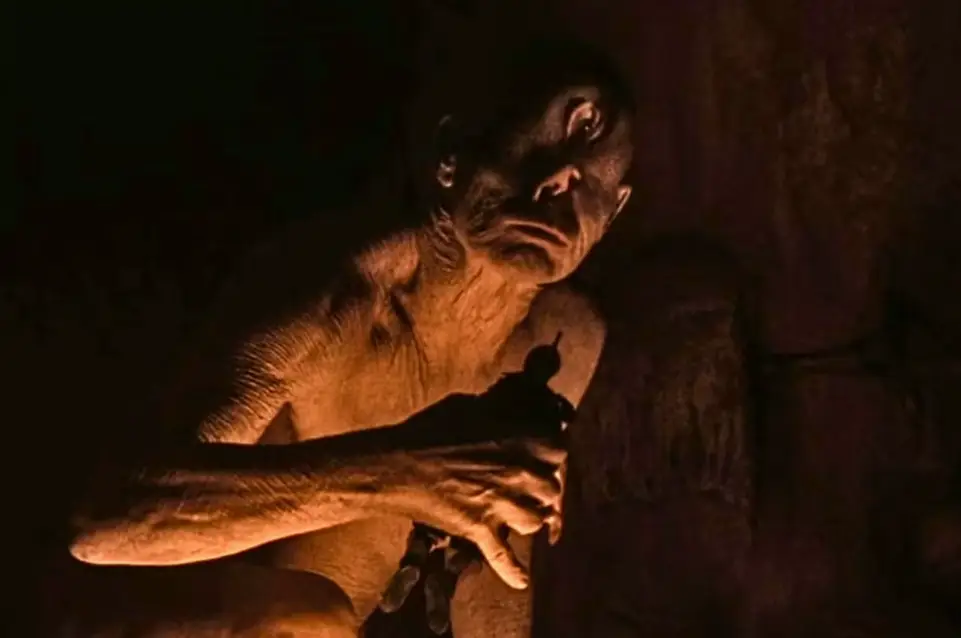
He then went further into the optics, saying the Prime 65 lenses have a T-Stop, or an aperture, of T2.
As per Cannon, an aperture of a lens is “the opening through which light passes into the camera”.
Anthony’s explanation continued with the point that a T2 lens on 70mm film gives the equivalent depth of field as an T1 or an F/1 aperture on a full frame camera, which is what leads to that razor thin focus pulling.
Viewers who want the full breakdown can watch his longer video, where he goes through the details with charts and graphs.
There is another trade-off with IMAX 70mm too. Because the format uses a taller aspect ratio than standard cinema screens, some venues can show more of the image, while others may crop or frame it differently depending on their setup. That means the experience can vary a little from one theater to another.
Nolan’s latest release has earned strong reviews and currently holds a 94 percent critic score and 97 percent audience score on Rotten Tomatoes.
Written: Between 725 BC and 675 BC, so more than 2,500 years ago
Based on a true story? Mostly no (cyclops aren’t real). Historians are unsure if the Trojan War really happened
Who wrote The Odyssey? Homer, but historians don’t know much about him and debate if he is a single person or a group of poets
How long is the movie? 2hrs, 52mins – best go to the toilet beforehand
How much did The Odyssey cost to make? A cool $250 million
The Odyssey’s box office performance so far: $639.6 million globally after its first two weekends
How long did it take to film The Odyssey? Principal photography took 91 days, so 13 weeks
Where was the movie filmed? The Hellenic Film Commission said Nolan and the production team shot scenes across several parts of the Peloponnese. Those locations included Nestor’s Cave, Voidokilia Beach and Almyrolaka Beach on the island of Pylos, along with Methoni Castle in the port town of Methoni in southwestern Greece, and Acrocorinth, the monolith overlooking the ancient city of Corinth.
Vogue also reported that filming took place in Morocco, specifically Marrakech, Tahanaoute, El Haouz, Essaouira and Ouarzazate. Production was later spotted on the Sicilian island of Favignana, while Iceland was used for the underworld sequences.
The schedule also took the team to Scotland, where scenes were filmed along the Moray Firth Coast as well as at Findlater Castle and Culbin Forest.
The Odyssey in IMAX 70mm vs normal cinema screens: The film’s official website provides trailer versions in six separate formats, each showing a different aspect ratio. That offers a useful comparison between IMAX 70mm and the standard presentation.
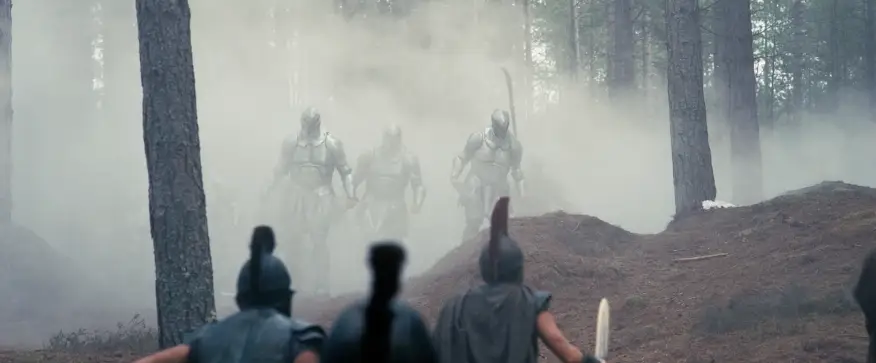
The Odyssey is in cinemas now.