

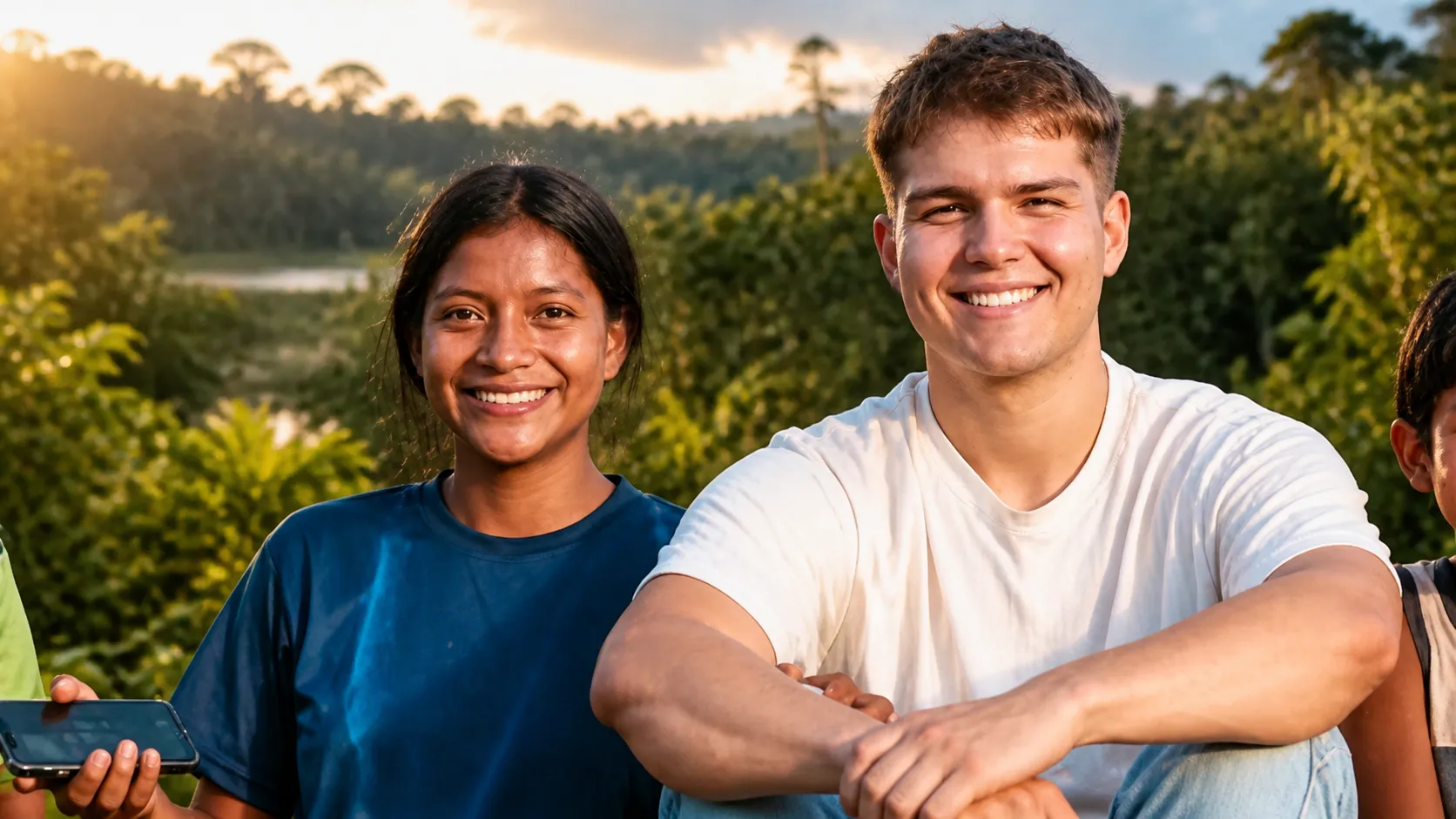
Justin Alvo, whose father is Amazonian, relocated to Ecuador’s Morona-Santiago province to live alongside the Shuar after he fell in love with Maria, a woman from the community.
Since settling there, he has gained a close view of daily life among the Shuar, but earning acceptance from Maria’s family first required him to complete a demanding test of strength.
When describing an average day, Justin said:
“I wake up on the farm, get some breakfast then everyone around just talking and chatting.
“Then all the men go off to work, and the women stay home to clean the house or continue cooking.”
He explained that, in general, the community still follows traditional divisions of labor. At the same time, he said some people now leave for nearby towns in search of better-paid work, so not everyone relies entirely on the land as they once did.
Justin also shared the story of how he had to demonstrate his determination to Maria’s grandmother.
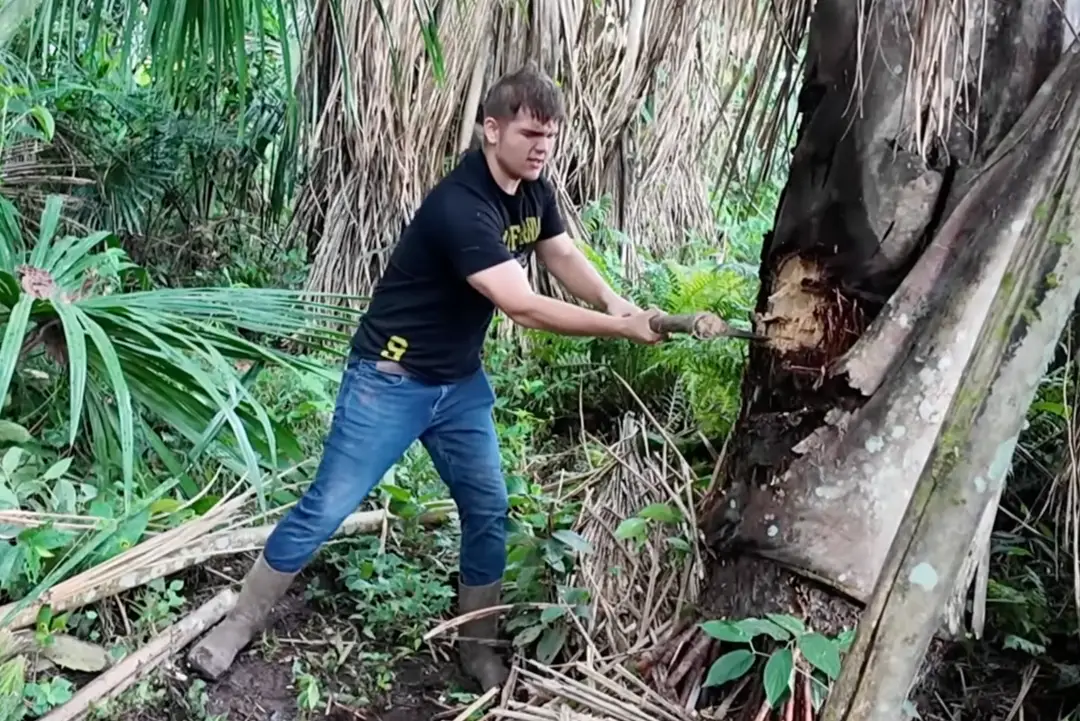
“Okay, I have a fun story for you. To prove my worth to Maria’s grandma, I had to cut down this certain tree that’s really tough to cut down, with an axe only.
“Traditionally to get married within a family the parents want to see if you’re a hard worker or not, and have strength.
“So the faster you cut down the tree, the better. Most Shuar can do it within thirty minutes if they’re strong enough.”
It took Justin more than 90 minutes to finish chopping down the large Amazonian tree. Even so, the effort itself was enough to make an impression.
He said: “Even though I was ‘weak’ in the sense of not cutting it down fast enough, the grandma was happy that I was able to cut it down and wanted to show my worth in the first place.”
From that moment on, he said, the family viewed him with respect.
Justin said there is no rigid list of rules for outsiders, but there is a strong sense of caution toward newcomers.
“Not so much strict rules, but they are very, very wary of foreigners coming into their community,” he explained, adding that some members hold positive views of foreigners while others associate them with the region’s painful history of colonization.
According to him, becoming fully accepted did not happen quickly. He said it took a long period of living with the Shuar before people across the broader Morona-Santiago area, as well as those deeper in the jungle near the Peruvian border, came to know him properly.
He added that most of them are just a bit confused, wondering ‘WTF’ he’s doing there.
He said that hesitation is based on history and experience, rather than simple suspicion of strangers.
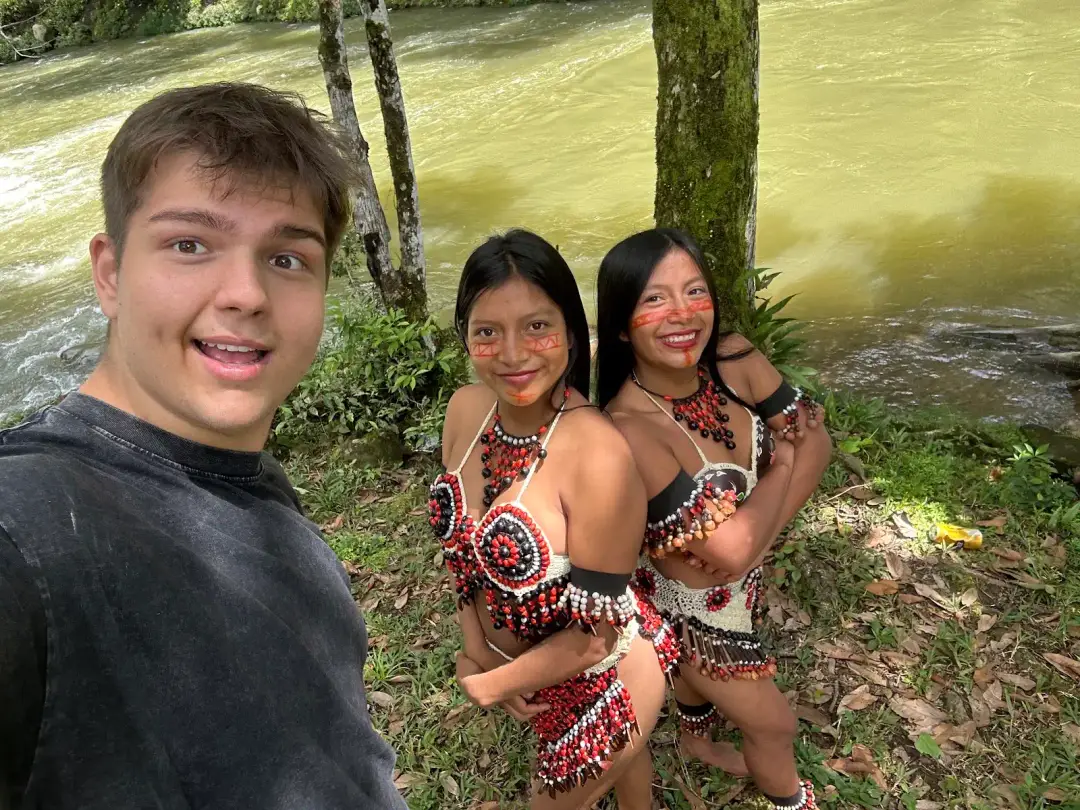
He also looked back on the first time he met Maria in person, when the pair had arranged to talk about creating documentary videos together.
He said: “The first time we met, I genuinely thought I might get kidnapped – we were meeting in the middle of nowhere.”
Only after spending more time together did their bond grow into the relationship that would later lead to marriage.
Justin said the Shuar community also functions with a degree of independence from Ecuador’s central state.
“From my understanding, they are separate from the normal government and they have a type of modern ‘elder’ that communicates with the government,” he said, comparing the role to that of a mayor, with local police liaising directly with this figure to resolve disputes within the community rather than involving the wider justice system.
The climate plays a major role in shaping everyday life as well.
“It’s the best and most perfect weather year-round,” Justin said: “however during rainy season it rains all day, every day, for weeks and weeks at a time.”
He said the wettest periods often mean spending day after day in boots while waiting for the rain to ease, though he has developed a real appreciation for the sound of it on the roof, describing it as especially calming and beautiful.
Even in such a remote area, he said modern technology is increasingly influencing daily habits.
According to Justin, younger members of the community now spend time on apps such as TikTok and Instagram, a shift that some elders dislike.
“The elders do not like that,” he said, adding that some worry the habit leads people to ‘doom scroll all day versus go out and enjoy the jungle.’
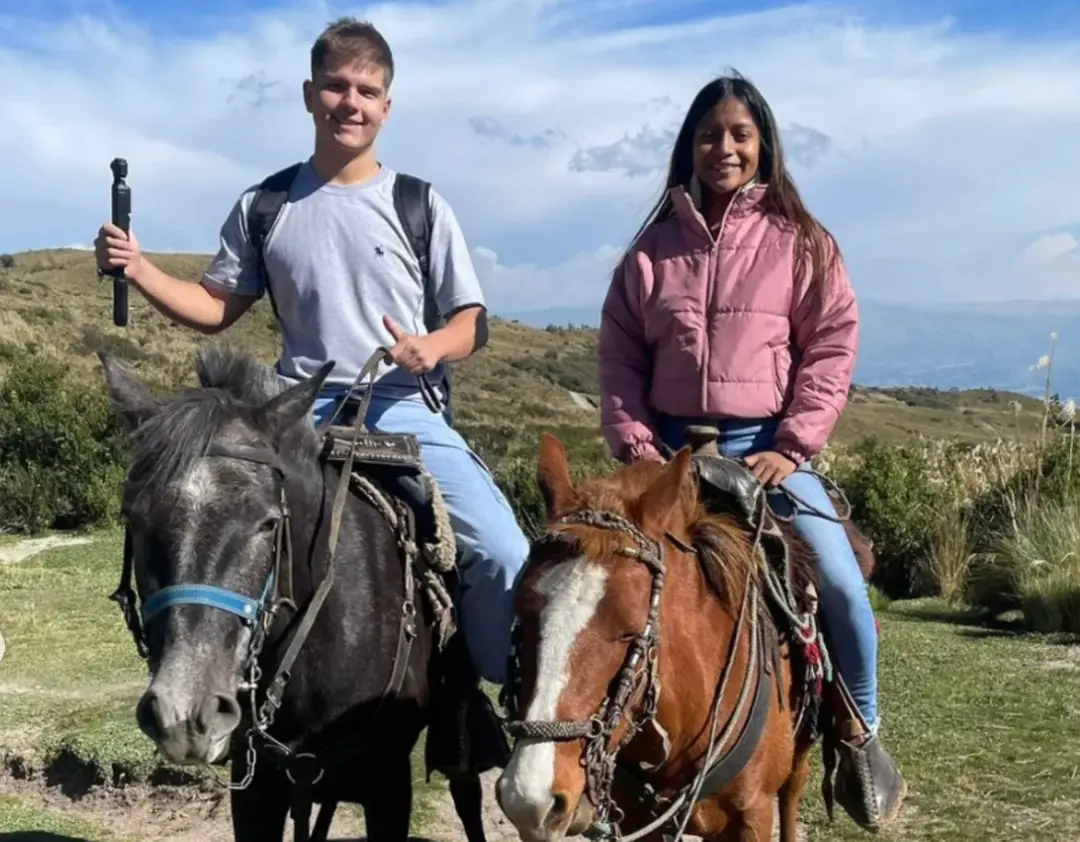
Justin said one of the most persistent false ideas he encounters online is the assumption that the Shuar are backward or lack education.
“The biggest one I see across all my social media is that people think the culture is primitive and uneducated,” he said, arguing instead that the Shuar are ‘master keepers of knowledge about the jungle’, with skills passed down through generations rather than taught in formal schools.
He also addressed criticism of his relationship with Maria, saying they are the same age and fully capable of choosing their own path.
“Love doesn’t have boundaries, and she’s an adult, just like I am,” he said. “We can make our own decisions.”
People interested in seeing more of Justin and Maria’s life among the Shuar can follow his YouTube channel, where he shares videos about the community’s traditions, culture, and everyday routines with an audience of around 158,000 subscribers.
In recent updates, Justin has also said he and Maria have welcomed a child together, adding a new chapter to their life in the Ecuadorian Amazon. His father’s roots in the region have also become part of the story he shares online, as he continues documenting both family history and daily life in the rainforest.
Beyond Justin and Maria’s story, the Shuar remain one of Ecuador’s best-known Amazonian Indigenous peoples. They live across the upper Amazon in Ecuador and Peru, and are recognized for their strong cultural identity, communal organization, and long-running efforts to defend their territory and way of life amid development pressures in the region.