

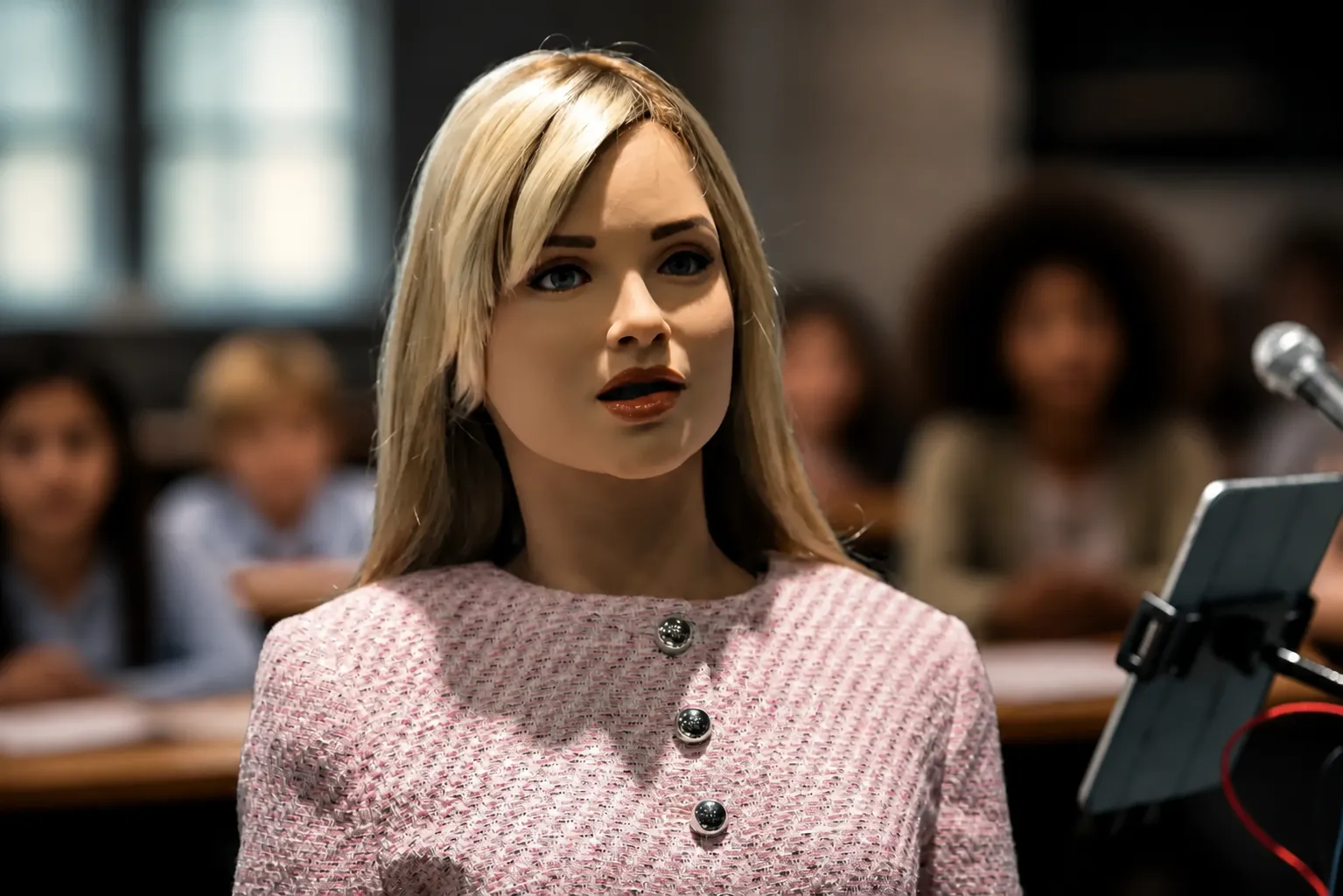
A western New York school district has paused its plan to deploy a humanoid artificial intelligence robot into high school classrooms following intense backlash from state education officials, teachers, parents, and community members concerned about privacy, data security, and the robot’s ties to a company that manufactures adult products.
The Salamanca City Central School District, located on the Seneca Nation reservation in rural western New York, had approved the nearly $60,000 purchase of a robot named Sally from technology company Realbotix. The district had planned to introduce the lifelike robot to students beginning this fall as part of AI and robotics courses designed to provide students with early exposure to emerging technologies and support their learning in STEM fields.
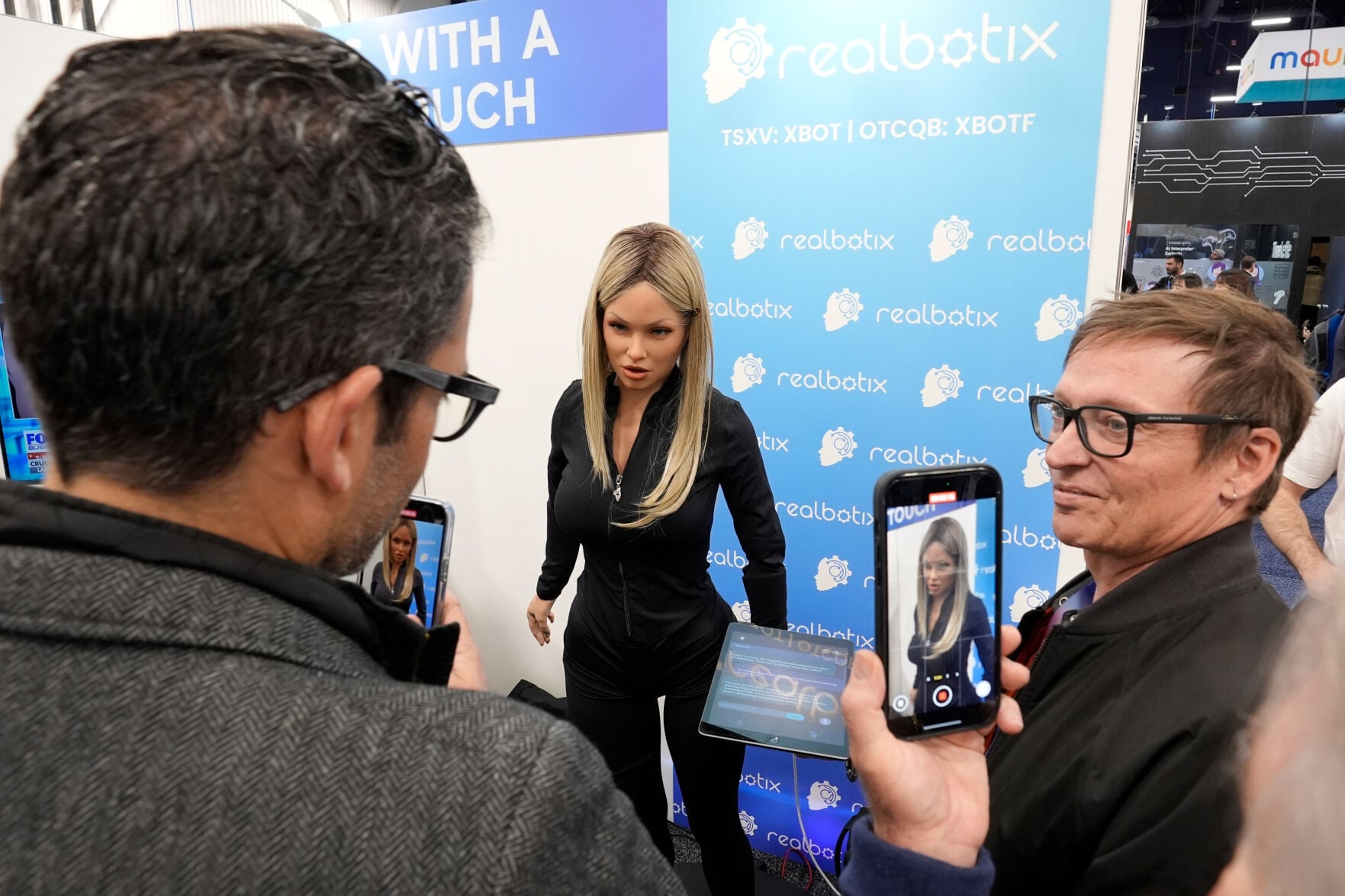
Sally, manufactured with silicone skin and long brown hair, was designed to remain seated in the classroom while displaying facial expressions and moving her arms and upper body. The robot would operate alongside an AI teaching assistant program that students could access on laptops. District officials said the system would run on a closed network not connected to the internet and that Realbotix would not have access to personally identifiable student information.
However, the controversy intensified when news of the plan became public. Realbotix is a Toronto-based company that acquired the parent company behind RealDoll, a manufacturer of hyperrealistic sex dolls, in April 2024. While Realbotix has stated that its education division operates independently from the adult products business and shares no employees, technology, or facilities, the connection became a focal point of criticism.
The state teachers union was particularly vocal in its opposition. Melinda Person, president of New York State United Teachers, declared that “a robot built by a company associated with sex dolls has no business in our classrooms.” The union emphasized that robots, regardless of their lifelike appearance, cannot provide the human connection that students require to thrive academically and emotionally.
Concerns about the proposal also centered on student privacy and data security. Parents, teachers, and the state education department raised questions about what safeguards would protect student information and how the robot would be used in actual classroom instruction. The district’s superintendent, Mark Beehler, emphasized at a school board meeting that the robot would not replace human teachers and that student safety and data privacy were paramount concerns.
Community response became deeply divided following the district’s announcement. Some parents and community members supported the investment, viewing it as an opportunity for students to gain skills in artificial intelligence that would make them more employable. Others pushed back strongly, questioning why funding was being directed toward a robot when the district could use resources to hire additional teachers or support human-centered learning.
The turning point came on July 24 when State Education Commissioner Betty Rosa sent a letter to the district expressing significant concerns. Rosa wrote that the department remained concerned about “the effect that a humanoid robot may have within a high school classroom,” noting that “many parents, teachers, and stakeholders are understandably concerned about the presence of artificial intelligence technology in classrooms, particularly when it involves robots that resemble humans.” She also raised questions about what role Sally would actually play in classroom instruction, noting that presentations had characterized the robot as a “tutoring platform.”
Within hours of receiving Rosa’s letter, the district announced via Facebook that it was placing the robot project on hold. The district said it would work through “enhanced student data privacy agreements” with the state education agency while continuing to engage with community members and other stakeholders.
The pause does not necessarily constitute a permanent cancellation of the program. The district indicated it remains committed to resolving the state’s concerns and continuing community discussions before any deployment decision is made. The state education department said it would continue monitoring the situation closely for potential legal, operational, instructional, privacy, safety and other consequences that may arise.
The controversy over Sally reflects growing anxiety nationwide about the role of artificial intelligence in schools. In New York City, Schools Chancellor Kamar Samuels announced a moratorium on educational software purchases while the education department revised its artificial intelligence policies. The state teachers union has called for strict limits on AI and screen time in schools. The state education department is developing comprehensive statewide guidance on the responsible use of digital tools, artificial intelligence, and emerging technologies in educational settings.
The Salamanca robot initiative had been intended as a landmark moment for both artificial intelligence and humanoid robotics in education, with the district poised to become one of the first in the nation to place such a robot in a working classroom. Instead, the pause underscores the tension between technological innovation and concerns about privacy, student welfare, and the preservation of human connection in educational environments.