

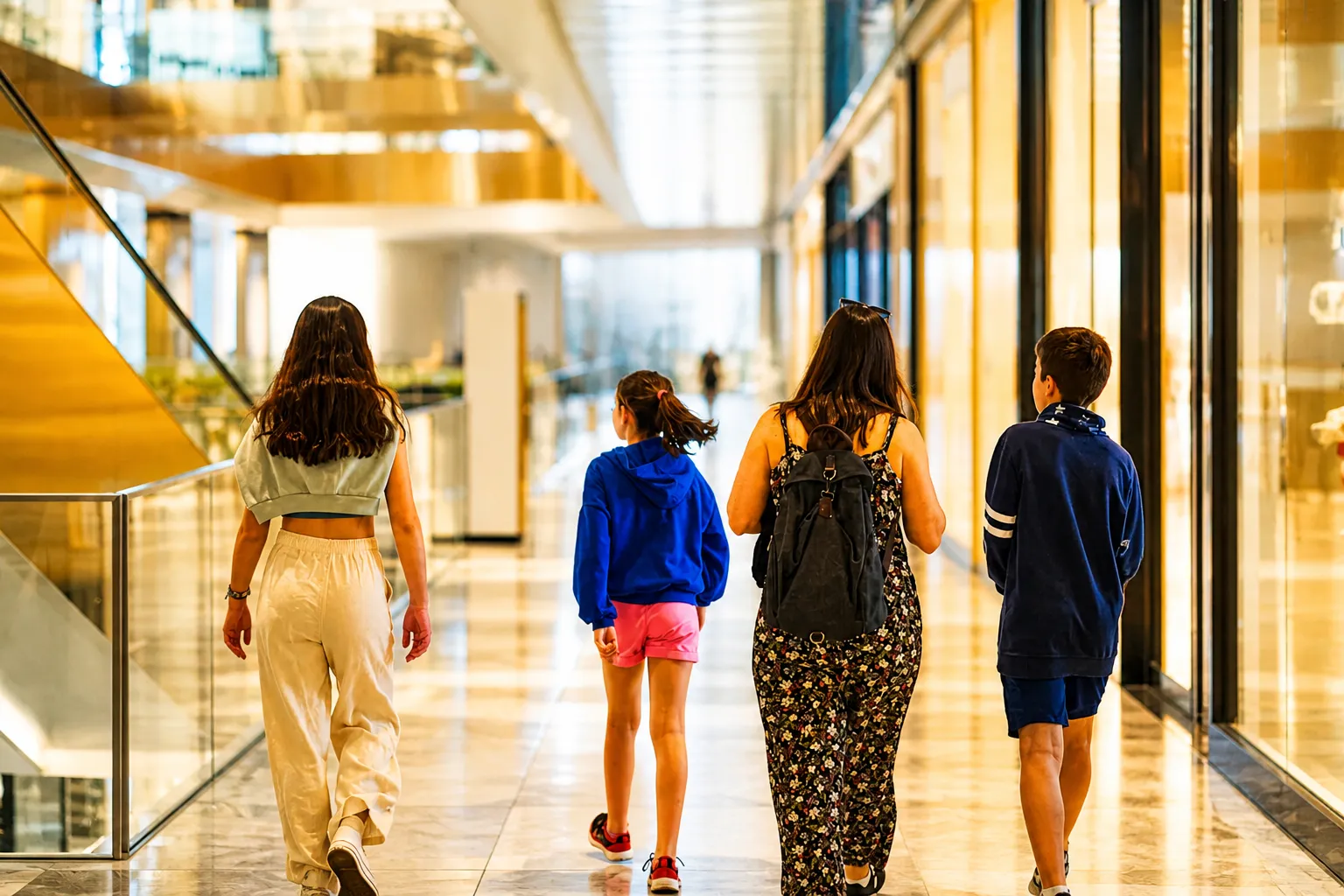
Once-gleaming temples of American consumer culture, shopping malls are splitting into two distinct and divergent futures. While luxury and experiential malls in prime locations are flourishing with record traffic and rising rents, lower-tier regional malls are closing at an accelerating pace, leaving abandoned corridors and empty storefronts in their wake. The bifurcation has never been starker, reshaping the retail landscape in fundamental ways.
The numbers tell a starkly divided story. According to recent data, roughly 1,200 malls still operate across the United States, down from historical highs. Yet projections suggest only 900 will remain by 2028. More than 8,100 stores closed across the U.S. In 2025 alone, roughly 12 percent more than in 2024. In the first quarter of 2026, there was negative net retail mall absorption of 1.2 million square feet. Major anchors including Macy’s, JCPenney, and regional retailers have announced hundreds of closures, creating cascading effects that destabilize entire properties.
The crisis at lower-tier malls is particularly acute. Class C malls with less than $300 in annual sales per square foot face a 13.3 percent vacancy rate, more than 52 percent higher than the overall mall vacancy rate. Class B malls with $300 to $500 in annual sales per square foot have a 9 percent vacancy rate, while Class A malls with $500 or more in annual sales per square foot maintain a healthy 5.6 percent rate. For many struggling properties, the downward spiral has become self-reinforcing: when anchor stores close, surrounding retailers negotiate lower rent or abandon leases entirely, further weakening overall occupancy and discouraging return visits.
Yet this narrative of decline masks a more complex reality. Premium shopping centers are genuinely thriving and attracting investment. Houston’s Galleria pulls over 30 million visitors annually, King of Prussia near Philadelphia hosts 22 million annual visitors with 450 stores, and Mall of America in Minnesota exceeds 40 million visits per year. Foot traffic at top-tier malls showed positive growth throughout 2025, and June 2026 data revealed indoor malls posted a 1.2 percent year-over-year increase in visits. These premier properties command strong rents and maintain nearly 95 percent occupancy, with many reporting their highest sales per square foot since 2007.
The characteristics that distinguish thriving malls from struggling ones have become unmistakable. Successful properties have repositioned themselves as lifestyle destinations rather than mere shopping venues, emphasizing experiential retail and entertainment alongside traditional stores. Aventura Mall in Florida, ranked the best mall in America by the outlet readers, features a museum-quality art collection, a giant chrome slide tower by renowned artist Carsten Höller, a koi pond, and diverse dining including Florida’s first Eataly. King of Prussia showcases luxury brands like Gucci, Cartier, and Dior. Galleria Dallas is celebrated for its iconic ice rink and three-story Christmas tree.
Beyond luxury retail, successful malls have diversified their tenant mix significantly. Thriving properties have shifted away from heavy concentrations of apparel and beauty brands toward more varied offerings, with stronger emphasis on elevated dining, entertainment venues, fitness centers, and services. Short, mission-driven shopping visits under 30 minutes have become the norm, with consumers making focused purchases across fewer stores per visit. Malls that accommodate this behavioral shift succeed; those still designed around leisurely, multipurpose outings struggle.
The pandemic accelerated these trends dramatically. When lockdowns forced temporary closures in 2020, luxury malls rebounded swiftly while mid-tier properties saw permanent traffic declines. The surge in e-commerce during pandemic lockdowns—which surpassed 16 percent of total retail sales in 2020—compressed years of projected digital growth into a single period. Many struggling regional malls could not recover from lost momentum and tenant departures.
Empty malls are increasingly being repurposed for new uses. Nearly half of mall redevelopments are mixed-use projects that retain some retail space while adding medical offices, fitness centers, entertainment venues, restaurants, and self-storage facilities. Some properties have been converted into community spaces, with churches, dance theaters, and educational facilities occupying former retail corridors. These adaptations suggest not total death, but fundamental reinvention.
Retailers continue to make selective decisions based on property quality. While many chains are consolidating around their strongest locations, some brands are expanding. Burlington has absorbed 45 leases from the failed Joann chain and aims to add approximately 100 stores annually. Luxury retailers and experiential brands remain aggressively seeking space in top-tier properties. For the first time in years, more stores opened than closed at well-performing malls in 2025, with an net gain of 4,120 mall stores.
Industry observers now describe the American mall as entering an evolutionary phase rather than experiencing apocalyptic decline. The winners are retailers who understood where customers genuinely want to shop and maintained lean balance sheets. The losers are those who bet heavily on a physical retail world that quietly shifted without them.
The verdict is clear: the American shopping mall is not dying as a concept, but undergoing radical transformation. The enclosed regional mall of the 1980s and 1990s—a one-size-fits-all destination for browsing, socializing, and spending entire afternoons—has largely finished. What replaces it will be far more selective, experiential, and destination-driven. For consumers in major metro areas and affluent suburbs with access to premier properties, the mall remains a vibrant gathering place. For those dependent on aging, lower-tier regional centers, the corridors echo with increasing silence.