

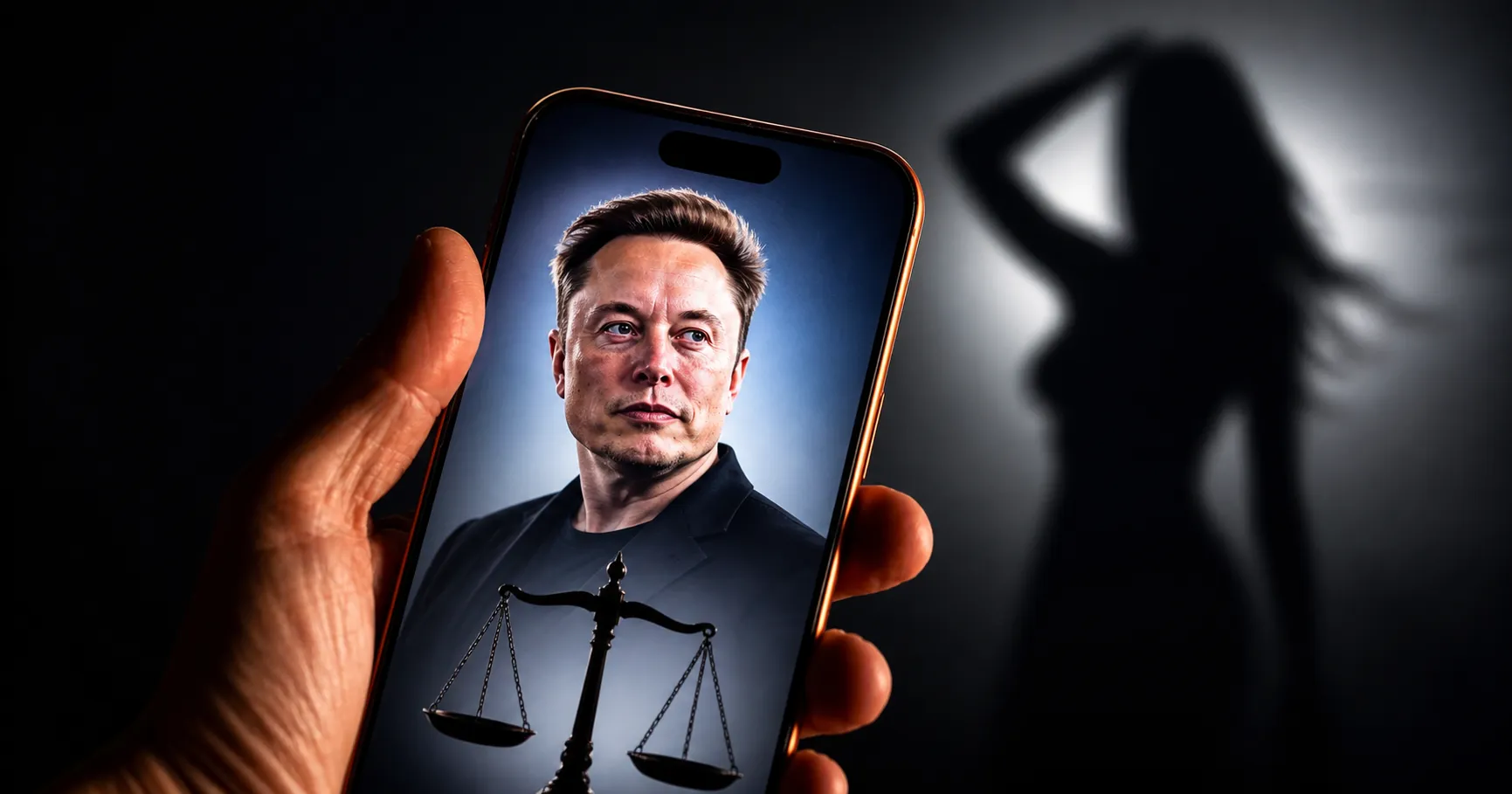
Elon Musk’s artificial intelligence company xAI has sued Minnesota over the nation’s first law banning nudification technology, arguing the statute violates the First Amendment and imposes unconstitutional restrictions on free speech. The lawsuit, filed Monday in federal court, seeks to block the law from taking effect Saturday, August 1.
Nudification refers to the use of artificial intelligence to create fake nude images or videos of real people without their consent. In Minnesota’s law, nudification is defined as an image or video altered or generated to depict an intimate part not shown in the original unaltered image or video of an identifiable individual. The law, officially known as HF 1606, passed with overwhelming bipartisan support—132 to 1 in the House and 65 to 0 in the Senate—making it rare legislation that united lawmakers across the political spectrum on concerns about the technology’s harms.
The dispute centers on how to regulate the technology and who should bear responsibility. Minnesota’s law takes aim at the platforms and services themselves rather than just individuals who misuse them. It prohibits websites, apps, software and other services from allowing users to access nudification tools and bans advertising or promotion of such services. The law opens platforms to civil penalties of up to $500,000 per violation and allows victims to sue for damages. The state attorney general’s office can also pursue enforcement actions.
XAI’s lawsuit claims the law imposes “an overbroad, content-based ban on free speech and the tools of visual expression in a clumsy attempt to prohibit nudification.” The company argues that the penalties are extraordinarily severe, noting that a platform whose users created 100,000 prohibited images could face $50 billion in liability. The complaint also contends that the law’s definition of “intimate part” is overly broad, potentially banning depictions of people without shirts, in shorts or swimsuits, and other images that go far beyond what reasonable people would consider nudification.
In its defense, xAI says it “strictly prohibits” users from generating nude or sexualized images without consent and has filed suits against users who attempted to evade its technological safeguards to produce such content. The company created a controversy in 2024 when its Grok chatbot and image generator were used to generate nonconsensual nude images of women and children. XAI says that if the Minnesota law takes effect, it will have no choice but to restrict Grok Imagine’s image-editing features in the state.
State officials and lawmakers have responded firmly to the lawsuit. Minnesota Attorney General Keith Ellison stated: “I know that using AI to generate nude images of people against their will is appalling. There are plenty of worthy debates to have about AI policy. This is not one of them. AI nudification robs the target of their dignity and can cause immense harm on an emotional, personal, and professional level.”
Governor Tim Walz offered a more direct response, posting on social media: “See you in court, creep.”
The law emerged from real-world harms that prompted action from Minnesota lawmakers. The effort was spearheaded by state Senator Erin Maye Quade after she learned that a Minnesota woman named Molly Kelley discovered a close family friend had used a nudification website to create nonconsensual deepfake images of her and over 80 other women, generated from their public social media photos. Kelley and other victims shared their stories with lawmakers, describing the emotional, personal, and professional damage they suffered.

Minnesota’s approach represents a significant shift in how states regulate harmful AI content. While most states have laws banning deepfakes or nonconsensual AI-generated sexual imagery, Minnesota is unique in holding AI companies liable for enabling the creation of such content on their platforms, rather than only targeting individuals who create or distribute the material. Texas and California have passed similar laws targeting operators of nudification services. Federal legislation also exists—the TAKE IT DOWN Act, signed by President Trump, took effect in May 2026 and requires covered online platforms to establish notice-and-removal processes for nonconsensual intimate images.
State Representative Jess Hanson, one of the law’s sponsors, pushed back on xAI’s free speech argument, saying there is “no constitutional protection” for providing the public with tools specifically designed to generate nonconsensual nude imagery. “They’re kind of being like, ‘Well, it’s not our fault what people choose to do,’ but at the same time, you’re providing the tool,” she said.
The lawsuit comes as xAI faces other legal challenges. Three Tennessee minors have filed a federal class action lawsuit alleging that Grok’s image generation capabilities were used to create sexually explicit material from their images. The city of Baltimore has filed a consumer protection lawsuit claiming the company knowingly deployed a system that produces and spreads nonconsensual sexualized content, including of minors. XAI has also filed a similar challenge against a California law addressing AI-generated deepfakes.
Supporters of Minnesota’s law note a significant gap in existing protections. Until now, federal and state laws primarily targeted behavior after harmful images were created or distributed. Minnesota’s approach attempts to prevent creation in the first place by restricting the tools themselves. Advocates point to the rising prevalence of such abuse, particularly among young people, as justification for the measure. One lawmaker cited a 26,000 percent increase in use of AI material to create child sexual abuse material when discussing why the bill was necessary.
The case will test whether states can regulate AI development and deployment to protect citizens from harm, or whether First Amendment protections shield the creators and distributors of such tools from liability. Courts will need to weigh Minnesota’s interest in protecting its residents from nonconsensual intimate imagery against xAI’s assertions about protected speech and free expression.