

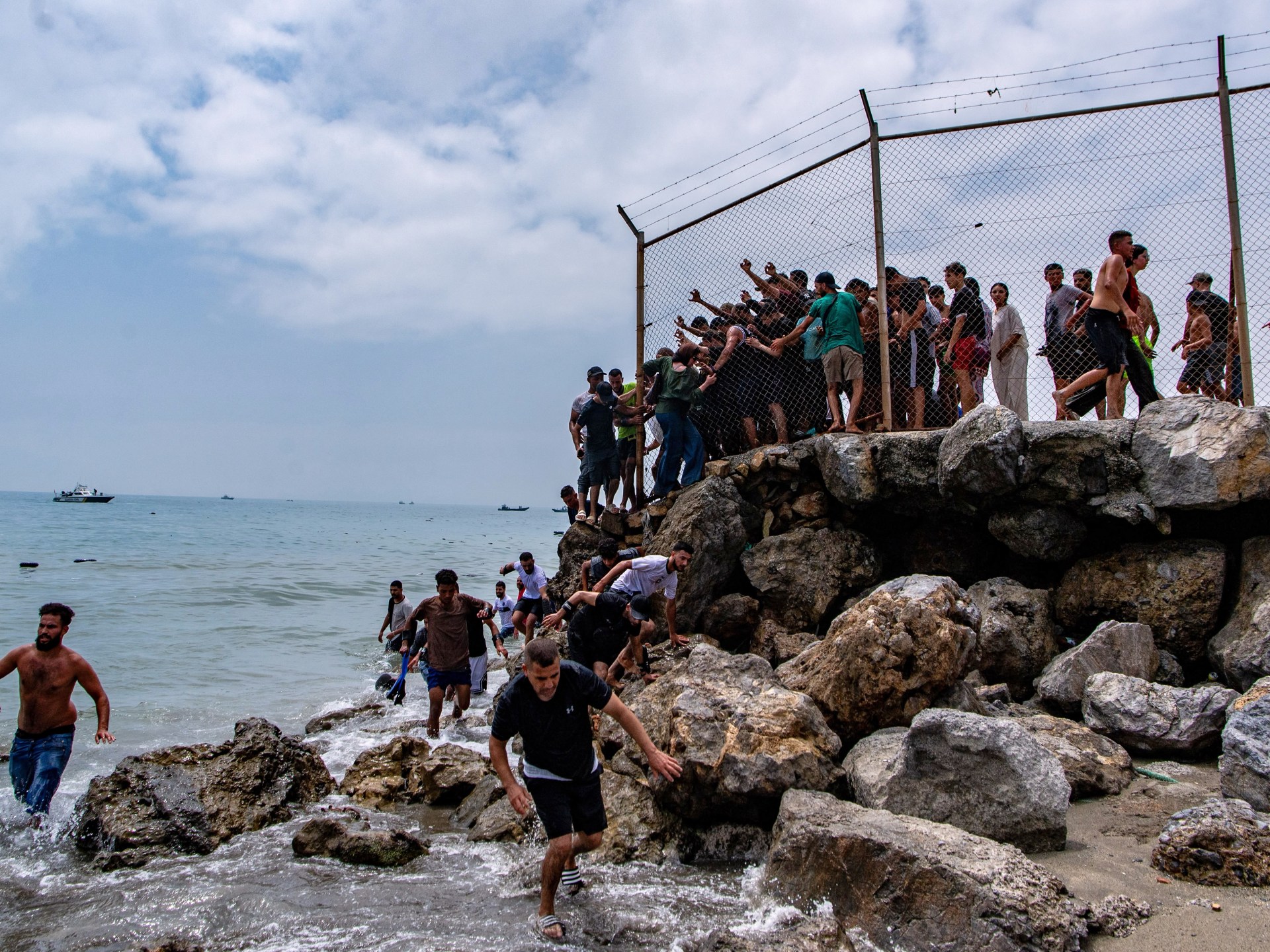
Thousands of migrants streamed across the border from Morocco into Spain’s tiny North African territory of Ceuta on Thursday in scenes of overwhelming chaos that prompted local officials to demand the government declare a national emergency and deploy the military.
The exact number of people who crossed remains unclear, but officials confirmed that between 1,500 and 2,000 migrants entered the enclave over a 10-day period, with hundreds more arriving on Thursday alone. The situation grew so dire that Rachid Sbihi, head of the association representing Spain’s Civil Guard officers who police the border, declared that “the situation is absolute chaos” and that the border had “totally collapsed.”
Juan Jesús Vivas, head of Ceuta’s regional government, called for Madrid to declare a national emergency on grounds of national security, requesting that more police and army troops be deployed to reassert control of the frontier. Vivas warned that migrant reception centers were overwhelmed, with hundreds of people sleeping on the streets after the facility designed to house 512 people became dangerously overcrowded.
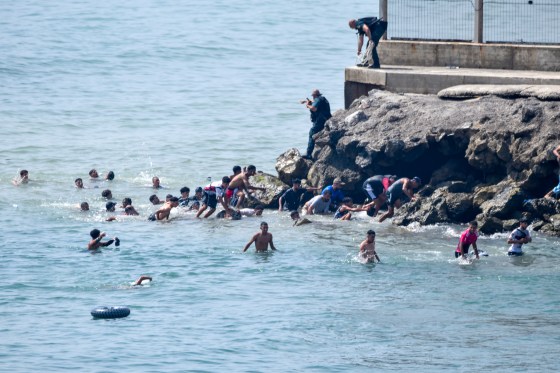
The crossing occurred primarily through the Tarajal beach area, where migrants swam across from the Moroccan coast. Footage showed crowds of people, mainly Moroccans, walking across the breakwaters and running onto local roads. While the majority appeared to be young men, families with women and children were also among those crossing. Some migrants shouted “Viva España!” as they entered Spanish territory, many having used inflatable inner tubes and other flotation devices to make the journey across the narrow strait.
A Moroccan Association for Human Rights representative described the situation as exceptional, noting that the Tarajal border had been “opened under unusual circumstances this morning.” Spanish authorities did not immediately clarify what these unusual circumstances were, though the situation appeared to involve the relaxation of normal border enforcement on the Moroccan side.
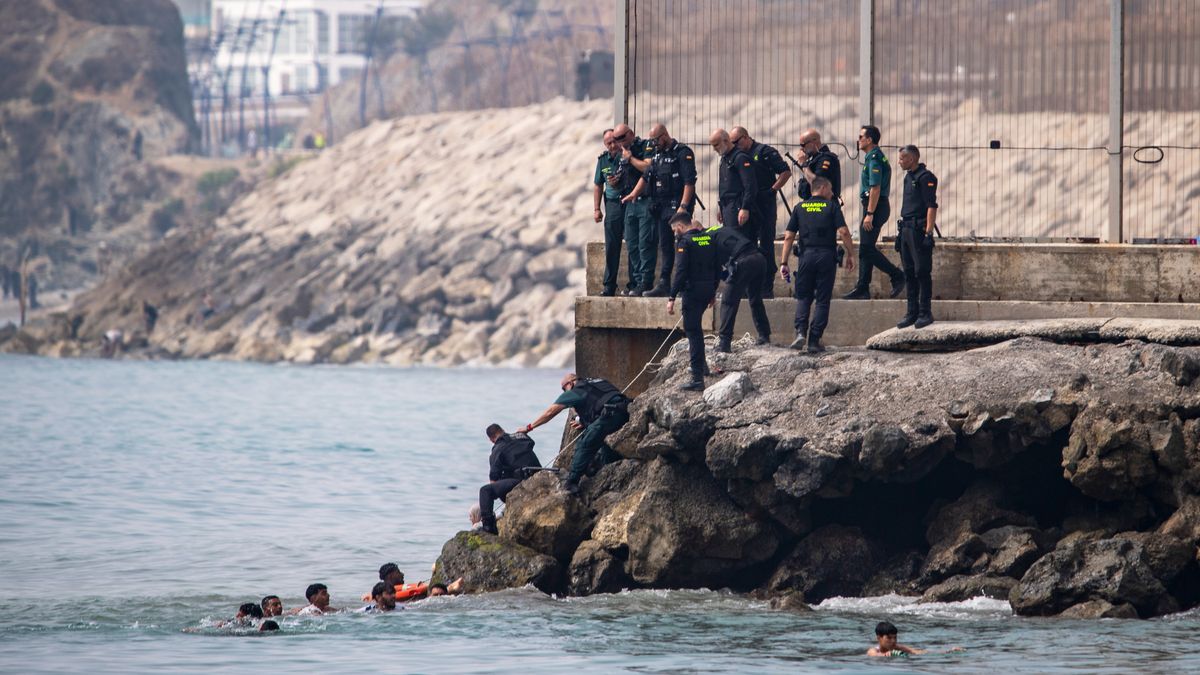
The surge in crossings represents a dramatic escalation reminiscent of the May 2021 border crisis when more than 8,000 migrants poured into Ceuta within just two days. Migrant rights activist Zakaria Zarroqui said the current influx was comparable to that earlier crisis and warned that “the situation remains out of control as we speak,” with people continuing to gather in the Moroccan city of Fnideq in hopes of crossing.
At least three people died attempting to reach Ceuta by sea during the surge, according to border officials and human rights activists. The deadly crossing attempts underscored the desperation of migrants willing to risk their lives for passage into Europe.
Spain’s Interior Ministry rejected calls to declare a national emergency, stating that such a measure does not cover migration crises. The government said it would guarantee the safety of citizens and maintain border integrity but offered no commitment to deploy military forces. However, Spanish Interior Minister Fernando Grande-Marlaska announced he would travel to Ceuta on Friday to evaluate the situation.
The Spanish government stated that Morocco was “closely cooperating” to handle the crisis, noting that Moroccan police were stopping numerous people attempting to cross. Both countries agreed to work together to accelerate the return of everyone who entered Ceuta illegally, though specifics on implementation remained unclear.
The surge in crossings appears linked to a recent Spanish Supreme Court ruling that fundamentally altered border procedures. Early in July, the court ruled that migrants intercepted at sea while attempting to reach Ceuta or Melilla cannot be immediately returned under the simplified procedure previously used in these enclaves. Instead, they must undergo standard deportation procedures including identification, legal assistance, and the opportunity to apply for international protection.
A Guardia Civil spokesperson acknowledged the connection, saying “It has been a slow trickle since the Supreme Court’s ruling, but today has been an explosion.” Officials blamed the court decision for removing a key deterrent that previously allowed swift return of would-be migrants. However, interviews with migrants revealed that many were unaware of the court ruling, suggesting other factors may also be driving the sudden influx.
Ceuta and Melilla, Spain’s two North African enclaves, represent the European Union’s only land borders with Africa. Both territories periodically experience surges in crossing attempts by people seeking to reach Europe, often fleeing poverty or violence in their home countries. The region has become a focal point for migration pressures as Europe faces continued challenges in managing its external borders.
Spanish authorities emphasized that they would work to restore order, though the speed and scale of Thursday’s crossing revealed significant vulnerabilities in border control systems that had been in place for years. The immediate focus turned to processing the thousands who had already entered and determining how to prevent similar mass crossings in coming days.