

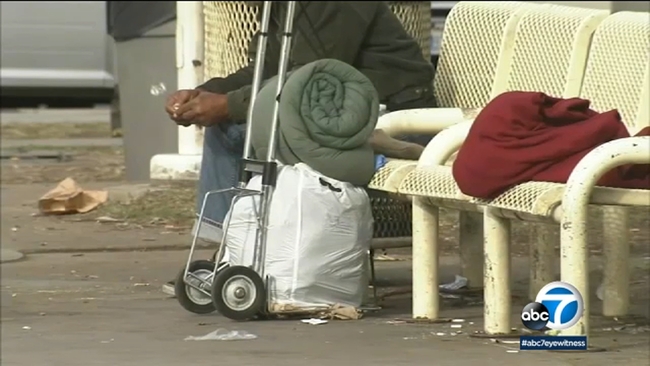
City workers nearly sealed a homeless man inside a South Los Angeles storm drain before noticing him emerge.
Workers prepared to weld shut a manhole near 88th Street and Grand Avenue when someone noticed movement below, and moments later, a man in his late 20s climbed out of the darkness, suitcase in hand, just before crews closed the opening. The man, later identified as Luis Jimenez, told reporters he had been homeless for about 10 years and had stayed in the drain for one or two nights because he felt safer there.
The incident followed days of growing attention around people living inside the city’s storm drain system, after videos circulating online showed individuals entering and exiting tunnels beneath the streets, prompting a city response.
The discovery of individuals living inside city storm drains near the 110 Freeway came to light after Juan Naula, founder of the nonprofit Clean LA With Me, reported witnessing people emerging from the underground drainage system near 88th Street and South Grand Avenue. Naula, who encountered two individuals exiting the drains on Monday, stated that this was his second such discovery in two weeks.
Juan Naula, with the nonprofit Clean LA With Me, said he witnessed two people emerge from the storm drain while cleaning the street Monday. “I can’t explain that. A person living like a rat — worse than a rat. Come on,” Naula said.
Juan Naula, who runs a nonprofit dedicated to cleaning up the city, said he believed that videos he posted on social media Monday about people living in the storm drains were the trigger for the city response.
Naula said he was cleaning trash near the corner of 88th and Grand that day when he saw as many as 10 people go in and out of the storm drains.
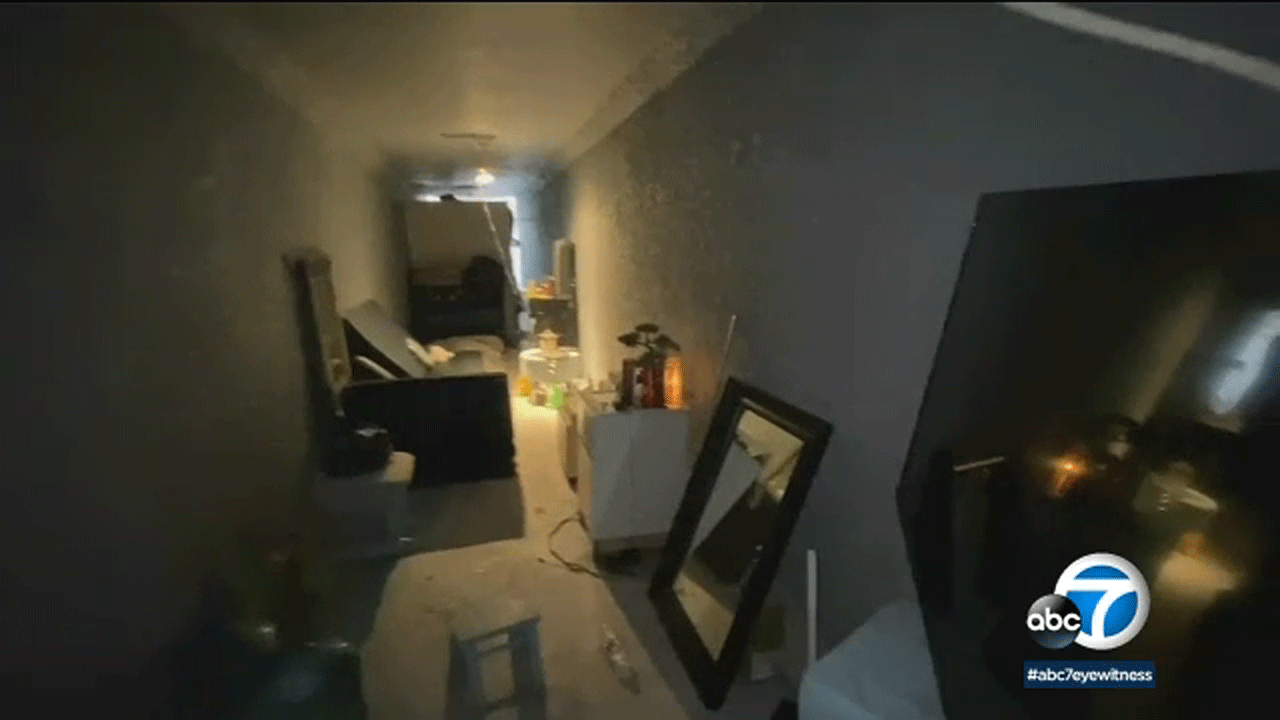
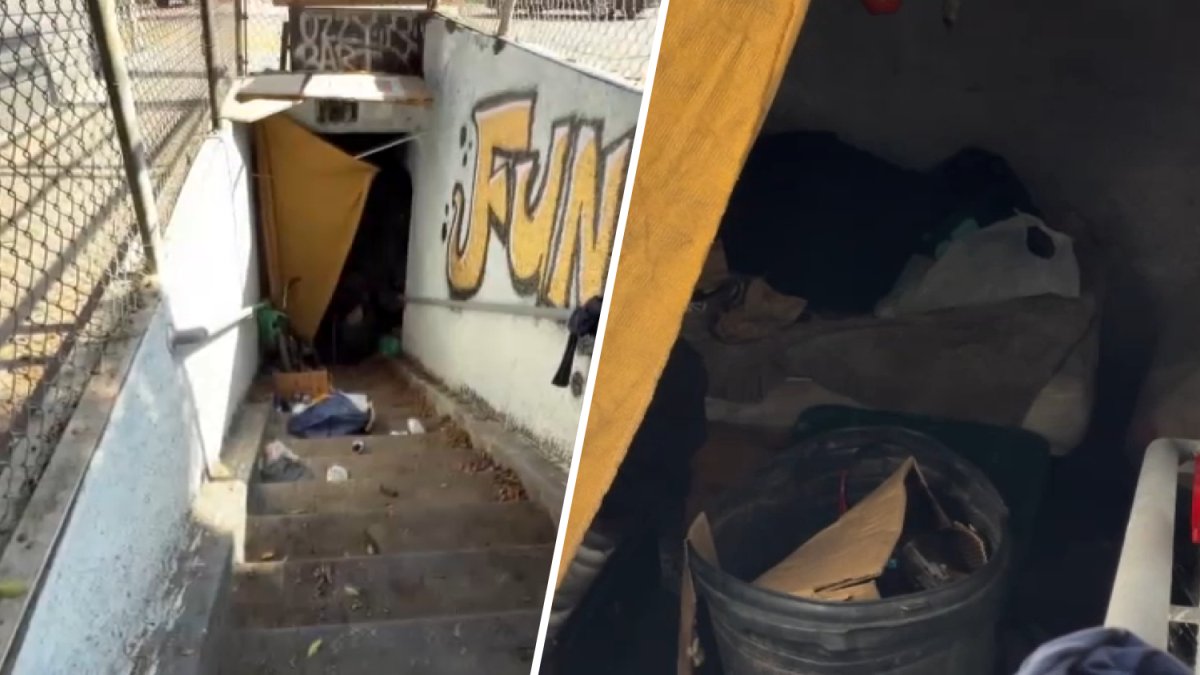
Conditions inside the drains were horrific.
A 10-foot space was filled with trash, no running water, and it’s completely unsanitary.
The storm drain had, in effect, become a sewer — filled with human waste, trash and devoid of running water. The occupant, likely suffering from mental illness, would reportedly place a doghouse over the open manhole, which she used as her point of entry and exit.
Sanitation crews in protective gear were seen removing human waste and debris from the drain near 88th and Grand, which officials described as a “hot zone,” with authorities keeping the public at least 100 feet away.
“These are human beings, you can’t come and blame them,” said Juan Naula. “This has to get a fix long-term, not just a couple weeks. I’ve seen so many places that the city comes, cleans, not even two hours… the same.”
Naula expressed frustration over the city’s response capacity.
“I cannot do so much,” he said. “I’m just a guy. I’m just one person trying to fix these things. But the city has to jump in.”
Naula said he got an email from the sanitation department saying they planned to seal and secure the sewer, but clearly more needs to be done.
Neighbors blamed city inaction for the crisis.
Neighbor Latoia Thomas said “It pisses me off … we need your help.”
One resident demanded authorities “Put cameras out, put something to barricade them from coming in. House them or send them somewhere else where they don’t have to be straggling on this part, under the tunnel.”
Multiple instances emerged in March and late February 2026.
The Canoga Park cleanup comes just two days after city officials cleared out an encampment inside a storm drain in South L.A. Near the 110 freeway.
Authorities cleared out a homeless encampment inside a Canoga Park storm drain near the Los Angeles River and Bassett Street on March 26.
The drain had essentially become a sewer as the tunnel was filled with human waste and trash. A woman who lived there had placed a doghouse over the open manhole to hide her point of entry and exit.
Rangers with the Mountains Recreation and Conservation Authority moved in to safely remove the occupants, placing them into temporary housing and sealing the drain entrance to block future access.
Officials said many unhoused residents they encounter decline city services and later return to abandoned drains, digging deeper rather than seeking help.
The problem, as Naula described it, is that people tend to return if there is no regular enforcement.
Jimenez emerged from the manhole at 88th and Grand.
Naula was cleaning trash near the corner when he saw as many as 10 people go in and out of the storm drains. He posted a video online about people living in Los Angeles storm drains, then got a call from a Fox 11 reporter. The station’s story ran online Tuesday morning — the same day city crews responded to the scene.
Jimenez told reporters he had stayed in the drain for one or two nights because he felt safer there, seeking safety from the dangers of street life.
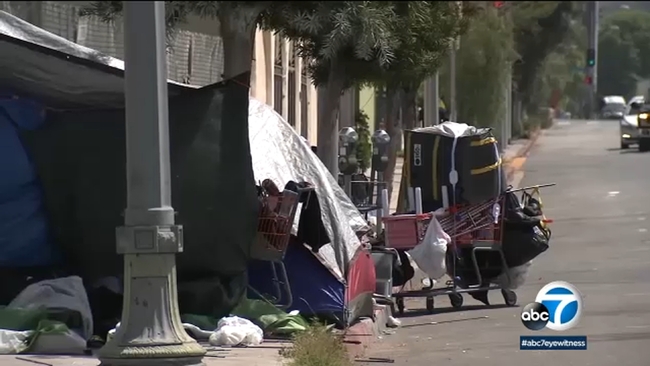
Workers were there Wednesday to permanently seal the manhole, a known refuge for unhoused residents, when they heard noises from below. Jimenez emerged moments before it was welded shut, clutching a few belongings.
City officials acknowledged the crisis but cited progress.
A spokesperson for LA Mayor Karen Bass called the situation “tragic and unacceptable” while noting that homelessness has dropped 17% on the mayor’s watch.
In response to widespread media coverage and outrage, city officials and public safety personnel covered up the cavernous catch basin, sealed it with a heavy metal plate and gave the woman another option for shelter. Officials told KTLA they’re providing her with mental health resources.
KTLA tried calling 3-1-1 and were referred to the Department of Sanitation. It said there have been multiple calls for service at this location, and it typically takes up to 90 days for someone to respond.
Broader tunnel history connected to the current crisis.
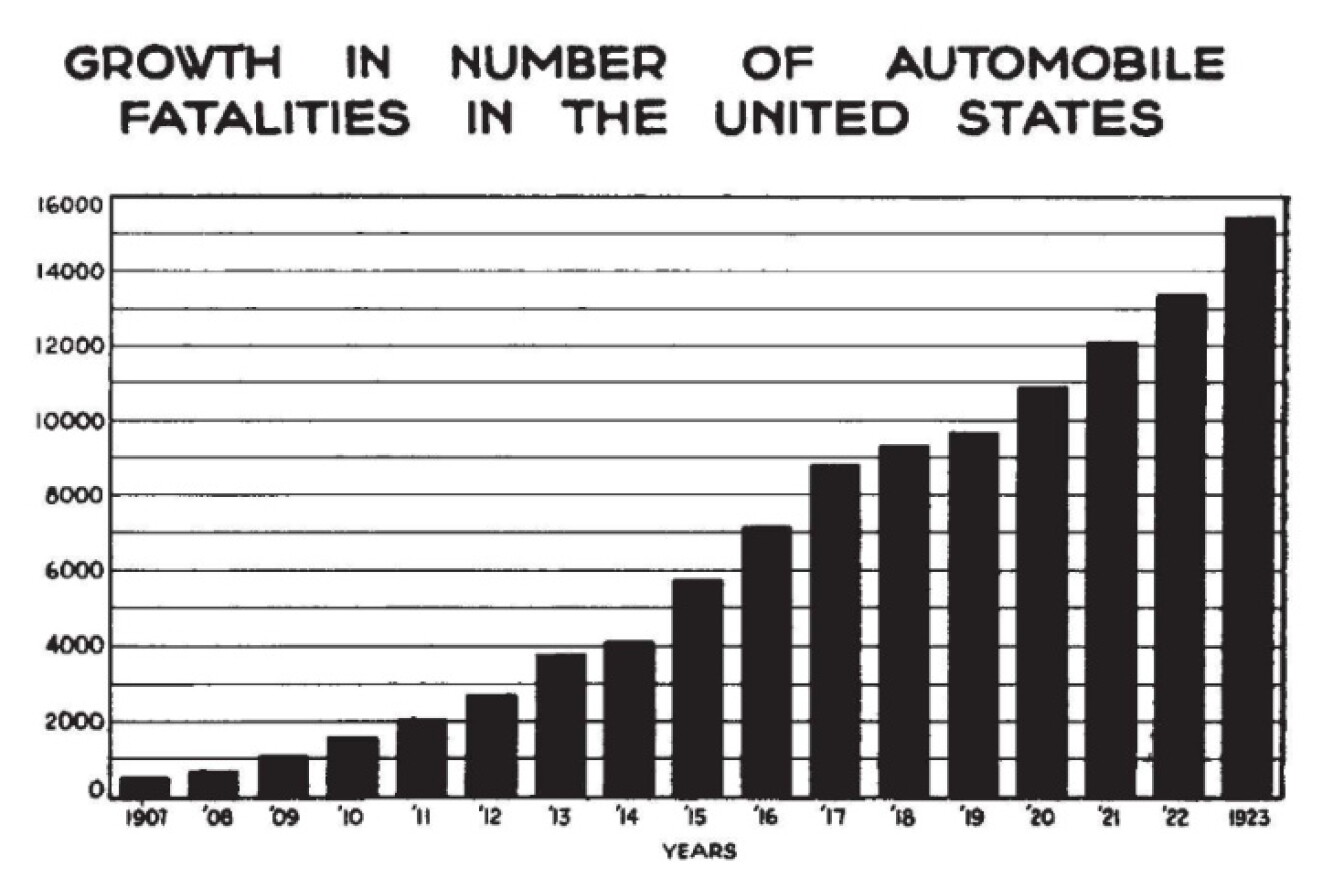
Around 220 pedestrian tunnels were built in the 1920s-1930s when higher traffic from automobiles led to increased accidents involving children and pedestrians. As the tunnels became less popular with pedestrians over the years, residents said the empty spaces became neglected.
By the 1980s, the walkways were “smelly, dangerous lairs for criminals, graffiti artists and vagrants,” the Los Angeles Times reported.
Although many underground walkways have been locked up for years or permanently sealed up with concrete, there are still a small number of passageways that are being used. Some remain open only to school employees who have keys to unlock the entrances, allowing students to pass through when needed.
City officials continue efforts to manage the sprawling crisis.
“This is so tragic, and is emblematic of the tough challenges that Mayor Bass is taking on that were ignored for decades,” the mayor’s office said in a statement, also noting it had “mobilized a response” to two locations on Grand Avenue on Tuesday, including at West 88th Street, and that “both sites were cleaned and people were offered resources.”
Rangers who patrol the area told KTLA that many homeless residents they approach often refuse services and later return to the site of the cleared-out encampment.
Jurado also said she wants to ensure that homeless people in the area are connected with outreach programs and supportive services.