

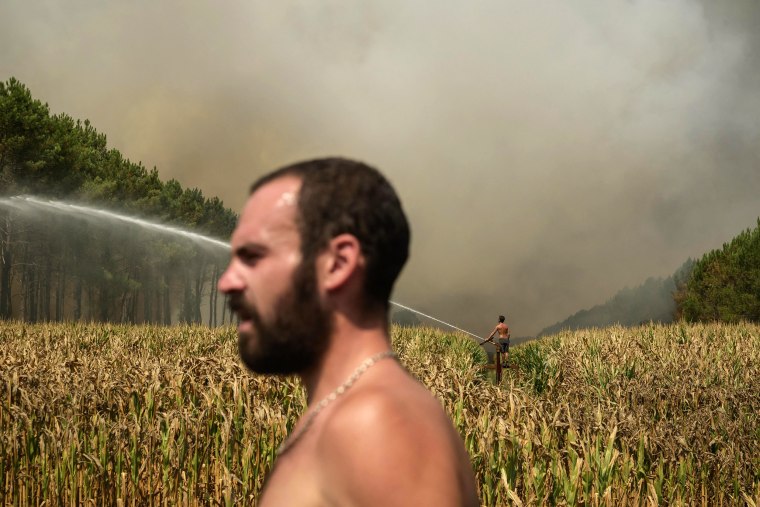
Firefighters in southwestern France are battling the last hot spots of one of the country’s largest wildfires on record, with teams working against another threat of extreme heat as some evacuees are finally allowed to return home after days of intense danger.
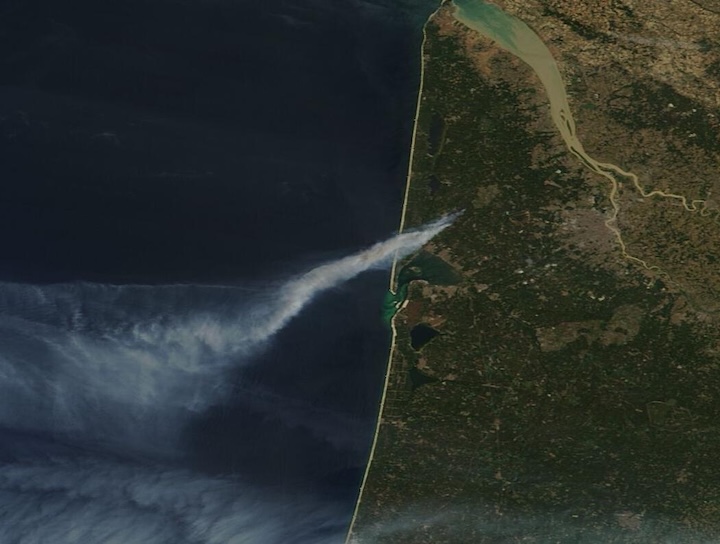
The massive blaze, which erupted in mid-July near Bordeaux in the Gironde region, has consumed an area four times the size of Paris, burning more than 420 square kilometers since it began. The fire was driven by extraordinary conditions: successive heatwaves that have gripped Europe all summer, severe drought, strong winds and vegetation so dry it became tinder-ready for fast-moving flames.
In a rare phenomenon, the wildfire became so powerful that it generated its own weather system. The fire’s towering smoke column became a thunderstorm complete with lightning that struck the ground and ignited new fires beyond the original blaze. This type of fire-induced storm, called a pyrocumulonimbus, has never been documented in France before.
The evacuation scale has been historic. More than 220,000 people were forced from their homes in the Gironde region alone, making it France’s largest civilian evacuation operation outside of wartime. Authorities also ordered around 4,000 more people evacuated from Atlantic coast tourist sites as the fire threatened to spread further. Residents of some nearby communities, including those in neighboring regions, fled desperately, with some taking refuge on rooftops as the flames approached their homes.
International assistance has poured in to help contain the blaze. More than 1,000 French firefighters have been joined by crews from across Europe, including 65 German firefighters from Bonn and support from Poland and Romania. A fleet of water-bombing aircraft, including planes from Greece and Sweden, have been deployed alongside nine French helicopters dropping water and flame retardant.
The firefighting effort has taken a toll. More than 90 firefighters have been injured battling the flames, while authorities describe the blaze as “stabilized” rather than “contained” — meaning it could still spread if conditions worsen. The fire created what officials called an “explosive cocktail” of weather conditions, with changing winds capable of shifting the fire’s direction at any moment.
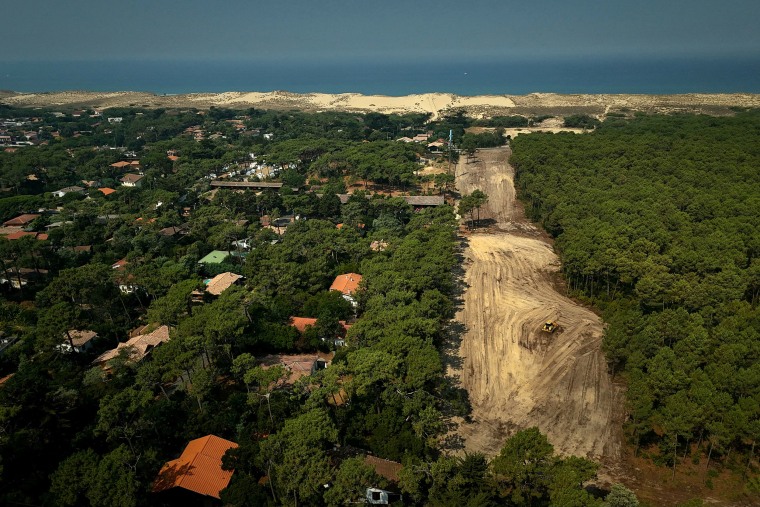
As of late July, authorities announced the first significant sign of progress: some evacuees were allowed to return home. Nearly 84,000 people were given permission to return to their homes in southwestern France after cooler weather moved in, a strong indication that firefighters were turning a corner. In the neighboring Landes region, about 15,000 people were authorized to return to their communities after a separate wildfire was extinguished.
But the brief window of hope faces new pressure from weather forecasts. A fourth heatwave of the summer is approaching the region, with temperatures expected to reach dangerous levels again. Authorities warned that the situation could deteriorate quickly, and they continued to urge residents to remain alert, keeping their mobile phones on and ready to evacuate again if necessary.
The 2026 wildfire season has been unprecedented for France. The country has experienced more than 115,000 hectares of burned forest since the beginning of the year — far exceeding historical averages. The fires have been fueled by the broader European heatwave crisis. On June 23, the European Union recorded its hottest day since measurements began in 1947, prompting emergency services and military forces across the continent to be placed on wildfire alert.
Climate experts and officials have pointed to global warming as the driving force behind the severity of these conditions. The Prime Minister stated that climate change had caused the wildfire season to come earlier than normal. Multiple climate scientists linked the extreme heatwaves to human-caused climate change, with UN officials describing the situation as bearing “the fingerprints of the climate crisis.”
Beyond France, Spain has battled equally catastrophic wildfires. A fire in the Ávila region west of Madrid has become Spain’s largest wildfire on record, burning more than 500 square kilometers. Spain has declared a national emergency, and the country has suffered at least 13 deaths from wildfires this year, making 2026 one of its deadliest fire seasons in decades.
As firefighters continue their grueling work battling the last hot spots in the Gironde region, they face the grim reality that August — traditionally the peak month for European wildfires — has not yet begun. Officials and residents alike brace for what could be an even more dangerous month ahead.