


A former hotel employee has shared a list of smart checks to make in your room before you start settling in and unpacking.
Megan, a YouTuber who has spent the last 10 years staying in hotels across 50 countries, also worked in a hotel for a year herself. Between her own experience and the stories she has heard from guests, she has picked up plenty of lessons about what can go wrong during a stay.
Among the issues she has come across are room doors that would not shut properly, toilets that failed to flush, and rooms left in seriously unpleasant states by previous occupants.
Because of that, she now follows a personal checklist every time she arrives at a hotel room, making sure everything is in order before taking her things out of her bag.
Her first step is to keep the door open with a suitcase or bag and carry out a full sweep of the room, with extra attention paid to the bathroom.

“You’ll want to check the bathroom, open the closet, look behind the curtains, under the bed and step out onto the balcony if there is one,” Megan advises in a video shared to YouTube.
She explains that this is not just about easing nerves. It is also a practical way to spot any immediate problems that could make the room unsuitable.
Megan advises to do the sweep to check for any ‘obvious messes or anything that’s immediately apparent that would make you want to switch rooms’.
On one occasion, she requested a different room after finding a filthy mess around the toilet, along with clumps of hair in the shower and bathtub.
It is also worth testing basic essentials straight away, including the toilet flush and the shower, so you are not discovering faults later on.
“Count your towels, count your toiletries and make sure everything is stocked,” Megan advises, noting it’s typically easier to sort at the start of your stay rather than midway through.
After that, she recommends placing your suitcase in the bathtub while you inspect the rest of the room for signs of bed bugs, since the tub is less accessible to them.
That is when the more detailed room check begins.
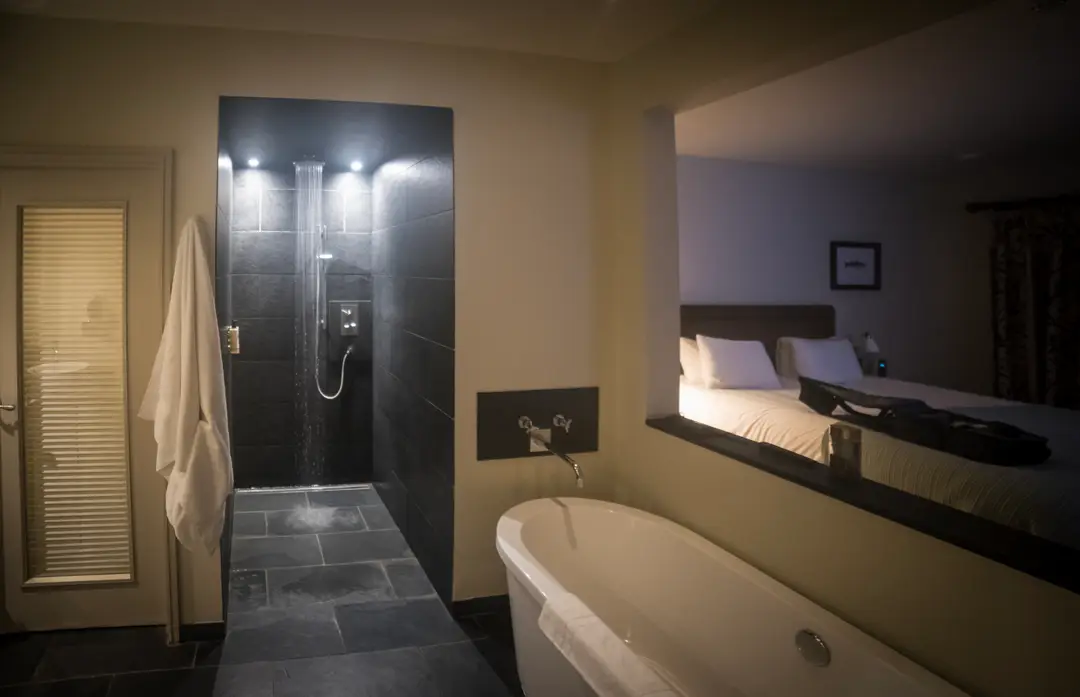
To inspect the bed properly, she says to pull back the sheets and examine the mattress closely.
“look at the mattress seams, corners and piping for any reddish brown bugs, small dark spots that look like black pepper or thin sheds of skin”.
For a more thorough search, she also suggests checking the edges of the headboard with your phone torch, including the space between the headboard and the mattress.
Bed bugs are a significant concern for travelers, with one in seven U.S. Travelers reporting a bed bug encounter in the past year, according to recent survey data. Notably, about 20 percent of these sightings occurred in five-star hotels, indicating that bed bug problems are not limited to budget accommodations. A 2024 industry survey found that 89 percent of pest control professionals have treated bed bugs in upscale hotels. Bed bugs are excellent hitchhikers introduced by guests regardless of hotel cleanliness standards, and recent industry data indicates that approximately 20 to 25 percent of hotels report bed bug incidents annually, though many cases go unreported.
If anything appears off, dealing with it is much simpler before your belongings are spread around the room. At that point, you can contact reception and ask to move, or even leave the hotel altogether if necessary.
Should you find bed bugs, Megan advises asking to move floor, not just to the room next door – where there will likely be more.
The next step on her list is making sure the room can be secured properly. That means checking the main lock, deadbolt, and security bar, as well as testing any window and balcony locks. She also recommends checking the peephole and covering it from the inside with a post-it note.
One of her more serious warnings involves searching the room for hidden cameras.
Megan advises closing the curtains, dimming the lights and performing a sweep with your phone flashlight ‘watching for any small reflective glint’.
She says to pay particular attention to smoke detectors, alarm clocks, air vents, lamps, and anything else facing the bed or bathroom.
“Also be suspicious of any USB charger or random electronic devices that have been left plugged in,” Megan adds, noting to photograph anything you do find and ‘get out’ immediately to call the cops.
Hidden cameras in hotels have become an emerging concern, with the global spy camera market reaching approximately $1.97 billion in 2024 and expected to more than triple by 2031. While cameras in hotel rooms are highly unlikely, taking a few minutes to check provides valuable peace of mind. Recent data shows that about two-thirds of Americans admit they do not know how to detect a hidden camera. Smoke detectors are commonly used to hide cameras in hotel rooms, and travelers are advised to perform visual inspections and use smartphone detection tools to protect their privacy. Mini cameras can now be hidden in everyday objects like chargers, alarm clocks, and even behind screws and ventilation slots.
Her sixth tip is about emergency safety.
She stresses the importance of not only reading the evacuation plan usually found on the back of the door, but also physically walking the route to the nearest exit so you know it is clear and accessible.
Another item on her checklist is the TV remote, which she describes as one of the least hygienic items in a hotel room. She even suggests placing a shower cap over it for an added barrier.
“A great idea.”
Scientific research backs up Megan’s concern about remotes. Studies have found that the TV remote is one of the most heavily contaminated surfaces in hotel rooms, harboring bacteria levels comparable to toilet seats. Among high-touch surfaces tested in hotel rooms, the remote control ranked second in bacterial contamination. The remote is frequently touched by every guest yet is often overlooked during routine housekeeping. Some hotels have begun sealing remotes in plastic to make them easier to sanitize. Experts recommend using a plastic bag as a makeshift glove when handling the remote or disinfecting it with antibacterial wipes, paying special attention to the power button which is touched the most.
She also recommends checking the coffee maker and the ice bucket or ice supply area to make sure they are clean, adding that it is perfectly acceptable to ask for a replacement if needed.
Her ninth check covers the air conditioning and the iron, looking out for unusual noises, odd smells, or any obvious faults.
Before finishing, she says guests should confirm the room phone has a dial tone in case of emergency, and check the alarm clock so there are no unwanted early wake-up calls.
Lastly, she advises taking photos of the room as soon as you arrive.
“Treat your room rental like a car rental,” Megan advises.
Doing that can help protect you from being held responsible for stains, missing minibar items, or other pre-existing issues. Documentation is particularly important when it comes to disputing any potential damage charges from your stay. Taking photos of the room upon arrival provides a baseline that can protect you if the hotel later claims you caused damage. Some hotels may charge damage fees for issues found after checkout, so having photographic evidence of the room’s condition when you checked in is essential for defending against unfair charges. You may never need those photos, but having them could save you from unexpected charges later on.