

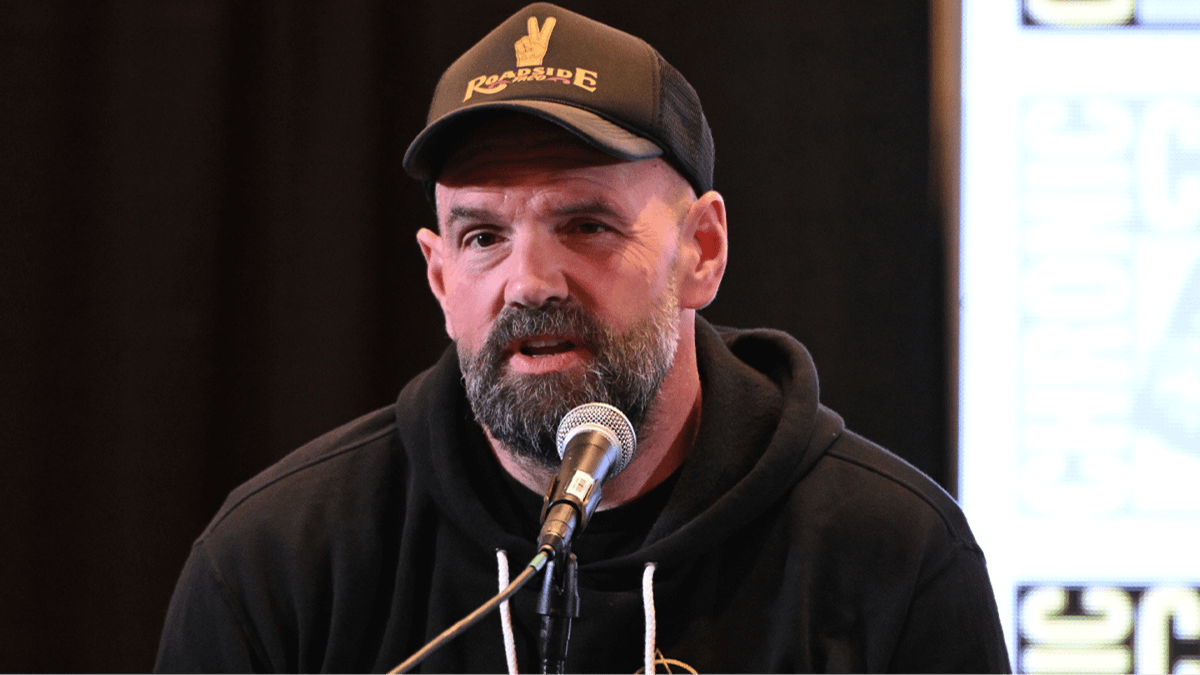
Ethan Suplee has shared his thoughts on GLP-1 weight loss medications after overhauling his health and shedding roughly 300lbs.
The My Name Is Earl star has spoken openly for years about the struggles he faced with his weight, revealing that he once weighed as much as 536lbs. The 50-year-old actor started dieting at just 5 years old after his grandparents, coming from a place of love and concern, put him on a restrictive eating plan—an experience that inadvertently created a pattern of sneaking food that would persist for decades.
From an early age, Suplee was put on strict eating plans, and as an adult he cycled through a long list of methods, including keto, paleo, and even liquid-based diets. While he often succeeded in dropping weight, keeping it off long term was the real challenge. Over the course of his lifetime, Suplee lost and gained roughly 1,000 pounds before finding his breakthrough.
In time, he developed a strategy that helped him sustain progress, focusing on calorie tracking, lean protein, maintenance phases, and a healthier mindset around food. The turning point came in 2018 when Suplee encountered a TED Talk by fitness researcher Mike Isratel and realized that carbs and gluten weren’t the problem—his relationship with food was. His transformation remains remarkable, and he has since undergone multiple skin-removal surgeries following his significant weight loss.
More recently, Suplee addressed GLP-1 medications and suggested their effectiveness depends in part on what someone is actually hoping to achieve through weight loss. He has become increasingly vocal about weight-loss drugs through his podcast American Glutton and his show LifeLONG with Ethan Suplee, where he discusses long-term weight management and transformation.

In an interview, Suplee said these drugs can help people lose weight even if they do not immediately make other lifestyle adjustments. However, he also argued that medication by itself may fall short for those aiming for a specific look or body composition. Millions of Americans have turned to blockbuster GLP-1 medications in recent years, with clinical research from 2026 showing that about 78.5% of people taking GLP-1 medications achieved weight loss, compared with only 26.5% of those taking a placebo.
He said:
“As a kid, I wanted a magical diet drug so badly. And now we have what is a magical diet drug…”
“I think, unfortunately, it’s also not a one-stop shop. I think you can hop on a GLP-1 and experience weight loss. You can see the scale go down week over week for a long time without having to do anything else.”
Suplee made clear that he was not taking aim at people who turn to the medication for health reasons.
He continued:
“By the way, a small amount of weight loss provides a huge health benefit…”
“So if you’re just going into it, going like, ‘I just want to be healthier. Let me hop on this GLP-1 agonist and improve my health.’ Bravo to you. You’re going to do that… I’m not criticizing those people.”
His concern, he explained, is more relevant to those pursuing a dramatic physical change or a higher level of fitness than simple movement on the scale.

He added:
“I think for those people, just hopping on a GLP-1 is not enough…”
“I think it also will require some resistance training to preserve lean tissue… Maybe increase protein a bit… I just think [they] aren’t a one-stop shop.”
The 50-year-old has also previously noted that working out was not the primary factor in his own weight loss journey.
He said:
“It took me a long time to really understand how inefficient exercise is for weight loss…”
“I’m not knocking exercise, I love to exercise, and it can compliment weight loss, but really the key is what you eat.”
Suplee has likewise emphasized that long-term weight control is not something that can be pinned on one single answer.
He explained:
“I don’t think it’s ever going to be one thing…”
“I think it is partially the amount of food you’re consuming, partially the types of food you’re consuming, partially how sedentary you are, and partially your emotional and potentially mental behavior and relationship with food.”
He added:
“There’s an ecosystem to everybody’s life.”
Suplee has also highlighted an important consideration for people experiencing significant weight loss with GLP-1 medications: the issue of loose skin. He noted that as obesity trends tick downward for the first time in roughly 50 years, partly due to the advent of GLP-1s, more people will face the challenge of loose skin after major weight loss. While people losing 20 pounds may have minimal loose skin, those losing 300 pounds will have substantial amounts that may require surgical intervention, a reality Suplee believes should be more widely discussed given its physical and emotional impact.