

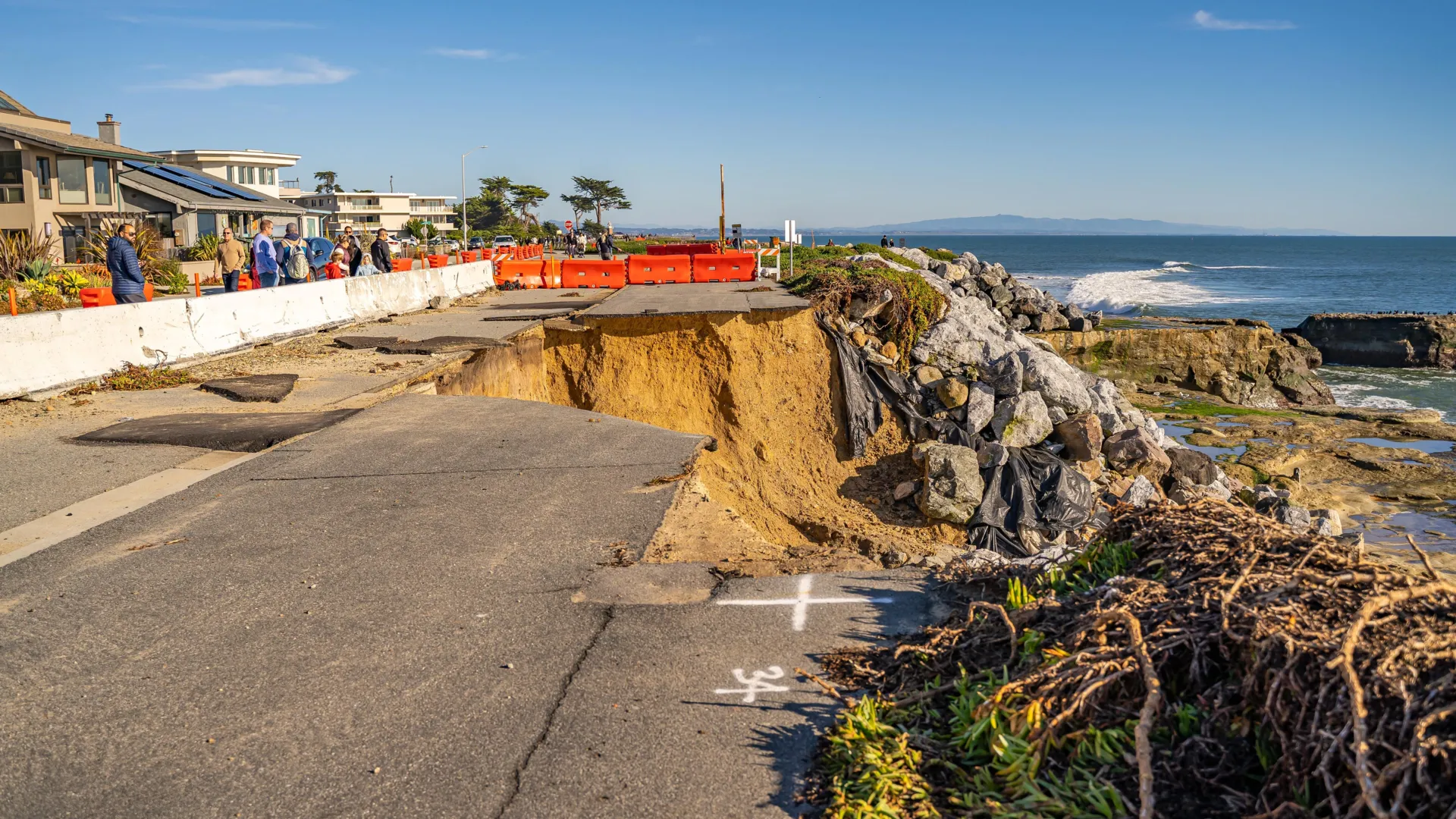
A study published in June 2026 and featured by ABC7/KABC in Los Angeles on August 2, reveals the San Andreas Fault is at its highest stress level in 1,000 years.
The research, conducted by Dr. Liliane Burkhard of the University of Bern along with colleagues from Northern Arizona University, the U.S. Geological Survey, and UC San Diego, modeled 1,000 years of earthquake activity along the southern San Andreas and San Jacinto faults.
Burkhard, a research affiliate in the Hawaiʻi Institute of Geophysics and Planetology at the UH Mānoa School of Ocean and Earth Science and Technology, stated that “stress levels on multiple fault segments are now at or above the highest values seen in the past millennium and that the region may be capable of a large through-going rupture involving both fault systems.”
The findings represent a major shift in how scientists understand earthquake risk.
The San Andreas and San Jacinto fault systems have reached the highest stress levels seen in the past 1,000 years, according to the study conducted at the University of Hawaiʻi at Mānoa.
Burkhard emphasized that “this is not a prediction of when an earthquake will happen,” but added that “studies like this are important contributions to national and global earthquake hazard research” and that “the system is critically stressed, and that physics-based models like this one give us a clearer picture of the range of scenarios we should be prepared for.”
The research focuses on a critical area near Los Angeles.
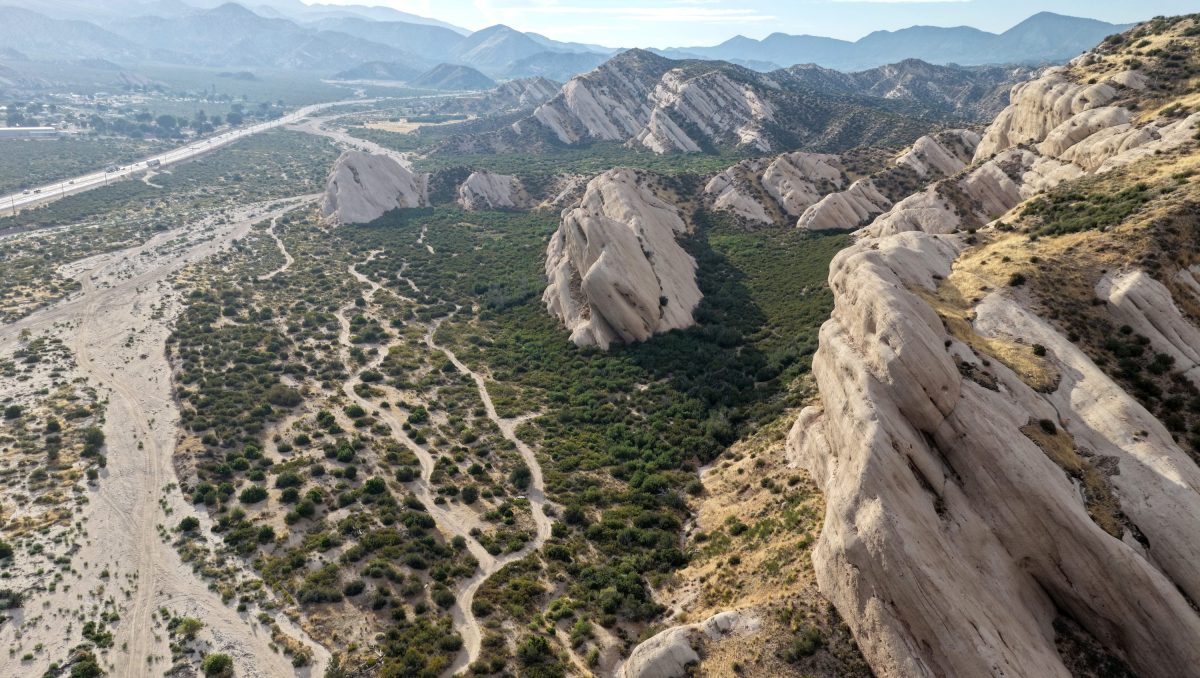
Northeast of Los Angeles, the San Andreas and San Jacinto fault systems come close together at Cajon Pass, a geologically complex area where a rupture on one fault may be able to jump to the other.
The concept of an “earthquake gate” is central to the study’s findings.
Burkhard found that “Cajon Pass may act as an ‘earthquake gate’: sometimes blocking large ruptures from crossing between the faults, and sometimes allowing them to pass through and involve both systems in a single event.”
Researchers said a significant earthquake at Cajon Pass, where the San Andreas and San Jacinto faults meet, could damage critical infrastructure across several cities, with Burkhard noting that “aqueducts actually cross the San Andreas Fault, and if something happens, you might not have water for a while.”
The potential impact on Southern California’s water supply could be catastrophic.
Higher stress on a fault means the pressure that causes earthquakes is building.
Dr. Lucy Jones, a seismologist at Caltech who helped develop the benchmark earthquake simulation, stated that “it is the longest fault in California and therefore capable of the biggest earthquakes.”
Jones emphasized the unpredictability of timing during recent interviews.
When asked about the timing of the next major earthquake, Jones said “it could go another 100 years. It could be tomorrow. It could be, you know, next minute.”
The stakes are enormous if such an earthquake strikes.
A magnitude 7.8 earthquake along the southern San Andreas Fault, rupturing from Imperial County to Los Angeles County, could result in an estimated $1 trillion in damage across Southern California.
Ahmed Elbanna, director of the Statewide California Earthquake Center, told the San Francisco Chronicle that “I wouldn’t say that a trillion dollars is an extreme, it could be very plausible if things go bad.”
Elbanna said damage from fires triggered by a major earthquake could account for $300 billion alone.
The potential for fire damage makes this scenario particularly devastating.
Elbanna added that “it’s going to be an event that California and Los Angeles have not experienced probably throughout their whole history.”
Christine Goulet, director of the U.S. Geological Survey Earthquake Science Center, recently told US Today that “it’s gonna happen. An earthquake could be in a matter of minutes, the next hour, tomorrow, or in a week from now, we can’t predict that precisely at this time.”
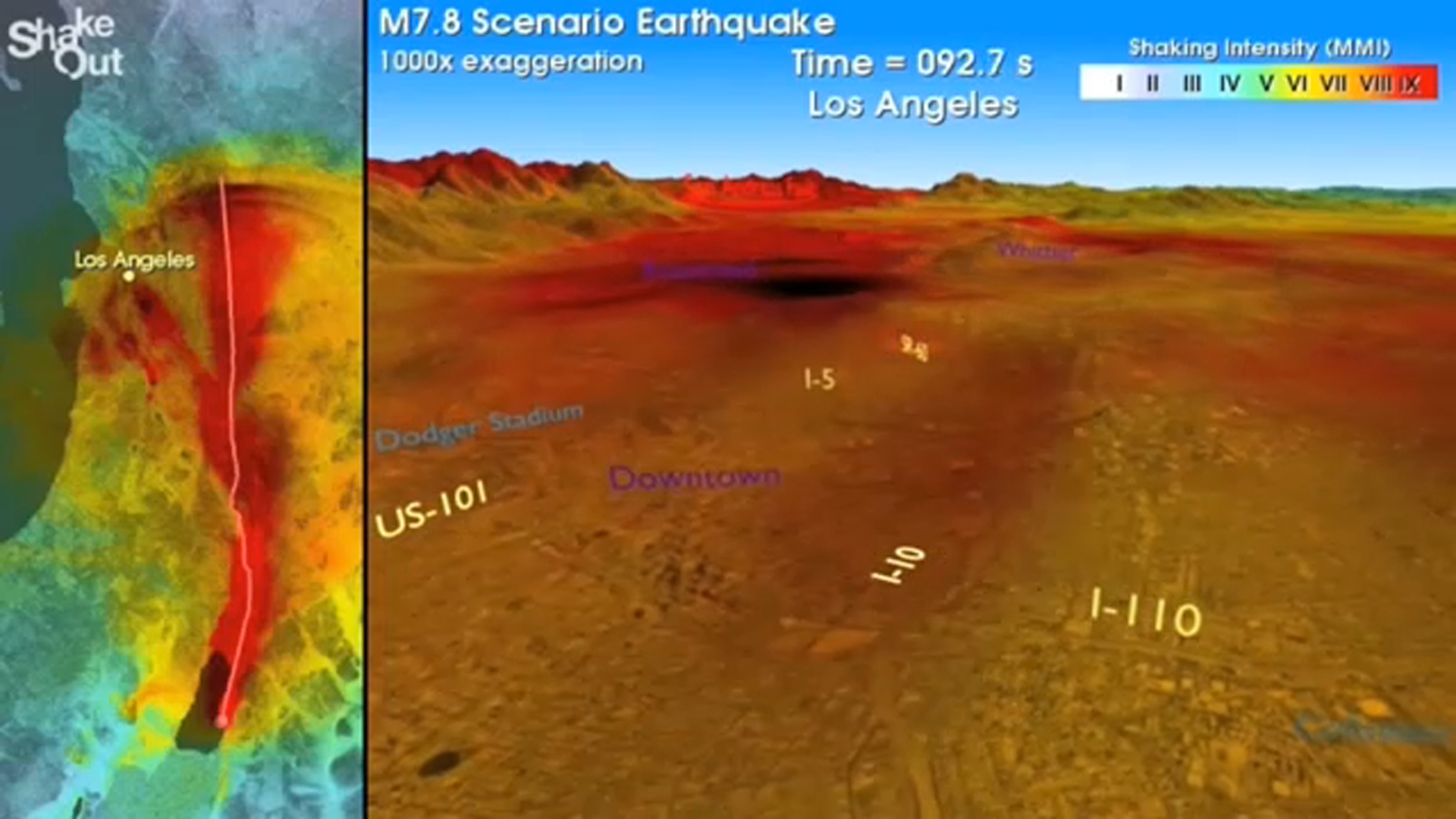
A 2008 simulation modeled a magnitude 7.8 rupture along the fault, producing nearly two minutes of shaking, and projects hundreds of deaths and billions of dollars in damage if such an earthquake were to occur.
Historical context underscores the danger.
The most significant seismic event in California’s history – an earthquake of 7.9 magnitude – occurred in 1857 and ruptured about 225 miles on the San Andreas Fault, which killed two people and produced shaking that lasted between one and three minutes.
Since the magnitude 7.9 Fort Tejon earthquake struck in 1857, stress has continued to accumulate along these fault segments, and that unusually long quiet period has fueled concerns among scientists about the possibility of a major future earthquake.
Jones recommended that during an earthquake, people should “get under a strong table” and “drop, cover, hold on, and it really is the safest thing to do.”
Preparedness remains crucial despite the timing uncertainty.
Jones warned that “we underestimate the social disruption and the economic disruption. We are so focused on our fear of dying, that we forget to be afraid of being bankrupted.”
Experts continue to encourage residents to prepare for future earthquakes by retrofitting their homes, maintaining emergency supplies and establishing communication plans.
Researchers emphasize that additional study is ongoing in related regions.
Burkhard hopes to study other earthquake-prone regions where several fault systems interact and create risks that remain difficult to predict.
The warning represents the latest evidence of mounting danger.
As of 2026, a recent study found that parts of Southern California’s San Andreas and San Jacinto fault systems are currently experiencing some of the highest stress levels.
Additional authors of the study include researchers from Northern Arizona University, University of Bern, U.S. Geological Survey and University of California, San Diego.