

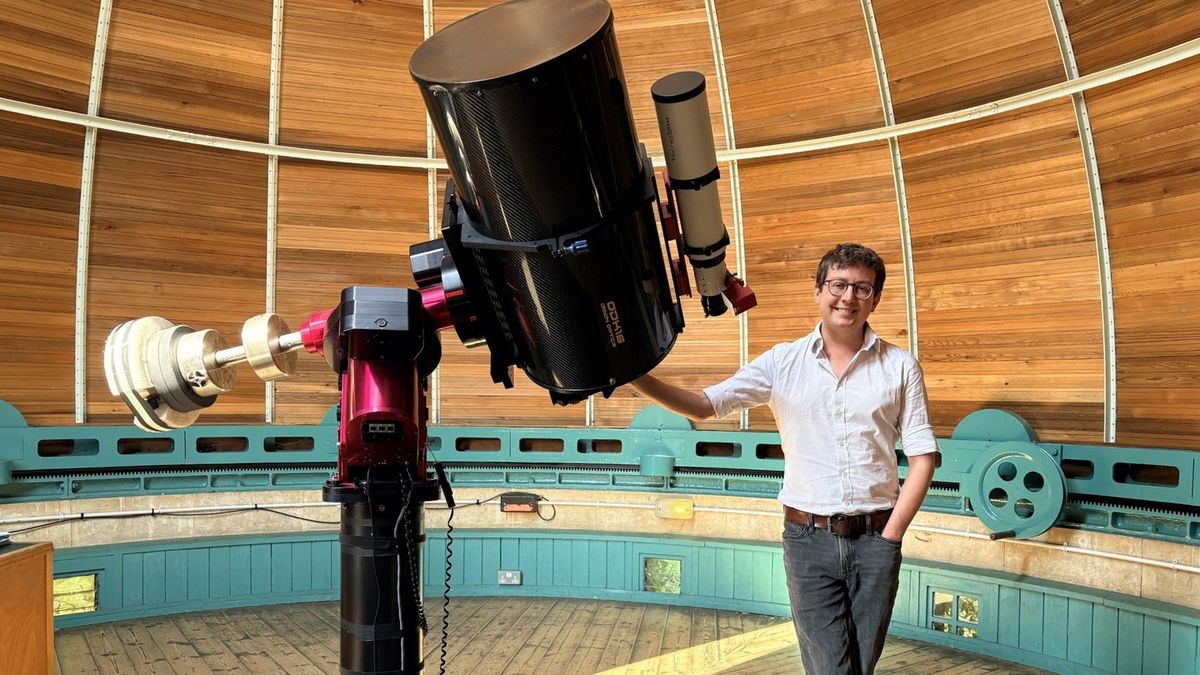
Astronomers say the mounting volume of debris circling Earth is a much more serious threat to the future of space travel than a stray rocket body striking the Moon.
Speaking about a discarded rocket stage that is expected to collide with the lunar surface, Dr Matt Bothwell, Public Astronomer at the University of Cambridge’s Institute of Astronomy, said the impact will leave a clear scar on the Moon.
On the question of what the collision itself will do, Dr Bothwell said the object’s speed means the strike will produce a substantial explosion across the lunar terrain.
“It’ll make a big splash!” Dr Bothwell explained. “It’s likely to make a cloud of debris tens of kilometres high, and leave behind a crater nearly 30 metres wide.”
Even so, he stressed that an object crashing into the Moon is not considered a major concern in astronomical terms, largely because of the enormous distances and open space involved. The SpaceX Falcon 9 upper stage, part of a rocket that launched two lunar landers in January 2025, is expected to impact the lunar surface near Einstein Crater. This marks only the second known accidental case of rocket debris crashing into the Moon; the most recent prior incident occurred in March 2022 when a Chinese Long March 3C rocket body struck the lunar far side.
According to Dr Bothwell, the more pressing issue is the growing amount of junk in orbit around Earth. That concern is tied to the idea known as Kessler syndrome, in which collisions between pieces of debris trigger further impacts in a destructive chain reaction. As of 2026, debris surveillance networks track more than 43,000 objects larger than 10 centimeters in Earth orbit, with statistical models estimating approximately 1.2 million fragments between 1 and 10 centimeters and more than 140 million objects smaller than 1 centimeter.
“Hitting the Moon isn’t really a problem — there’s a lot of space out there,” Dr Bothwell stated. “A much bigger issue is space debris in orbit around Earth… the more and more stuff we launch into space, the more crowded and dangerous it can get for rockets and astronauts trying to get up there!”
The concept of Kessler Syndrome was first outlined in 1978 by NASA scientist Donald Kessler. As The Space Centre describes it, the theory imagines a point where Low Earth Orbit (LEO) becomes so crowded that one collision between orbiting objects sparks a much wider disaster.
That first impact would break the objects apart into huge numbers of fast-moving fragments, which could then strike other satellites and old rocket hardware. Objects in low Earth orbit travel at speeds of approximately 7 to 8 kilometers per second, meaning even small debris particles carry significant destructive energy.
The result would be a runaway cycle in which each crash creates more debris, and that debris causes even more collisions. In the worst-case scenario, Earth could end up surrounded by a dense shell of orbital wreckage, wiping out operational satellites, disrupting communications and navigation systems, and making launches into space dangerously difficult. Research suggests that in certain orbital regions, the density of debris has already crossed the critical threshold where a self-sustaining cascade of collisions could occur even without new satellite launches.
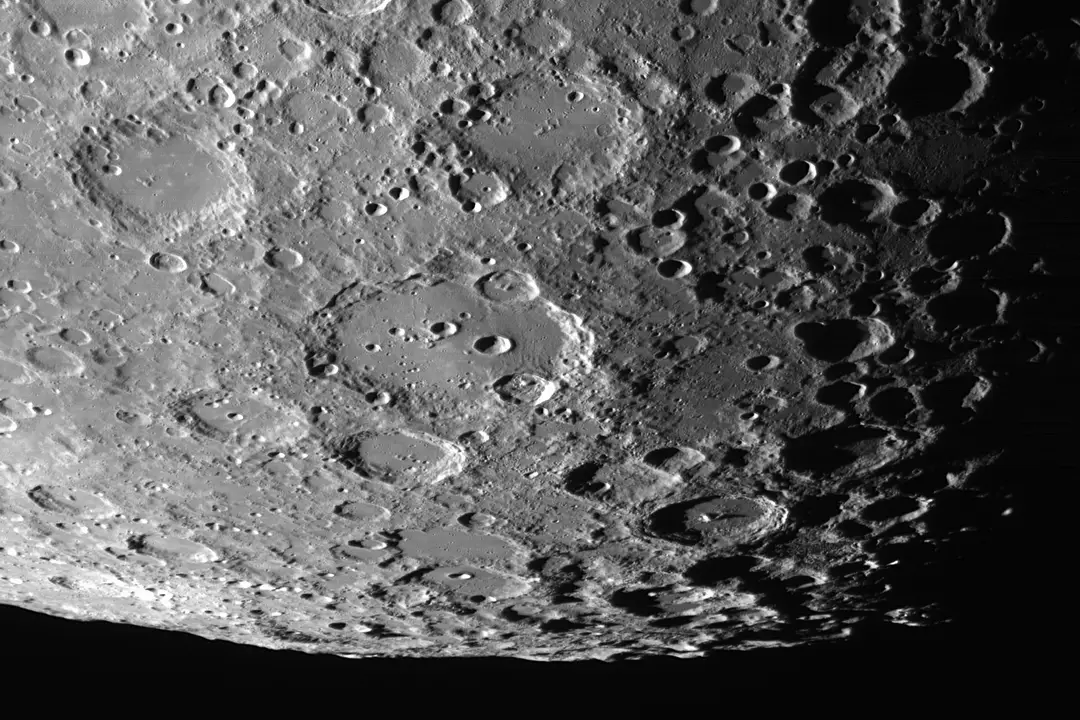
For anyone hoping to see the Moon impact from Earth, Dr Bothwell said there is no risk to our planet. However, he added that spotting the event will not be easy without powerful equipment.
“Thankfully no!” Dr Bothwell said when asked if the crash would impact Earth. “It’ll be a nice event to watch (though you’ll need a really big telescope, backyard binoculars won’t cut it sadly).”
With government space programmes and private firms sending up satellites and rockets at an increasingly rapid pace, specialists continue to argue that controlling debris in low-Earth orbit is essential if those regions of space are to remain usable in the future. Experts warn that active debris removal missions, currently at the research stage, may need to dramatically increase to outpace new object creation and prevent further degradation of the orbital environment.